




At exactly 9:12 AM, in a primary school in Ghana’s Volta Region, 10-year-old Eyram taps her fingers rhythmically on a homemade drum. She’s blind, but today she leads her school's drumming group in a contest — and wins. What makes the moment special isn’t just her music. It’s what made it possible.
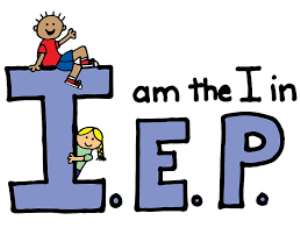
Eyram has an Individualised Education Plan (IEP); and in classrooms across the world, these plans are gently redefining what inclusion truly means. But what exactly are IEPs, and why are they changing the educational landscape for millions of learners — from Hohoe to Moscow?
What Is an Individualised Education Plan (IEP)?
An IEP is more than paperwork. It's a tailored learning blueprint personalised to the unique needs of children with disabilities or learning challenges. It outlines:
- A student’s strengths and needs
- Clear learning goals (short- and long-term)
- Required support services (speech therapy, resource rooms, assistive tech, etc.)
- Classroom accommodations (e.g., extra time, visual schedules)
- Assessment and progress tracking
- Input from parents, teachers, therapists — and the student
In short, an IEP is a contract of care and commitment — between a child (learner) and the system meant to serve them.
From Global Norms to Local Realities
IEPs are grounded in international law. Article 24 of the UN Convention on the Rights of Persons with Disabilities (CRPD) mandates an inclusive education system at all stages, and identifies individualised supports as a right, not a luxury.
In the U.S., the 1975 Individuals with Disabilities Education Act (IDEA) created the legal structure for IEPs, and today, millions of students benefit from them. In Finland, IEPs are part of a broader philosophy of “individual learning paths,” available even to high-achievers and neurodiverse learners.
But in Ghana, India, Kenya and much of the Global South, the dream of individualised learning crashes with resource constraints, teacher shortages, and systemic inequities.
Ghana: IEPs on Paper, Struggling in Practice
Ghana made bold strides in 2015 when it launched its Inclusive Education Policy, stating clearly that all children, irrespective of capability, shall learn in regular classrooms with needed supports. Many educators maintain that we have the laws, but we’re still building the system to deliver on them.
The Gaps
- A lot of teachers need formal training on IEPs.
- In rural districts, one special educator might cover up to 10 schools, making regular IEP reviews a dream deferred.
- Many teachers mistake IEPs for “extra tutoring” or believe they’re “only for blind or deaf students,” showing a critical knowledge gap.
Anatomy of a Strong IEP — Global Frameworks, Ghanaian Flavour
| Component | What It Looks Like Globally | What It Looks Like in Ghana |
| PLOP (Present Levels of Performance) | Standardised testing + psychological assessments (U.S., Canada) | Teacher observation + anecdotal reports, with some speech evaluation |
| SMART Goals | Defined with metrics and deadlines | Often qualitative; sometimes lack timeframes |
| Support Services | Speech therapy, PT, OT, behaviour analysts | May include visiting district officers or itinerant resource teachers |
| Assessment & Progress | Benchmarks updated quarterly | Annual reviews, often informal |
| Family Involvement | Required legally in meetings | Often present, but sometimes intimidated by jargon or hierarchy |
Teachers, Parents and Drums: Real Lives, Real Plans
“My son Kwame has Down syndrome. Before the IEP, he was just sent to the back of the class. Now, he reads aloud at assembly,” says Abena, a mother. The IEP needs improvisation by educators and specialists in Ghana.
In Toronto, a child named Jim uses an AI text reader to complete writing assignments. In Nairobi, Wanja’s IEP included ramps and rest breaks. In Ho, Ghana, students and parents built Eyram’s drums out of tins and plantain leaves because her IEP called for tactile instruments.
Innovation: From AI to SMS Alerts
Across the world, IEP innovation is thriving:
Global Tools
- IEPWriter Pro (US) automates goals based on diagnostic data.
- Student-led IEPs (UK) let students present their learning preferences.
- Universal Design for Learning (UDL) platforms now integrate with IEPs to offer multi-sensory learning options.
In Ghana:
- EduMate Ghana’s IEP Tracker App allows mobile monitoring by district officers, SMS reminders to parents and cloud-based updates to student profiles. It turns bureaucratic documents into living tools.
The Funny Side of Formality
IEPs can get bureaucratic. One parent in Sunyani shared her son’s IEP goal was originally phrased as:
“Reduce hyperkinetic classroom interruptions to below 2 per instructional hour.”
She asked, “You mean stop dancing on the desk?”
“Yes,” the team admitted.
She laughed, “Then just say so!”
The Global Bottlenecks
IEPs face challenges across continents:
| Challenge | Global Occurrence |
| Undertrained teachers | High in sub-Saharan Africa, parts of Asia |
| Lack of multidisciplinary teams | Common in rural districts globally |
| Parental exclusion | Frequent where IEP language is too technical |
| Boilerplate goals | Widespread in overworked systems |
| Policy–Practice gap | Found from Accra to Appalachia |
The Soul of the IEP: A Child’s Right to Flourish
When stripped of jargon, what is an IEP?
It’s a promise. A contract of care between society and its most vulnerable learners — one that says:
“We won’t standardise you. We’ll support you.”
“We won’t measure you by your deficiencies. We’ll teach to your strengths.”
Final Word: One Plan Can Change a Life
From British Columbia to Brong Ahafo, IEPs are transforming classrooms — not only for children with disabilities, but for the very essence of schooling. Because once we know that every child learns in a different way, we start to build schools that work for all.
Eyram’s drumbeat reverberates louder than any test score. It is the sound of a world learning to listen.
By James Attah Ansah
Email: [email protected]
Website: https://jaansahpublications.com


 MIIF, GHIB Open Talks on Big‑Ticket Financing to Power Ghana’s Mining Value Chai...
 'We will upgrade Ho Teaching Hospital to be worthy of the name of a teaching hos...
 'If you are a man of principle and have done nothing wrong please come home' – M...
 'Ghanaians gave me one additional term; it’s exactly what the constitution says'...
 EOCO questioned Miracles Aboagye over GH¢5million, not GH¢55million – Sammi Awuk...
 'I do not take enjoyment, pride in prosecuting people if they have done no wrong...
 Father arrested for allegedly forcing her 16-year-old daughter to sleep with men...
 Female ward assistant in court over alleged GH¢1.7million military recruitment s...
 "He stood for peace, good neighborliness" — Bawku Naba mourns demise of Yaa Naa ...
 Mahama targets completion of Ho Sports Stadium before Ghana's 70th anniversary

