




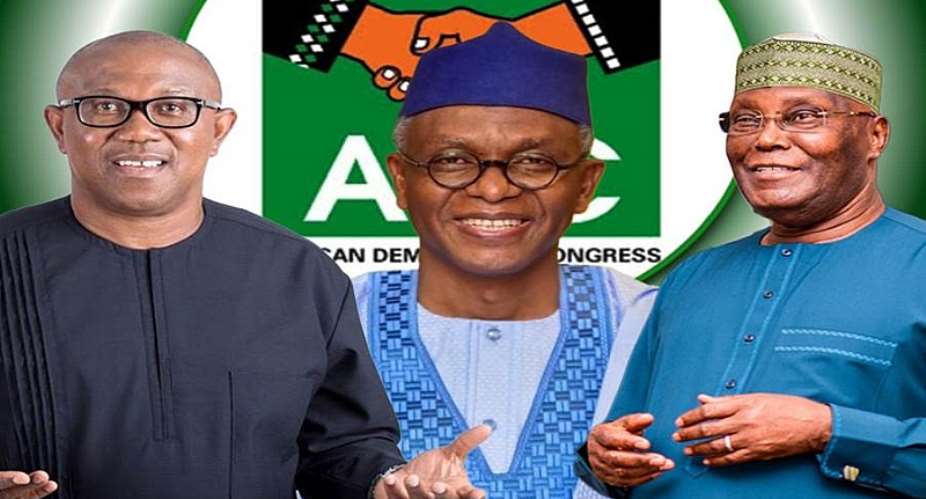
About eighteen months ago, a broad-based coalition of political forces began to take shape under the umbrella of the African Democratic Congress, ADC. The coalition's two main objectives were first to wrest authority from President Bola Ahmed Tinubu in 2027, and next was to put Nigeria back on track to practise true democracy. Many Nigerians felt a familiar sense of déjà vu when the plan was made public. It was almost like what happened in 2015 when the coalition that gave birth to the All Progressives' Congress, APC, seized authority from the Peoples' Democratic Party, PDP, after the party ruled Nigeria for sixteen straight years and was beginning to take so many things, like clean drinking water, affordable health care, education, electricity, the high cost of foodstuffs, youth unemployment, security of life, and much more, for granted.
But then, the infectious excitement about this particular potential political realignment was quickly tempered when the public realized that the coalition’s main players had, once again, been drawn largely from the same pool of seasoned political veterans who continued to dominate Nigeria’s public space for decades since the country acquired self rule in 1960. From former governors to former ministers and ex-senate presidents, the coalition’s ranks read like a roll call of Nigeria’s political establishment. Among them were Aminu Tambuwwal, Nasir El-Rufai, Rotimi Amaechi, Dele Momodou, John Odigie-Oyegun, Rabiu Musa Kwankwaso, Atiku Abubakar, Peter Obi, Ibrahim Shekarau, Bukola Saraki, Ahmed Makarfi, Olusegun Mimiko, Pat Utomi, Buba Galadima, David Mark, and Rauf Aregbesola. These were individuals who had extensive experience, and many of them had actually made their names and left indelible marks on Nigeria’s political landscape.
There is no doubt that these politicians would bring their experience and wealth of knowledge in Nigeria’s governance and its intricate complexities into play if they were voted into public office again. However, the absence of youth representation in their coalition highlights a troubling trend that has haunted Nigerian politics for far too long. This time, it appears again that Nigerian young adults, who form the backbone of the country’s population and its most energetic demographic, are going to be relegated to the sidelines in the dispensation of national duties by the coalition.
In my article titled: “There must be room enough for everyone,” which was published in Modern Ghana newspaper on 14 June 2025, I pointed out the fact that Nigerian youths have consistently been denied meaningful opportunities to participate in governance. The entrenched political class has been reluctant to mentor young leaders or create pathways for them to assume leadership positions. Their reluctance, I thought then, often stemmed from an irrational fear that these young leaders, once empowered, might not prioritize or sustain the privileges and forms of security currently enjoyed by the elderly statesmen. But on reflection, when we take a closer look, we discover that this fear was deeply flawed.
The true position is that even Nigeria’s current older generation of public office holders have not in any way demonstrated an ability or willingness to care for their peers who are outside the circles of political authority. For example, pensioners, many of whom dedicated their most productive years in the service of the country, often go months without pay. Some have even collapsed and died while queuing to collect their pensions. And if the system, as it stands, cannot protect its elderly citizens despite their years of service, and despite the fact that their fellow elders are at the helm of affairs in the country, what reasonable assurance does anyone have that the status quo, maintained by the same aging political actors, can even safeguard the interests of any other age group?
This sad reality should compel us to rethink our approach to political leadership which benefits only those who are loyal to leaders. Instead of perpetuating a gerontocracy that hoards power, Nigerians should be forging a model of governance that actively includes a mentoring process that empowers young adults. And the inclusion of these young adults should no longer be limited to such token appointments as “Special Assistants” or any other superficial roles designed to showcase diversity that does not confer real political authority. In my earlier article, “Rehoboam Syndrome and the Reform Nigerian Politicians Need to Make,” published on 6 November 2017, I criticized the practice of appointing much younger individuals as special assistants to senior political figures, arguing that such practices were often cosmetic because those younger advisers had no experience, and were only there to tell their principals what they wanted to hear, that all was well, even when the house was on fire. The appointments scarcely translated to genuine empowerment or influence.
Our current projection demands a different approach. And I make bold to ask: what could possibly be wrong with the coalition reversing the current political dynamic by innovating a totally different but admirable model of political dispensation? What could possibly be wrong with the older generation supporting and nurturing young leaders to vie for and occupy substantive political offices as legislators, commissioners, governors, and even as potential presidential candidates while the veterans sit behind them to provide guidance, mentorship, and strategic support as "Special Advisers", given their age and experience? In this arrangement, elder statesmen would serve as Special Advisers or senior policy mentors rather than be perpetual frontline actors. Such a reversal of roles would not only break the cycle of power hoarding by the older generation, it will also demonstrate their sincere commitment to national progress.
Demographically, Nigeria is a young nation. With 50% of its population under the age of 18 and the other 50% above the age of 18, it is a demographic powerhouse. These young people should not merely be passive beneficiaries of governance, given that they are dynamic, enterprising, and ambitious. They are the ones who should be driving innovation in governance as they are known to be doing in technology, entertainment, agriculture, and other critical socio-economic sectors. Their energy and ingenuity need to be adequately tapped or harnessed within the political sphere. Trust my instincts. The change Nigerians sought for all these years will definitely happen, even as it is already happening in places like Abia state, if opportunities are created by the Coalition for younger people to take on political offices while the elder statesmen stay behind them as Special Assistants, guiding and mentoring them.

ADC coalition senior members
And let us not forget: youth inclusion in governance is not only about representation. It is even more about infusing new ideas, fresh perspectives, and innovative solutions into the political system. The world is changing rapidly from technological advancements to shifting economic paradigms, and governance must keep pace. Older politicians, no matter how experienced, may not fully grasp the nuanced challenges and aspirations of a tech-driven, globally interconnected generation. An example is Mrs Kemi Badenoch, a British-Nigerian who is today the leader of Britain's Conservative Party. Born on 2 January 1980, she was only 25 years when she joined politics in 2005. She was first elected into the London Assembly in 2015 at the age of 35 years. She holds a Masters degree in Computer Systems Engineering from the University of Sussex and a Bachelors degree in Law from Birkbeck University of London. She prefers to be known as a software engineer. At 45, she is heading Britain's main opposition party. From people like Kemi, we come to know that involving young people in governance cultivates a political culture of accountability and shared ownership of the national project. When young people feel represented, they are more likely to engage constructively, to vote, to volunteer, and to hold leaders accountable. Exclusion breeds apathy and, eventually, resentment and these dynamics can definitely destabilize societies and impede national progress.
The emerging coalition, which has already collapsed into the structure of the African Democratic Congress, ADC, has a unique opportunity to rewrite Nigeria’s political narrative. By intentionally embracing youth inclusion, it can distinguish itself from the anachronistic political figureheads who ruined Nigeria and resonate with the aspirations of millions of Nigerians seriously yearning for genuine change. An all-inclusive ADC coalition should not merely be a collection of established figures sharing the spoils of political office. It should be a platform for intergenerational collaboration. By integrating young leaders at all levels, from policy formulation to executive decision-making, the coalition can craft policies that are reflective of, and responsive to, the needs of all Nigerians.
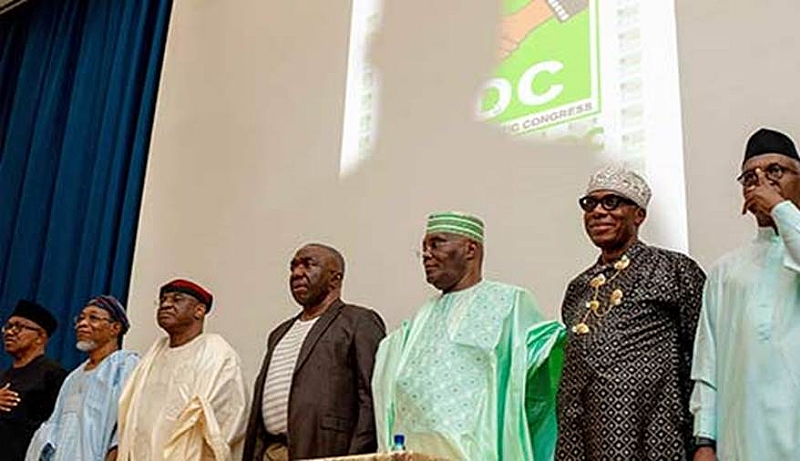
ADC coalition senior members
When we take a look at the private sector, succession planning is a standard practice. Forward-thinking companies identify and mentor young talents, preparing them to take over leadership roles seamlessly. This process ensures innovation, continuity and sustained growth. Politics, which arguably has an even greater impact on the destiny of the country should not operate differently. The older politicians can actually embrace a scenario where young political leaders are groomed over a period, learning the ropes from their experienced mentors while also contributing their unique perspectives towards the common good. Such a model would create a dynamic, resilient, and adaptable governance structure, capable of navigating the complexities of the modern world.
In all, the one hurdle the new coalition must focus on is the open secret that Nigeria’s political class faces a massive trust deficit. Years of corruption, broken promises, and economic mismanagement had left citizens disillusioned. Even the continuous recycling of the same faces of "state actors" deepened this disillusionment. A coalition that boldly champions youth inclusion can begin to rebuild this broken trust. When young people see their peers actively participating in governance, not as symbolic figures but as real decision-makers, they are likely to re-engage with the political process. This re-engagement can invigorate democracy, enhance civic responsibility, and foster a new generation of patriotic leaders dedicated to national development.
It is understandable when the older generation harbours fears about stepping aside for a younger cohort. There are concerns about inexperience, potential mistakes, and the unpredictable nature of youthful exuberance. But these fears must be addressed with perspective. Every generation faces the challenge of trusting the next. Progress, by its nature, involves risk sometimes. Mistakes are inevitable, but they are also necessary for growth and learning. Shielding young people from leadership roles out of fear does not protect the nation, it stifles its potential. Instead of fearing youthful leadership, the older generation should focus on creating robust support systems that can guide and cushion young leaders as they navigate the complexities of governance.
Nigeria is often described as the giant of Africa. Its actions and policies reverberate across the continent. By embracing a truly inclusive coalition that empowers young leaders, Nigeria can set a powerful example for other African nations grappling with similar issues of gerontocracy and youth marginalization. A successful intergenerational political model in Nigeria can inspire a continental shift towards inclusive governance. It can easily spark a renaissance of youth-driven leadership across Africa, driving development, innovation, and democratic consolidation. The question then arises: How can the ADC coalition operationalize this vision of inclusion?
Step one is to establish a clear youth quota. The Coalition should commit to reserving a percentage of elective and appointive positions for individuals below a certain age. This quota should not be symbolic but enforceable and monitored. Step two is to create mentorship frameworks. The Coalition should as a matter of urgency design structured mentorship programmes where young leaders would be paired with more experienced politicians. These programmes should go beyond ceremonial interactions and focus on skills transfer, strategic thinking, and policy development. Step three is to fund youth campaigns. Political campaigns are expensive, and many young aspirants lack the resources to compete effectively. The coalition should establish a fund dedicated to supporting credible young candidates. Step four is to establish policy and ideology workshops. The Coalition should regularly organize workshops and retreats to build the ideological and policy capacity of young politicians. This ensures they are not just placeholders but are equipped decision-makers. Step five is to encourage youth-led policy proposals. Coalition should create platforms within its system where young members can propose policies, debate ideas, and influence the coalition’s manifesto. And finally, the Coalition should institutionalize youth caucuses. They should form youth caucuses within the coalition structure, granting them formal recognition and influence over decision-making processes.
Rather than completely step aside from politics, elder statesmen should redefine their roles. They can transition into advisory positions, leveraging their wealth of experience to guide and support the new generation. This approach aligns with the traditional African value of elders serving as custodians of wisdom and cultural continuity. By stepping back from frontline politics and empowering young leaders, elder politicians can cement their legacies as builders of Nigeria's future who prioritized that future over personal power and financial greed.
Beyond strategy and political expediency, youth inclusion in governance is a moral imperative. It speaks to fairness, justice, and the fundamental principles of democracy. A system that consistently excludes its largest demographic is neither fair nor democratic. Besides, inclusion is not a favour to young people, it is a right and a necessity for national survival and prosperity. Nigeria stands at crossroads. The 2027 elections will present an opportunity to chart a new course. The ADC coalition, as it positions itself to challenge the incumbent, must rise above old patterns of exclusion. It must embrace the politics of inclusion that transcends age, ethnicity, and religion. The coalition has the chance to demonstrate that it is not merely a reconfiguration of old political war horses but a genuine movement for change. By making youth inclusion the central pillar of its agenda, the ADC will galvanize widespread support and rekindle hope in a disenchanted populace.
The way forward is not without challenges, especially from the camp of the incumbent. It requires courage, innovation, and a willingness to embrace certainty. The reward, a more vibrant democracy, a rejuvenated polity, and a nation poised for greatness, is well worth the effort. Nigeria’s future belongs to all its citizens, both young and old. And it is time to build a new system where everyone has a place and a voice. The ADC coalition can lead this charge and make inclusivity not just a slogan but a reality. In so doing, they would not only secure electoral victory in 2027 but also secure a lasting legacy as the coalition that truly put Nigerians forwards. We move.

 Fire Service rescues trapped victim after STC Bus, Taxi collision at Konongo
 Private SHSs in Free SHS pilot programme demand payment of outstanding governmen...
 Police foil planned robbery, recover weapons at Kukuom
 A 53-year-old mechanic remanded for allegedly stabbing another over car battery ...
 Asiedu Nketiah urges IGP to speed up justice for victims of election 2024 killin...
 Each family receives GH¢15,000 support after Accra Police Barracks Fire
 Mussa Dankwah urges ministers to focus on performance amid MoFA–finance minister...
 Selling single cigarette sticks illegal – FDA
 Hungry, unhealthy workforce cannot protect nation’s health – GRNMA
 Health Minister orders suspension of KATH CEO over Emergency admissions directiv...


