




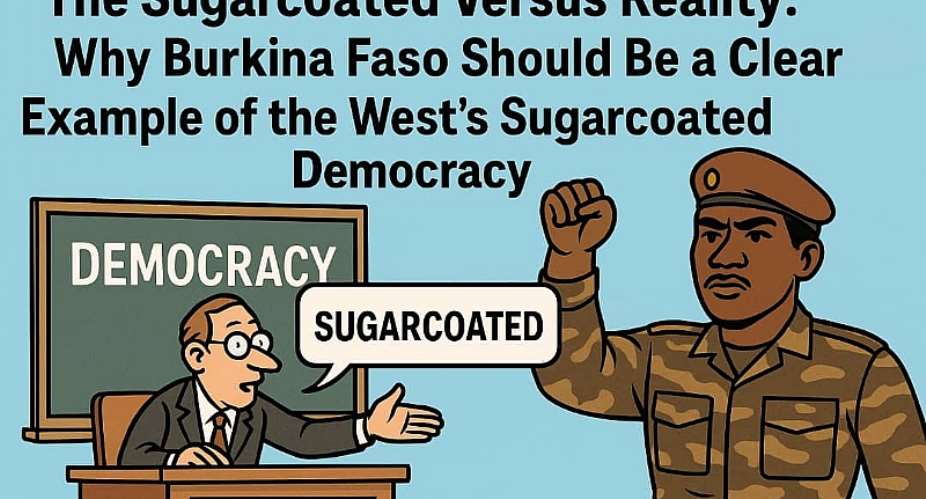
“We are not against genuine democracy. We are against Western hypocrisy.”
These words echo the sentiment rising across a new wave of African leadership—one no longer content with borrowed ideologies wrapped in foreign interests. At the center of this political awakening stands Burkina Faso, a nation that has become a mirror reflecting the double standards of Western democracy.
Since its independence in 1960, Burkina Faso has seen recurring political instability, largely influenced by neocolonial interests and internal dysfunction. But the landscape shifted in 2022, when a coup led by Captain Ibrahim Traoré marked a radical pivot toward self-determination.
The new leadership broke military ties with France, expelled foreign troops, and redirected foreign policy towards nations willing to respect its sovereignty, including Russia and Turkey. These moves—popular among many Burkinabè—invited swift condemnation from the West, exposing a deeper truth: democracy is accepted in Africa only when it aligns with Western interests.
Burkina Faso is not an isolated case. Mali and Niger have followed similar trajectories, rejecting Western military influence and seeking new paths to tackle internal crises. Guinea, under Mamady Doumbouya, is also rethinking its allegiance to former colonial powers.
Instead of addressing the underlying issues—foreign exploitation, insecurity, and governance failures—the West responds with blanket condemnations, sanctions, and a media narrative that criminalizes autonomy.
The Camouflage of “Democracy”
What the West promotes as democracy in Africa is often a façade. Underneath lies a framework of conditional aid, foreign-dominated NGOs, rigged economic structures, and surveillance disguised as support.
When a leader like Traoré attempts to govern independently, he is labeled a “dictator.” But when Western-friendly leaders crack down on protests, loot national resources, or allow foreign control of critical sectors, they are hailed as democratic partners.
This contradiction exposes democracy as not always a value-based system, but a geopolitical tool used to reward compliance and punish resistance.
Why African Leaders Must Rally Behind Traoré?
Captain Ibrahim Traoré represents more than a military transition—he symbolizes a return to dignity, courage, and a political imagination unshackled from colonial residue. His refusal to let foreign troops define Burkina Faso’s security narrative is a stand many African leaders dream of taking but fear the consequences.
Supporting Traoré is not about endorsing coups; it's about defending the right of Africans to choose their own destiny without interference. If he fails in isolation, it will serve as a warning to every future leader who dares to defy the status quo.
History warns us of the next steps. When ideological warfare and sanctions fail, Western powers have often turned to indirect interventions—arming internal opposition, funding coups, or launching “humanitarian” missions.
The international media is already framing Burkina Faso as unstable, lawless, and repressive. This narrative sets the stage for intervention, not liberation.
Burkina Faso today is not just a country in transition; it is a symbol. A symbol of what happens when African leadership begins to think independently. The West’s reaction reveals that democracy, as exported to Africa, is often sugarcoated—sweet in speech, toxic in practice.
Africa must now choose: continue consuming sweet lies, or embrace the bitter truth required for real freedom. The choice is not just political. It is existential.

 We have paid too high a price to allow freedom of speech diminish — Osahen Afeny...
 No disciplinary concern justifies violence against students - EduWatch condemns...
 Introduce regular criminal background checks into teacher recruitment — EduWatch...
 Bank of Ghana mops up GH¢17.24bn in major liquidity tightening move
 NDC marks 34 years of political influence and democratic governance
 UTAG threatens nationwide strike over delayed book and research allowances
 808 presidential staffers on payroll as Parliament receives annual staffing repo...
 24-Hour Economy cannot succeed without data — GSS tells Parliament
 Captain Smart declares bid for NDC parliamentary slot in Gomoa West
 24-Hour Economy will promote prostitution – NPP Chairman warns government



Comments
Great analysis and piece