




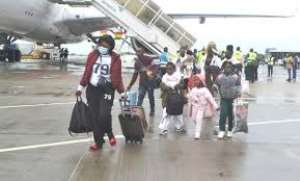
The recent emergency evacuation of over a thousand Ghanaian nationals from South Africa amidst a volatile wave of anti-immigrant sentiment and a Looming June 30 vigilante deadline has reignited a fierce, uncomfortable debate across our media landscape. To some, the sight of state-chartered flights landing at Accra International Airport, carrying citizens fleeing targeted hostility, is a proud demonstration of sovereign responsibility. To others, particularly the heavily burdened domestic taxpayer, it feels like an expensive irony. Hard-working citizens who stayed behind to build the nation, navigating high inflation, heavy taxation, and overstretched public infrastructure, are once again footing the bill for individuals who left the country by choice, often bypassing formal channels, in search of personal fortune. This situation forces us to confront a fundamental question of political philosophy and economic justice. How do we balance our moral and constitutional duty to protect Ghanaian citizens abroad with our financial obligation to the domestic taxpayers who sustain the state? As global geopolitical instability rises, this is no longer a theoretical exercise. If economic distress, conflict, or xenophobia triggers concurrent crises across multiple nations simultaneously, Ghana will face a mathematical impossibility. When state resources are finite, by what criteria do we choose whom to save, and whom to leave behind?
The Constitutional Paradox: Duty vs. Deficit
At the heart of this dilemma lies a stark contradiction between legal ideals and fiscal reality. Proponents of unconditional state-led evacuations point directly to the 1992 Constitution of Ghana and the foundational tenets of international law. The state exists to protect its people. A passport is not merely a travel document; it is a binding legal contract between the sovereign state and the individual. When a citizen's life is threatened on the global stage, the state is morally and legally compelled to intervene.
However, this argument ignores a glaring domestic reality. There are dozens of things the government is constitutionally bound to do, from providing quality basic education and accessible healthcare to ensuring clean water and robust judicial infrastructure, which it routinely fails to deliver simply because there is no money.
Our public discourse is perpetually flooded with reports of "no bed syndrome" in regional hospitals, uncompleted school buildings, and dilapidated roads. If the state must constantly defer its constitutional obligations to the citizens who live, work, and pay taxes within its borders due to a lack of funds, how does it suddenly find the liquid capital to charter commercial aircraft and fund reintegration packages for those who chose to leave? To the domestic taxpayer, this feels less like sovereign duty and more like a betrayal of the social contract.
The Remittance Myth and Taxpayer Equity
A common defense of state expenditures on the diaspora is the macroeconomic significance of foreign remittances. It is an undeniable fact that remittances inject billions of dollars into the Ghanaian economy annually, serving as a critical lifeline for millions of households and a stabilizing force for the Cedi. However, this argument conflates collective economic impact with individual fiscal responsibility, creating a profound equity problem:
- Private Gain vs. Public Cost: Remittances are fundamentally private transfers. A migrant worker sends money directly to their family in Accra, Kumasi, or Tamale to pay for school fees, rent, or land. These funds do not flow directly into the Consolidated Fund to build hospitals or pave highways.
- The Formal Tax Gap: While the diaspora contributes indirectly through consumption taxes (VAT) when their families spend money locally, they do not pay direct income taxes, head taxes, or formal levies to the Ghana Revenue Authority.
- The Disconnect in Protection: Highly skilled Ghanaian professionals --- doctors, engineers, and academic consultants working legally abroad frequently maintain formal ties, pay relevant dual-citizenship fees, and rarely require emergency evacuation. Ironically, the bulk of emergency state resources is spent evacuating informal, often undocumented migrants who left via irregular routes, contributed little to nothing to the state's coffers, and yet demand the most expensive form of state protection when crisis hits.
When the state spends scarce public funds on emergency airlifts, it is effectively socializing the risk of irregular migration while the financial rewards of that migration remain entirely privatized.
The Nightmare Scenario: The Case for Multi-Country Crisis
The current evacuation from South Africa is manageable because it is an isolated, localized event. But what happens when the geopolitical landscape fractures further? The year 2026 has already demonstrated how quickly regional tensions can escalate. Imagine a simultaneous crisis. A resurgence of anti-migrant violence in South Africa, a sudden outbreak of civil conflict in a Middle Eastern host nation like Qatar or Lebanon, and an abrupt political expulsion of undocumented West African migrants from a neighboring sub-regional state.
If thousands of Ghanaians are in imminent danger across three different theatres at the same time, the state's capacity will completely collapse. The government cannot charter ten aircraft simultaneously; it cannot fund multiple parallel evacuation corridors. In such a nightmare scenario, the state will be forced to play God with its citizens' lives. By what criteria will our policymakers select which citizens to bring home?
Designing an Objective Selection Matrix
If the government must choose due to absolute financial constraints, it cannot rely on political opportunism, media visibility, or emotional sentimentality. We must establish a transparent, institutionalized Selection and Prioritization Matrix for state-led evacuations.
If resources only allow us to rescue 30% of nationals in danger, the selection should be governed by clear, pre-defined pillars:
- Legal Status and State Registration: The first tier of prioritization must favor citizens who have maintained a formal relationship with the Republic of Ghana. This includes students on valid visas, registered expatriates, and individuals who formally registered their presence with the local Ghanaian Embassy or High Commission upon arrival. Registration shows an adherence to law and allows the state to plan effectively. Those who deliberately bypassed legal channels and evaded state oversight cannot logically demand the same immediate expenditure of state resources as those who operated within the law.
- Demographic Vulnerability: Within any crisis zone, priority must be given based on physical vulnerability. Children, pregnant women, the elderly, and those requiring urgent medical attention must be placed on the first available flights. Able-bodied young men, who often make up the vast majority of irregular economic migrants, must understand that the state's immediate moral duty is to the defenseless.
- Geopolitical and Logistical Feasibility: The state must evaluate where its resources can achieve the maximum impact. Evacuating citizens from a neighboring West African nation via land corridors is far cheaper and more efficient than launching a long-range airlift to the Middle East or Eastern Europe. If the cost of saving one citizen in a distant, complex warzone could fund the rescue of fifty citizens in a neighboring state, logistical utilitarianism must prevail.
- Reciprocal Contribution and Tax Compliance: While controversial, the state should consider a citizen's history of contribution. Have they been part of registered diaspora associations that actively support national development? Have they maintained voluntary tax compliance or contributed to national social security schemes where applicable? A state must prioritize those who recognize their obligations to the state, rather than those who view the state exclusively as an emergency insurance policy.
Institutional Reforms: Beyond Emergency Firefighting
We cannot continue to govern by crisis management. Every time an international emergency occurs, the government scrambles, dips its hands into contingency funds that do not exist, and worsens our domestic deficit. To balance our moral duties with our fiscal realities, Ghana must transition toward a self-sustaining diaspora safety model.
The Diaspora Emergency Insurance Levy
The state should introduce a mandatory, micro-premium insurance policy attached to all international travel tickets departing from Ghana, alongside a specialized "Diaspora Emergency Levy" on formal outbound migration channels. This revenue must be locked in an audited, ring-fenced Diaspora Emergency and Rescue Fund. When a crisis occurs in South Africa, Libya, or elsewhere, the money used to charter flights must come from this fund, built by travelers themselves, rather than from the tax revenues meant for domestic hospitals and schools.
Enforcement of Embassy Registration
Ghanaians traveling abroad must be legally required to check in with local missions. Modern digital platforms make this seamless; a simple mobile application linked to the Ghana Card could allow citizens to log their location worldwide. If a citizen fails to register with the embassy within a specified period of arrival, they should face a lower priority tier during an emergency evacuation. The state cannot be expected to rescue people whose existence and location it cannot verify.
Rethinking the Social Contract
We must alter the national psychology surrounding migration. For too long, the narrative has been that anyone who manages to escape the economic hardships of Ghana is a hero, and if their gamble fails, the state must bear the cost of their safety. We must explicitly state that while citizenship guarantees basic consular advocacy, the financial cost of physical extraction from a foreign country is not an automatic entitlement. If you choose to take risks for individual economic comfort, you must shoulder a portion of the risk management.
My Thoughts: A Call for Pragmatic Patriotism
The "prodigal sons" returning from South Africa are our brothers, our sisters, and our children. Their suffering in foreign lands is a painful reflection of our collective failure to create an economy that retains its youth. Humanity demands that we feel empathy for their plight, and statesmanship requires that we protect our national dignity. But true statesmanship also requires unyielding pragmatism. We cannot build a sustainable nation by robbing Peter to pay Paul --- by starving our domestic schools, hospitals, and civil servants of vital resources to fund emergency operations for those who turned their backs on the domestic tax system.
As we look toward an uncertain global future, Ghana must establish clear boundaries. We must build an independent financial buffer for diaspora crises, enforce strict registration legalities, and implement a rigid selection matrix for emergencies. The Ghanaian passport must remain a symbol of pride and protection, but it must never become an unsustainable blank check drawn on the accounts of the taxpayers who stayed behind to build the nation.
FUSEINI ABDULAI BRAIMAH
+233550558008 / +233208282575
[email protected]

 We have paid too high a price to allow freedom of speech diminish — Osahen Afeny...
 No disciplinary concern justifies violence against students - EduWatch condemns...
 Introduce regular criminal background checks into teacher recruitment — EduWatch...
 Bank of Ghana mops up GH¢17.24bn in major liquidity tightening move
 NDC marks 34 years of political influence and democratic governance
 UTAG threatens nationwide strike over delayed book and research allowances
 808 presidential staffers on payroll as Parliament receives annual staffing repo...
 24-Hour Economy cannot succeed without data — GSS tells Parliament
 Captain Smart declares bid for NDC parliamentary slot in Gomoa West
 24-Hour Economy will promote prostitution – NPP Chairman warns government


