




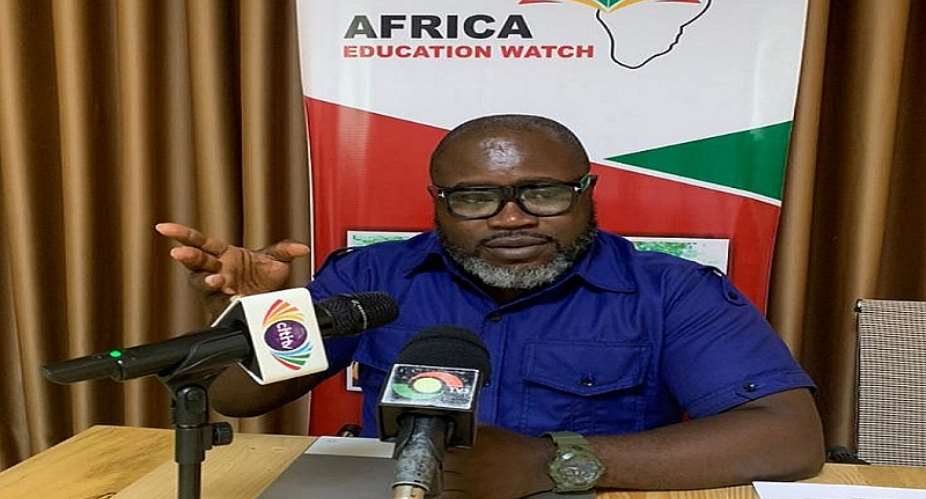
My attention has been drawn to a recent statement by Africa Education Watch (Eduwatch), alleging that heads of public basic schools are "imposing" examination or printing fees on parents. I, as a stakeholder, find this assertion not only misleading but also lacking context and fairness to the reality on the ground.
1. No Imposition, Only PTA Agreements
Contrary to Eduwatch’s claim, no headteacher or school is imposing examination fees on parents. In all districts and schools where examination fees are being paid, these decisions have been reached through Parent-Teacher Association (PTA) agreements. It is therefore erroneous and disingenuous to describe such consensus-based arrangements as impositions. Heads of schools do not act unilaterally; they engage parents through the PTA structure, and only proceed based on majority consent.
2. Parental Involvement Was Widely Agreed Upon
Being a participant in the recent National Education Forum held in February in which Eduwatch's Mr. Kofi Asare was a part of the seven-member committee, nearly all stakeholders—including civil society organisations—acknowledged the important role of parents in supporting basic education financing. In fact, it was widely accepted that parents should be encouraged to contribute meaningfully where necessary, especially in the face of ongoing funding delays from government.
3. Support for PTA Does Not Breach FCUBE
The Minister for Education, Hon. Haruna Iddrisu, has repeatedly stressed the importance of PTA involvement in the smooth running of schools. Voluntary contributions by parents to support the printing of exam papers do not contravene the Free Compulsory Universal Basic Education (fCUBE) policy, especially when no child is being compelled or punished due to non-payment. Labelling such collaborative efforts as violations of the law is a misinterpretation of both the spirit and the letter of the law.
4. Eduwatch Failed to Offer Practical Solutions
While Eduwatch rightly acknowledges that government funding for assessments has not been timely for years, they disappointingly fail to offer a viable alternative. If schools are not provided with funds to print exam papers, how are heads expected to conduct assessments? Should learning be compromised and sacrificed on the altar of financial bottlenecks beyond their control?
5. No Child is Being Denied Assessment Unlawfully
School heads, by and large, are not denying pupils access to exams purely due to non-payment. Rather, they continue to engage parents in constructive dialogue to find feasible ways of keeping teaching and learning effective. It is unfair to suggest that teachers and heads—who are already doing more with less—are now the source of educational inequity.
In conclusion, the partnership between parents and schools through PTAs must be strengthened, not demonised. In times of fiscal constraints, the spirit of collaboration should be celebrated—not condemned—especially when the welfare and education of our children are at stake.

 GBA urges Chief Justice to stop judges for compelling lawyers to appear during l...
 Two footballers, okada rider convicted in GH¢38,000 cyber fraud case in Assin Fo...
 Angry supporters storm NPP headquarters over Ayawaso Central electoral album con...
 Biakoye NADMO cautions residents over possible Bagre Dam spillage on August 11
 IMF urges Ghana to sustain quarterly electricity tariff adjustments to reduce f...
 Government plans second National Theatre in Kumasi – Gomashie
 Trump pushes rethink of school vaccine mandates and MMR shots
 I didn’t disrespect Nana Yaa Jantuah — Afenyo-Markin clarifies
 People and institutions at the centre of US trial and Asante Berko bribery convi...
 Busia has been treated unfairly in Ghana’s political history — Kufuor

