




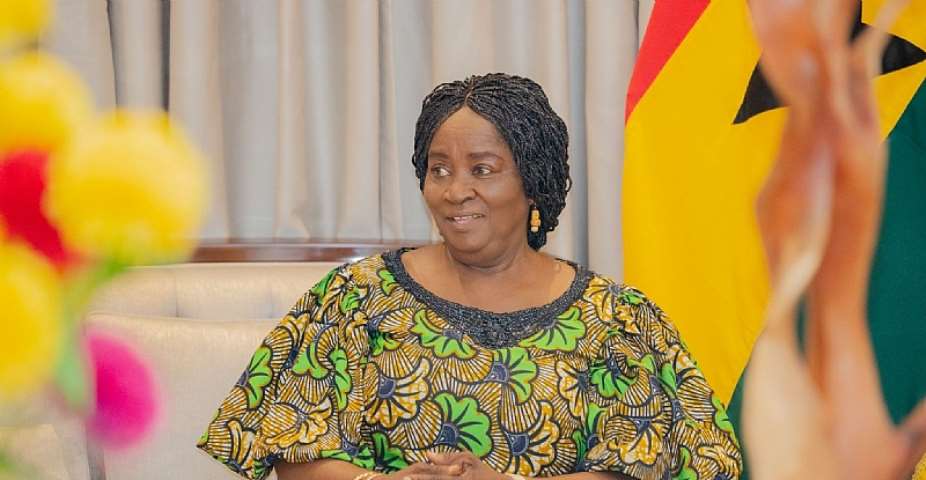
The sudden news of Ghana’s first female vice president, H.E. Prof. Naana Jane Opoku-Agyemang, being in poor health has sparked intense debate across social and mainstream media. The revelation that she initially sought treatment at the University of Ghana Medical Centre (UGMC) before being airlifted abroad has prompted public discourse on Ghana’s healthcare system and the ongoing trend of political leaders opting for medical care overseas. Naturally, this development has revived long-standing discussions on why high-ranking government officials frequently seek medical treatment outside the country instead of investing in Ghana’s healthcare system.
However, the discussion has taken a sharp political turn. More pointedly, the opposition New Patriotic Party (NPP) has seized the moment to accuse the ruling National Democratic Congress (NDC) of hypocrisy, citing the NDC’s past criticism of NPP officials who sought medical treatment outside Ghana. This argument may not only appear compelling, but it also places the NDC in a difficult position, requiring a well-strategized communication approach to address public concerns while maintaining credibility. A closer examination of the facts reveals a more nuanced reality that the NDC must effectively communicate to the public.
Framing the Narrative: Context, Facts, and Transparency
The key to effective communication in this instance lies in establishing the appropriate context. One of the initial steps in shaping public perception is to clarify the sequence of events. For example, unlike previous cases where high-ranking officials immediately sought care abroad, the vice president first received treatment at UGMC before medical professionals recommended further consultation overseas. This distinction must be emphasized in public discourse to highlight that the government prioritized local healthcare before exploring external options. Just as any regional or district hospital will refer complex cases to teaching hospitals, UGMC’s referral was based on the necessity for advanced treatment that Ghana currently lacks. The NDC must stress that prioritizing local healthcare was indeed their first course of action, demonstrating a commitment to domestic medical institutions. The referral system is a standard global medical practice, not a reflection of Ghana’s health infrastructure.
Addressing the Double Standards Debate
The opposition’s argument hinges on the idea that the NDC, while in opposition, criticized the NPP for facilitating medical travel abroad. To counter the NPP’s accusations of hypocrisy, the NDC must differentiate its approach from that of the previous administration. While criticisms of past administrations centred on neglecting local healthcare investment, which was deprioritized in favour of political expediency, the NDC can emphasize that its administration is committed to healthcare development and that this single instance does not negate its broader efforts.
More importantly, they should compare their approach with the NPP’s track record, highlighting that previous leaders often neglected Ghanaian healthcare, while the vice president prioritized local care. Furthermore, the NDC should not only defend its actions but also take a proactive stance by questioning the NPP’s moral authority on the issue. The NPP’s practice of sending officials abroad without first considering local treatment options undermines their position. The discussion should focus on the wider issue of inadequate healthcare investment instead of a politically motivated blame game.
A Forward-Thinking Approach to Healthcare Investment
Beyond the political back-and-forth, this situation presents an opportunity for the NDC to take a leadership role in advancing Ghana’s healthcare system. Instead of remaining defensive, the party can seize this moment to outline concrete steps toward improving medical infrastructure, such as investing in specialized medical training to reduce dependency on foreign expertise, strengthening public-private partnerships to equip hospitals with cutting-edge technology, establishing exchange programs where Ghanaian doctors accompany officials abroad for knowledge transfer, and creating policies that incentivize Ghanaian medical professionals abroad to return and contribute to local healthcare.
Engaging the Public with Transparency
Communication is not just about facts; it also encompasses public sentiment. Ghanaians have legitimate concerns about politicians accessing medical care abroad while citizens struggle with challenges at home. The NDC must recognize this frustration and communicate with empathy. Instead of appearing defensive, they should frame this as part of a broader discussion on enhancing healthcare accessibility for everyone. Furthermore, transparency in government spending is essential. If taxpayer money is involved, the government should disclose costs and assure citizens of their dedication to improving healthcare. Addressing these concerns directly can foster goodwill and ease political tensions.
Shaping the Narrative for a Forward-Thinking Healthcare Agenda
In conclusion, the vice president’s medical trip should not be reduced to a mere political point-scoring exercise. Instead, it should catalyze broader conversations about healthcare reform in Ghana. The NDC has a chance to reshape the narrative by clarifying that local healthcare was prioritized before a referral abroad, differentiating between past criticisms and current realities, proactively outlining policies to enhance Ghana’s medical system, and finally, engaging the public with transparency and empathy. By taking a strategic communication approach, the NDC can turn this controversy into an opportunity—one that reinforces its commitment to a sustainable, world-class healthcare system for all Ghanaians, not just the political elite.


 GES directs Ashanti regional, Obuasi East educational directors to step aside ov...
 Ghana's economy doing well; Bawumia's 'pocket economy’ theory will not fly – Apa...
 Obuasi SHTS headmaster resigns as Juaben NDC secretary, withdraws chairmanship b...
 NDC reverses decision, directs Obuasi SHTS headmaster to step aside from Juaben ...
 Africa must turn mineral wealth into jobs and shared prosperity – Mahama
 'Despicable!’ – Prof. Prempeh blasts GES, NDC over handling of Obuasi SHTS alleg...
 Police search for missing fishing canoe and seven crew members off Axim
 October 20: Cedi sells at GHS12.25 on forex market, GHS11.67 on BoG interbank
 'Very distasteful’ – Selorm Branttie blasts NDC for clearing Obuasi SHTS headmas...
 Power fluctuation destroys MTN mast power plant worth GH¢200,000 in Begoro



Comments
The fact still remains that NDC is doing the same thing they hypocritically accused the NPP of doing.If no public announcement was made before officials of the precious govt went abroad for further treatment,it does not mean that those officials were not referred by local doctors. There were official communications about such trips Until politicians stop being their own enemies such critisisms will not stop.Sickness has no colours Anybody can be taken ill at any time.