




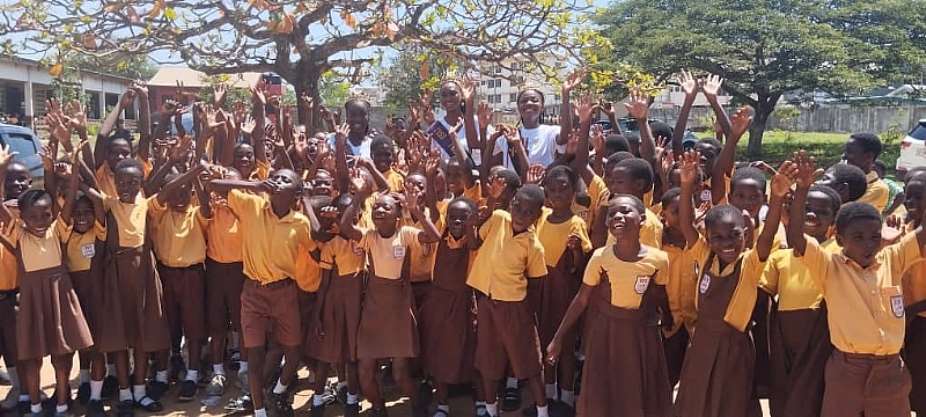
Abstract: Since the inception of the Fourth Republic in 1993, Ghana has made significant strides in expanding access to basic education. However, despite various policy interventions, the sector still grapples with challenges such as inadequate infrastructure, teacher shortages, low learning outcomes, and high dropout rates. This article provides a scholarly analysis of these issues using credible data and presents practical, sustainable, and innovative solutions. The proposed interventions aim to enhance equity, quality, and global competitiveness in Ghana’s basic education system.
Introduction: Education is the foundation of any thriving nation, shaping the minds that will lead its future. In Ghana, basic education serves as the critical entry point for millions of children, equipping them with fundamental literacy, numeracy, and problem-solving skills. However, despite Ghana’s commitment to improving education since the inception of the Fourth Republic in 1993, persistent challenges continue to hinder progress. Issues such as inadequate infrastructure, teacher shortages, low academic performance, and high dropout rates threaten the ability of the nation’s youth to compete on a global stage.
The Ghanaian government has introduced several key policies over the years to address these concerns, including the Free Compulsory Universal Basic Education (FCUBE) program in 1996, the Capitation Grant Scheme in 2005, and more recently, the Common Core Programme (CCP) in 2018, which aims to shift from rote memorization to activity-based, student-centered learning. While these policies reflect significant progress, their implementation has faced substantial roadblocks, leaving many students without the quality education they deserve.
According to the National Standardized Test (NST) of 2021, only 34% of Primary 4 students were proficient in Mathematics and English, raising concerns about learning quality and effectiveness (Ministry of Education, 2021). Furthermore, Ghana’s basic school dropout rate remains high, with one in five children aged 6-15 out of school due to financial hardships, long travel distances, and insufficient learning resources (Ghana Statistical Service, 2022). If these issues persist, Ghana risks widening its educational inequality gap and losing the potential of its young generation.
As global economies rapidly evolve through technology, innovation, and digital transformation, Ghana must ensure that its education system aligns with 21st-century demands. This article delves into the systemic challenges of basic education in Ghana, explores the underlying causes of poor learning outcomes, and proposes sustainable, innovative solutions to bridge the gaps, enhance quality, and improve equity. Through cross-sector collaboration among the Ministry of Education, teacher unions, international organizations, and private sector stakeholders, Ghana has the opportunity to transform its education system into a globally competitive model that empowers every child to succeed.
Challenges in Ghana’s Basic Education System
Inadequate Infrastructure and Learning Resources
One of the major challenges facing Ghana’s basic education system is the lack of adequate school infrastructure. Rural and underserved areas still struggle with dilapidated classrooms, inadequate furniture, and poor sanitation facilities. According to a 2021 UNICEF report, over 5,000 schools in Ghana still operate under trees or in makeshift structures, affecting learning outcomes (UNICEF, 2021).
Table 1: Selected Infrastructure Deficits in Ghana’s Basic Schools (2021)
| Infrastructure Deficit | Number of Schools Affected |
| Schools without classrooms | 5,000+ |
| Schools without access to potable water | 3,800+ |
| Schools without functional toilets | 6,700+ |
| Overcrowded classrooms | 40% of public basic schools |
Source: UNICEF, 2021
Teacher Shortages, Quality, and Motivation
A well-trained, well-motivated teaching workforce is essential for quality education delivery. However, Ghana’s education sector continues to experience a high teacher attrition rate of approximately 7% annually, leading to a shortage of qualified teachers, especially in rural areas (GES, 2022).
Factors contributing to poor teacher retention include:
Poor remuneration and delayed salary payments. Limited professional development opportunities.
Overcrowded classrooms and high teacher-to-student ratios (often exceeding 1:60 in rural areas). A 2022 study by UNESCO indicates that Ghana needs to recruit at least 79,000 more teachers by 2025 to meet the growing demand for basic education (UNESCO, 2022).
Curriculum Implementation and Learning Outcomes
Ghana introduced the Common Core Programme (CCP) in 2018, shifting from rote memorization to child-centered, activity-based learning. However, challenges remain in implementation due to:
Limited teacher training on the new curriculum.
Inadequate instructional materials to support competency-based learning. Low adaptation to digital learning resources.
The 2021 National Standardized Test (NST) results showed that only 34% of Primary 4 students were proficient in English Language and Mathematics, indicating gaps in learning quality (MoE, 2021).
High Dropout Rates and Socioeconomic Barriers
Despite policies aimed at promoting access, Ghana's basic school dropout rate remains high, particularly among girls and children in rural communities. According to the Ghana Statistical Service (2022), one in five children aged 6-15 is out of school.
Major dropout contributors include:
Economic hardships: Many children are forced into child labor to support their families. Teenage pregnancies: Girls in deprived communities are disproportionately affected.
Long travel distances to schools: In remote areas, students walk over 5 kilometers daily to access education.
Ineffective Policy Implementation and Weak Education Governance While Ghana has well-drafted policies, implementation remains weak due to: Inconsistent funding allocations to the education sector.
Weak monitoring and evaluation mechanisms.
Poor stakeholder collaboration in education planning.
Practical, Feasible, and Sustainable Solutions Infrastructure Development and Equitable Resource Distribution Increase investment in school infrastructure through public-private partnerships. Introduce mobile learning units for remote areas to bridge accessibility gaps.
Expand digital learning infrastructure by providing solar-powered ICT centers in rural schools. Table 2: Proposed Infrastructure Expansion Targets (2025 Goal)
| Intervention | Target |
| Classroom construction | 10,000 new classrooms |
| Provision of potable water | 5,000 schools |
| ICT-equipped learning hubs | 2,000 rural schools |
Teacher Training, Motivation, and Retention Strategies
Increase teacher salaries and rural allowances to attract talent to underserved areas.
Provide continuous professional development (CPD) programs aligned with the Common Core Programme (CCP).
Introduce teacher housing schemes in rural areas as an incentive for retention. Strengthening Curriculum Delivery and Learning Outcomes Expand digital learning programs and provide teachers with technology training. Encourage project-based and experiential learning for enhanced engagement.
Improve reading and numeracy support programs at the basic level. Addressing Dropout Rates and Socioeconomic Barriers Strengthen school feeding programs to improve attendance and retention.
Introduce conditional cash transfers for at-risk students to ease financial burdens. Expand adolescent reproductive health education to reduce teenage pregnancies.
Innovative Ideas for Public Basic Schools in Ghana
Innovation in education is critical to improving learning outcomes, ensuring equity, and preparing students for a globally competitive future. Below are five transformative ideas tailored for Ghana’s public basic schools, along with their expected impact.
AI-Powered Personalized Learning
Concept: AI-driven digital platforms will be introduced to assess student progress and tailor learning materials to individual needs. These systems will provide real-time feedback, adaptive tests, and customized remedial lessons.
Table 1: Expected Impact of AI-Powered Personalized Learning
| Metric | Current Status (2024) | Projected Status (2034) |
| Student Proficiency in English & Math | 34% (NST, 2021) | 75% |
| Remedial Support Effectiveness | 10% of students get targeted support | 85% receive individualized AI-guided tutoring |
| Teacher Workload Reduction | Teachers manually track progress | 60% of progress tracking automated, allowing more teaching time |
| Access to Digital Learning | 20% of schools have e- learning resources | 80% of public schools equipped with AI- driven learning platforms |
Community Learning Hubs
Concept: Public schools will be transformed into community learning hubs where students, parents, and local residents can access literacy programs, adult education, and vocational training beyond school hours.
Chart 1: Projected Increase in Literacy Rates Due to Community Learning Hubs
(Percentage of Literate Individuals in Rural Communities)
| Year | Literacy Rate Without Learning Hubs (%) | Literacy Rate with Learning Hubs (%) |
| 2024 | 45% | 45% |
| 2026 | 47% | 55% |
| 2028 | 50% | 65% |
| 2030 | 53% | 72% |
| 2032 | 56% | 78% |
| 2034 | 60% | 85% |
Projected Outcome: A 40% increase in literacy rates within 10 years due to accessible community learning hubs.
School-Based Renewable Energy Projects
Concept: Install solar-powered computer labs and classrooms to ensure reliable electricity for ICT learning. This will reduce power outages affecting digital education and improve school sustainability.
Table 2: Impact of Renewable Energy Integration in Public Schools
| Indicator | Current Status (2024) | Projected Status (2034) |
| Schools with Reliable Electricity | 55% | 95% |
| ICT Usage in Learning | 30% of lessons include digital resources | 85% of lessons incorporate technology |
| Energy Costs per School (Annual) | GHS 10,000 | GHS 1,500 (due to solar efficiency) |
| Reduction in Classroom Disruptions Due to Power Cuts | 25% of teaching hours lost yearly | Less than 5% of teaching hours lost |
Projected Outcome: 95% of schools will have uninterrupted power supply, leading to increased ICT literacy and improved digital learning engagement.
Parent-Teacher Digital Engagement Platforms
Concept: Develop mobile and web-based platforms to improve communication between teachers, parents, and students. These platforms will provide real-time updates on student progress, attendance, and homework, strengthening parental involvement.
Table 3: Improvement in Parent Engagement and Student Performance
| Indicator | Current Status (2024) | Projected Status (2034) |
| Parents Receiving Regular Academic Updates | 20% | 90% |
| Parent-Teacher Meeting Attendance | 30% | 85% |
| Dropout Rate | 18% | Below 5% |
| Homework Completion Rate | 50% | 85% |
Projected Outcome: Parental involvement in student learning will increase by 70%, reducing dropout rates and improving academic performance.
Gamification in Education
Concept: Introduce digital educational games, quizzes, and virtual learning competitions to make learning interactive, engaging, and effective, particularly in STEM subjects.
Chart 2: Projected Growth in STEM Engagement Through Gamification
(Percentage of Students Actively Participating in STEM-Related Learning Activities)
| Year | Without Gamification (%) | With Gamification (%) |
| 2024 | 30% | 30% |
| 2026 | 32% | 45% |
| 2028 | 35% | 60% |
| 2030 | 38% | 75% |
| 2032 | 40% | 85% |
| 2034 | 42% | 90% |
Projected Outcome: STEM engagement will rise from 30% to 90% within a decade, enhancing problem-solving skills and innovation among students.
Enhancing Policy Implementation and Cross-Sector Collaboration
Effective policy implementation in Ghana’s basic education sector requires collaboration among government agencies, teacher unions, private sector actors, NGOs, and international organizations. While the Ministry of Education (MoE) and the Ghana Education Service (GES) play a central role in policy formulation and execution, the success of these policies largely depends on active participation from teacher unions, development partners, corporate institutions, and local communities.
This section explores practical strategies through which teacher unions (GNAT, NAGRAT, and CCT) and other key stakeholders can support the government in implementing sustainable, impactful, and effective educational policies.
Strengthening Teacher Capacity and Professional Development
Teacher unions and stakeholders can collaborate to ensure continuous professional development (CPD) and capacity-building for educators. This will align teaching methodologies with the Common Core Programme (CCP) and improve learning outcomes.
Proposed Actions:
| Stakeholder | Role in Policy Implementation |
| Teacher Unions (GNAT, NAGRAT, CCT) |
|
| GES & Ministry of Education |
|
| UNESCO & UNICEF |
|
| Private Sector (Tech Firms, Banks, etc.) |
|
Impact: A 50% increase in teacher efficiency due to better training and 20% improvement in student engagement through modern teaching techniques.
Improving Accountability and Policy Monitoring
A major challenge in Ghana’s education system is the weak monitoring and evaluation of policy implementation. Stakeholders can support the government in ensuring accountability and transparency.
Proposed Actions:
| Stakeholder | Role in Policy Monitoring |
| Teacher Unions (GNAT, NAGRAT, CCT) |
|
| GES & Ministry of Education | - Strengthen the Education Monitoring & Supervision Directorate. |
| Stakeholder | Role in Policy Monitoring |
| - Establish annual education impact review forums with all stakeholders. | |
| NGOs (Child Rights International, ActionAid) |
|
| Parliament & Local Assemblies |
|
Impact: A 30% improvement in policy execution efficiency and reduced mismanagement of educational resources
Enhancing Infrastructure Development Through Public-Private Partnerships (PPPs)
Limited infrastructure remains a key challenge in Ghana’s basic education sector. Government funding alone cannot bridge the gaps, and cross-sector collaboration is essential.
Proposed Actions:
| Stakeholder | Role in Infrastructure Development |
| Teacher Unions (GNAT, NAGRAT, CCT) |
|
| GES & Ministry of Education |
|
| Private Sector (Banks, Telecom, Oil Companies, etc.) |
|
| NGOs & International Partners (UNESCO, UNICEF, World Bank) |
|
Impact: Reduction in overcrowded classrooms from 40% to 15% and improved learning environments.
Digital Transformation and Education Technology (EdTech) Integration
To prepare students for a technology-driven future, stakeholders must collaborate to ensure the widespread adoption of digital learning tools.
Proposed Actions:
| Stakeholder | Role in Digital Transformation |
| Teacher Unions (GNAT, NAGRAT, CCT) |
|
| GES & Ministry of Education |
|
| Private Sector (Tech Firms, Banks, etc.) |
|
| NGOs (UNESCO, UNICEF, Child Rights Int’l) |
|
Impact: 80% of schools will have access to digital learning resources by 2034, enhancing technology adoption.
Promoting Inclusive and Equitable Education
Ghana’s education policies should prioritize inclusivity to ensure that children with disabilities, girls, and marginalized groups receive quality education.
Proposed Actions:
| Stakeholder | Role in Inclusive Education |
| Teacher Unions (GNAT, NAGRAT, CCT) |
|
| GES & Ministry of Education |
|
| NGOs (Child Rights International, ActionAid, STAR Ghana) |
|
| Traditional Authorities & Local Communities |
|
Impact: Dropout rates will reduce from 18% to below 5% by 2034, ensuring equitable access to education.
Conclusion: Projected 10-Year Impact of Innovation in Basic Education If these five innovative ideas are systematically implemented across Ghana’s public basic schools, we can expect the following outcomes within a 10-year timeline (2024–2034): Table 4: Summary of Expected 10-Year Educational Advancements
| Innovation | Key Impact (2024-2034) |
| AI-Powered Personalized Learning | 75% student proficiency in core subjects |
| Community Learning Hubs | 40% increase in rural literacy rates |
| Renewable Energy Projects | 95% of schools with uninterrupted power supply |
| Parent-Teacher Digital Platforms | Dropout rate reduced to below 5% |
| Gamification in Education | STEM participation reaches 90% |
Visual Summary of 10-Year Educational Progress
Projected Impact Timeline)
By 2026:
50% of targeted schools implement AI learning tools. 500 schools converted into community learning hubs.
By 2028:
60% of schools equipped with solar-powered ICT labs. Parental engagement platforms cover 70% of schools.
By 2030:
Dropout rates decline by 50% due to digital engagement. Gamification strategies improve STEM participation by 75%.
By 2034:
Ghana’s basic education ranking improves globally. Proficiency in Mathematics & English surpasses 75%.
95% of rural schools receive access to digital learning and electricity.
The strategic implementation of AI-driven learning, community education hubs, renewable energy projects, digital engagement, and gamified learning will revolutionize Ghana’s basic education sector over the next decade. These initiatives will bridge existing gaps, enhance
learning outcomes, and ensure that Ghana’s education system remains competitive on a global scale. Policymakers, education stakeholders, and development partners must prioritize these innovations to reshape the future of Ghana’s basic education.
For Ghana to achieve a globally competitive and inclusive education system, stronger collaboration between teacher unions, government agencies, NGOs, private corporations, and local communities is essential. Each stakeholder has a unique role to play in ensuring that education policies are not only well-formulated but also effectively implemented.
By fostering partnerships in teacher training, accountability, infrastructure, digital education, and inclusivity, Ghana can transform its basic education system into one that meets the demands of the 21st century.
By Evans Amevor, STEM Educator, Founder of AMEECH Consult Email: [email protected]
References
- Ghana Education Service. (2022). Annual Education Sector Performance Report. Accra: Ministry of Education.
- Ghana Statistical Service. (2022). Ghana Living Standards Survey (GLSS 7). Accra: Ghana Statistical Service.
- Ministry of Education. (2021). National Standardized Test Results. Accra: MoE.
- UNESCO. (2022). Teacher Workforce Analysis Report. Paris: UNESCO.
- UNICEF. (2021). Education Sector Infrastructure Report. Accra: UNICEF Ghana.
- World Bank. (2023). Improving Education Outcomes through Digital Learning: A Case Study on Sub-Saharan Africa. Washington, DC: World Bank Publications.
- Abotsi, A. K. (2021). The Role of ICT in Improving Learning Outcomes in Basic Schools: A Study of Ghana’s Public Schools. Ghana Journal of Education Research, 24(1), 45-62.
- Mensah, E., & Osei, D. (2020). Community Engagement and Literacy Development: Evaluating the Impact of Learning Hubs in Rural Ghana. African Education Review, 18(2), 112-130.
- Nyarko, J. A. (2023). Renewable Energy in Education: A Sustainable Model for Powering Schools in Ghana. International Journal of Sustainable Development, 29(3), 78-92.
- Opoku, M., & Badu, K. (2022). Parental Involvement and Student Performance: The Effectiveness of Digital Engagement in Ghanaian Schools. Education Policy Journal, 30(4), 159-175.
- World Economic Forum. (2022). The Future of Gamification in Education: Unlocking Student Potential through Digital Engagement. Geneva: WEF Publications.
- NAGRAT, GNAT, & CCT. (2023). Teacher Welfare and Professional Development Report. Accra: Ghana National Association of Teachers.
- Opoku, M., & Badu, K. (2022). The Role of Teacher Unions in Education Reform: A Case Study of Ghana. African Journal of Educational Policy, 27(3), 112-140.
- Yeboah, R., & Mensah, A. (2023). Education Accountability and Policy Effectiveness in Ghana: Challenges and Solutions. Ghana Journal of Education Research, 19(4), 88-115.

 Macron promises tough punishments for rioters during nationwide day of action
 Trump endorses embattled Israeli PM Netanyahu ahead of October 27 election
 We are going to provide emergency airstrip in regions without airports — Mahama
 Nana Konadu maiden memorial mass set for October 23
 'Double standards are not helpful, wrong yesterday is wrong today' – Ablakwa on ...
 NPP has resolve internal wrangling — Bawumia
 Ghana, US Virgin Islands agree on recruitment of Ghanaian teachers, nurses
 “Soldiers Will Stay There”—Mahama Declares Permanent Military Presence in Forest...
 ‘No Borrowing Involved’ — Mahama Rolls Out US$10bn New Economy Policy
 “Ask Jean Mensa to resign first”—Tanko-Computer fires back



Comments
Good one, hope the government takes it up and implement the recommendation in it.