




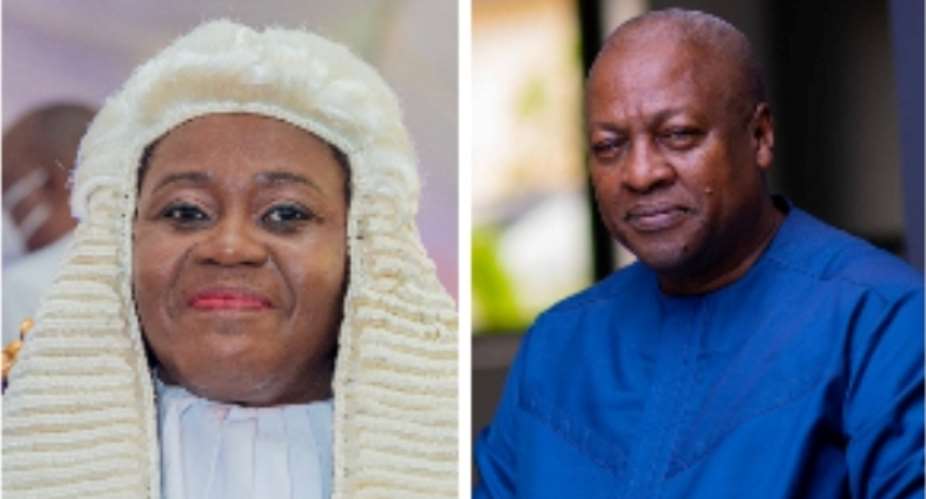
The fight against corruption remains one of the most significant challenges in Ghana's democratic journey. Left unchecked, corruption undermines public trust, stifles development, and erodes the moral fabric of governance. Recent debates have sharpened the focus on the judiciary's role in this battle, with increasing calls for comprehensive reforms and systemic anti-corruption measures to bolster accountability and ensure justice.
The Role of the Judiciary in Anti-Corruption Efforts
The judiciary serves as the cornerstone of justice in any democracy. Its independence and impartiality are critical to ensuring fairness, accountability, and the rule of law. However, in Ghana, concerns about the judiciary's perceived partisanship have cast a shadow over its ability to remain a neutral arbiter, particularly in politically sensitive corruption cases.
Critics argue that perceived affiliations with political parties could compromise the judiciary's credibility. Alleged biases weaken public trust and embolden corrupt actors to act with impunity. As one observer aptly noted, “Justice must not only be done but must be seen to be done.” Addressing these perceptions is imperative to restoring confidence in Ghana’s judicial system.
Without a judiciary that commands public trust, the prosecution of high-profile corruption cases risks being undermined. Immediate action is needed to safeguard judicial independence, transparency, and impartiality.
Legal Processes for Judicial Reforms
To address these concerns, Ghana must adopt legal frameworks and internationally recognized best practices to guide judicial reforms. Key measures include:
1. Adherence to the Bangalore Principles of Judicial Conduct:
These global standards emphasize independence, impartiality, integrity, propriety, competence, and diligence. Incorporating these principles into Ghana’s judicial code can elevate ethical standards within the judiciary.
2. Establishment of a Judicial Oversight Body:
An independent entity tasked with monitoring judicial conduct, investigating misconduct allegations, and ensuring ethical behavior would greatly enhance accountability and transparency.
3. Transparent Appointment Processes:
Ensuring judges are selected based on competence, integrity, and merit can mitigate perceptions of political influence. Public vetting processes and the adoption of clear selection criteria would bolster public confidence.
4. Mandatory Asset Declarations:
Judicial officers should periodically declare their assets to deter corruption and enhance transparency.
5. Regular Training and Capacity Building:
Ongoing professional development focusing on judicial ethics, anti-corruption laws, and international best practices can strengthen judges' ability to handle complex corruption cases.
Systemic Anti-Corruption Reforms
Judicial reforms must be accompanied by broader systemic changes to combat corruption effectively. Key recommendations include:
1. Institutional Independence:
Anti-corruption bodies, such as the Office of the Special Prosecutor (OSP), must operate without political interference, ensuring impartial investigations and prosecutions.
2. Whistleblower Protections:
Strengthening legal protections for individuals who expose corruption encourages citizens to participate in the fight against graft without fear of retribution.
3. Transparency in Governance:
The government should adopt open governance practices, such as publishing financial disclosures and procurement contracts, to deter corrupt practices.
4. Public Education:
Raising public awareness about anti-corruption laws and the importance of accountability fosters a culture of zero tolerance for corruption.
A Call for Unity and Accountability
To achieve meaningful progress, every stakeholder must actively contribute to Ghana’s anti-corruption efforts. This includes the executive, legislature, judiciary, civil society, and the general public. By aligning efforts and addressing concerns about judicial impartiality, the nation can collectively reinforce the principles of equity and justice.
Judicial impartiality must remain a priority in these reforms. The perception of bias—whether real or imagined—damages public trust and undermines the fight against corruption. Implementing transparent processes, such as judicial monitoring and ethical training, will strengthen the judiciary’s standing and Ghana’s governance as a whole.
Conclusion
Ghana’s battle against corruption is at a crossroads. Judicial reforms and comprehensive anti-corruption measures must work in tandem to restore public trust and safeguard the nation’s democratic ideals. The judiciary’s integrity and the effectiveness of Ghana’s anti-corruption frameworks are not just domestic concerns—they symbolize Ghana’s commitment to equitable governance on the global stage.
The time to act is now. As one leader famously declared, “The arc of the moral universe is long, but it bends toward justice.” For Ghana, ensuring this arc bends toward transparency, fairness, and a corruption-free society is not just an option—it is a necessity.
Retired Senior Citizen
Teshie-Nungua


 Obuasi SHTS sex scandal: Parliament Gender committee demands full accountability
 Some NDC MPs didn't vote for me; NPP votes made me Speaker in 2021 – Bagbin
 Ghana Armed Forces to hold land combat firepower demonstration at Bundase on Oct...
 Gambia to pay victims of Yahya Jammeh’s rule from proceeds of his seized US mans...
 Kolgo Paramount Chief questions 24-hour economy market without security
 'ABFA utilisation data excluded from PIAC's report not withholding of informatio...
 Obuasi SHTS sex scandal: Manasseh never said headmaster is a rapist - Brako-Powe...
 Obuasi SHTS sex scandal: GES to ban teachers from inviting students to bungalows...
 UG directs students with CGPA below 1.00 to go home
 Uganda Revenue Authority delegation visits TOR to understudy Ghana’s oil refinin...



Comments
An erudite, thought-provoking article! Ghana's judiciary needs a complete overhaul, and URGENTLY! However, the huge elephant in Dramani Mahama's room is HOW to get rid of the Chief Justice, Gertrude Torkornoo, who is obviously not up to the job, in order to carry out the badly needed reform of the judiciary. Dramani Mahama's best bet is to seek counsel from Tsatsu Tsikata and former Chief Justice Sophia Akuffo about the best way to reform Ghana's judiciary so that citizens can get the justic...