




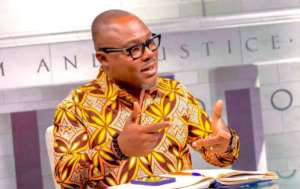
The Political neutrality, like the mythical philosopher’s stone, is often paraded as the golden standard of intellectual integrity. Yet, history tells us that those who claim to be politically neutral are often the most politically entrenched. The recent appointment of Prof. Ransford Gyampo, a vocal critic of the government, as the CEO of the Ghana Shoppers Authority resurrects an age-old question: Can an academic who has spent years scrutinizing the political system truly detach himself from political inclinations when placed in the corridors of power?
History’s Verdict: No One Is Truly Neutral
History has been unkind to those who posture as politically neutral. Aristotle argued that “man is by nature a political animal,” emphasizing that every individual, whether consciously or unconsciously, is aligned with a political ideology. Mahatma Gandhi, despite his commitment to non-violence, never pretended to be politically neutral—he was unapologetically for the downtrodden and against imperial rule. Martin Luther King Jr. warned against the “appalling silence of the good people,” cautioning that neutrality often becomes an endorsement of the status quo.
Academia and the Masquerade of Impartiality
Today’s scholars, particularly those in political science, love to wear the mask of objectivity while being deeply immersed in ideological battles. From Harvard to Legon, from Oxford to Yale, intellectuals have historically played advisory roles in shaping governance structures. Yet, many continue to peddle the illusion of neutrality. In Ghana, we have seen academics who lambast governments when in opposition but, once offered a comfortable seat, morph into staunch defenders of the establishment.
Prof. Gyampo: From Critic to Executive
Prof. Gyampo’s appointment is an ironic twist in Ghana’s democratic narrative. Once a fierce critic of governmental appointments, he now finds himself wearing the same shoes he previously ridiculed. His acceptance is neither the first nor the last of such transitions, but it underscores the double standards often exhibited by public intellectuals. The question is: Was his past criticism a genuine pursuit of national interest, or was it a calculated move to position himself for an appointment?
The Dance of Political Deniability
Political scientists like Harold Lasswell argued that politics is about “who gets what, when, and how.” In Ghana, academics often denounce political patronage but conveniently accept appointments when they are the beneficiaries. They weave intricate narratives to deny their own political leanings, yet their actions speak louder than their academic papers. Political deniability is a game, and Ghanaian intellectuals play it masterfully.
The Trojan Horse of Intellectual Activism
Many scholars engage in fierce activism, not necessarily for the good of the nation but to create leverage for themselves. Niccolò Machiavelli, in The Prince, warned about those who criticize from the outside only to seize power and act no differently from their predecessors. This cycle repeats itself in Ghana, where vocal critics of government policies suddenly lose their voices when given a seat at the table.
A Brief History of Political Co-optation
Political co-optation is as old as politics itself. In ancient Rome, Julius Caesar strategically brought critics into his administration, silencing their opposition. Kwame Nkrumah did the same, integrating former adversaries into his government. In modern Ghana, governments have mastered this technique, appointing influential critics to neutralize dissent. Prof. Gyampo’s case is merely the latest in a long line of such political maneuvers.
Democracy and the Smartness Game
Democracy in Ghana is no longer a contest of ideas but a game of strategic positioning. Public intellectuals play both sides, ensuring that no matter which party wins, they remain relevant. This game of smartness is evident in how critics navigate their public discourse, ensuring they are never too antagonistic to rule themselves out of future appointments.
The Erosion of Academic Integrity
Once upon a time, academia was the last bastion of independent thought. But today, intellectual independence is often traded for political convenience. As Plato warned in The Republic, when scholars become too entangled in the affairs of the state, they risk losing their credibility. Ghanaian academia now risks becoming a mere extension of the political elite, where scholarship is wielded not for truth but for personal ambition.
Selective Outrage and the Politicization of Criticism
The Ghanaian academic space has become a terrain of selective outrage. Some scholars remain loud critics only when their preferred party is in opposition, but once their friends assume power, they suddenly find reasons to be silent. This hypocrisy is what frustrates genuine reformers and erodes trust in intellectual discourse.
Lessons from Global Intellectuals
Across the world, intellectuals have shaped politics, but the best ones never pretended to be neutral. Noam Chomsky, for example, openly critiques U.S. foreign policy without hiding his ideological leanings. John Maynard Keynes advised governments openly, shaping economic policies without denying his political preferences. Ghanaian scholars should take a lesson from these figures: intellectual honesty is more respectable than feigned neutrality.
The Role of Public Intellectuals in a Democracy
A true public intellectual serves as a watchdog, not a political opportunist. Walter Lippmann, a key figure in political journalism, argued that democracy needs informed critics, not hidden partisans masquerading as neutral observers. Ghana’s democracy will benefit more from scholars who acknowledge their biases and work transparently rather than those who claim neutrality while engaging in political machinations.
Will Prof. Gyampo’s Stance Change?
Now that Prof. Gyampo is within the establishment, will he maintain the same energy in critiquing the system? History suggests that his tone may soften, his criticisms may become more measured, and his defenses of government actions may increase. His appointment will be the ultimate test of whether he was truly independent or simply waiting for his turn.
A Call for Intellectual Consistency
The crisis of Ghanaian democracy is not just in politics but in the intellectual class that refuses to be consistent. If scholars want to engage in governance, they should do so with honesty, not deception. It is time for academics to declare their stances openly rather than playing both sides for personal gain.
Conclusion: Beyond the Façade of Neutrality
The illusion of political neutrality in Ghana is a carefully curated deception. As history, philosophy, and political science have shown, no one is truly neutral. Prof. Gyampo’s case should be a lesson that intellectuals must either embrace their political affiliations or stay true to their academic duties without hidden agendas. Democracy thrives on truth, and truth requires honesty—not the perpetual pretense of neutrality.
ZAKARI GUA JNR. a.k.a Scorpio 🦂
SECURITY AND JUSTICE ADVOCATE
Email: [email protected]

 Obuasi SHTS alleged sexual abuse: Kwasi Kwarteng criticises Education Minister o...
 ECOWAS’ $250,000 flood relief donation arrives in Ghana – Ablakwa
 Kennedy Agyapong has not resigned from NPP – Kwasi Kwarteng
 State failure, not GoldBod, driving galamsey – Daryl Bosu
 A Rocha Ghana raises alarm over human rights abuses in mining communities
 ECOWAS, AfDB discuss ways to advance West Africa’s development priorities
 October 16: Cedi gains against dollar, sells at GHS12.25 on forex market, GHS11....
 Galamsey: Ghana’s rivers now run chocolate and milk colour — Sam Jonah
 A nation of job-seekers will always be poor — Sir Sam Jonah
 “If you attack us with pepper spray, we’ll fight back” — NDC Yakubu Tony Aidoo w...


