




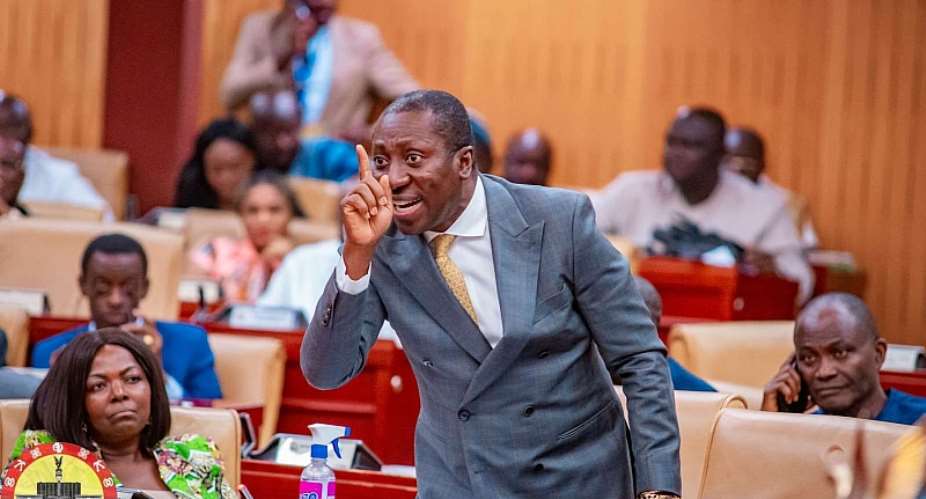
Hon. Alexander Afenyo-Markin’s claim that NDC Members of Parliament (MPs) would become redundant under a potential John Dramani Mahama administration, due to the decision to appoint only 60 ministers, misses a crucial point. The effectiveness of MPs is not tied solely to ministerial roles but to their legislative, oversight, and representative functions. Rather than leading to redundancy, this approach offers a unique chance to refocus parliamentary efforts on governance and accountability.
In every well-functioning democracy, the primary role of MPs is to represent their constituents, shape laws, and hold the executive accountable. Ministerial appointments, while significant, are not the only avenues through which MPs can contribute meaningfully to national development. Historically, MPs who double as ministers often struggle to balance executive duties with legislative responsibilities. By limiting the number of ministers, MPs will have more time to concentrate on parliamentary business, ensuring a more active and engaged House.
This change will also reinvigorate parliamentary committees, which are vital to policy development and oversight. Committees offer MPs a platform to influence national policy beyond executive roles. With fewer MPs serving as ministers, committees will be strengthened by greater participation and dedication. Effective committee work is essential for scrutinizing government activities and ensuring that policies are well thought out and beneficial to the public.
Moreover, fewer ministerial appointments create an opportunity for MPs to build stronger connections with their constituents. Without the distraction of executive duties, MPs can focus more on constituency needs, advocating for local development and addressing pressing concerns. This approach enhances parliamentary representation, ensuring that decisions made in Parliament are grounded in the realities faced by ordinary citizens.
Perhaps the greatest advantage of a leaner government is the strengthening of parliamentary independence. A reduced number of MPs in ministerial positions limits the executive’s influence on the legislature, ensuring that Parliament can exercise its oversight role effectively. This separation of powers is fundamental to good governance, promoting transparency, accountability, and fairness in the management of national affairs.
Contrary to fears of redundancy, this shift presents a golden opportunity for new leadership to emerge within Parliament. MPs will have more room to demonstrate their competence through legislative contributions, committee work, and constituency engagement. Rather than merely aspiring to be ministers, MPs can distinguish themselves by championing important national issues and driving legislative reforms.
Hon. Afenyo-Markin’s view fails to recognize the long-term benefits of a smaller, more focused executive. A government that prioritizes parliamentary efficiency and constituency representation is more likely to deliver on its promises. Far from sidelining MPs, this approach empowers them to focus on their constitutional mandate, strengthening democracy and improving governance.
In sum, fewer ministerial appointments under a potential Mahama government would not result in parliamentary redundancy. On the contrary, it would create a more dynamic and effective legislative body, where MPs can thrive in their roles as lawmakers, overseers, and representatives. This is a bold and necessary step toward a more accountable and responsive governance system—one that prioritizes national interests over executive expansion. Rather than redundancy, it is an opportunity for Parliament to rise to its true potential.


 Government targets GH¢15.38bn domestic financing in Q4 to support 2027 bond buyb...
 Obuasi SHTS sex scandal: GES to ban teachers from inviting students to bungalows...
 Adwoa Safo to contest Dome-Kwabenya parliamentary seat again
 UG directs students with CGPA below 1.00 to go home
 Uganda Revenue Authority delegation visits TOR to understudy Ghana’s oil refinin...
 Attorney-General appeals ruling halting trial of former Buffer Stock CEO, wife
 NAIMOS destroys 1,970 changfans, 863 Illegal mining structures in three months —...
 Let's see how Asiedu Nketia becomes NDC flagbearer with same people he conspired...
 Obuasi SHTS sexual abuse: 'GES must distant itself, allow the law to work' — For...
 Upper East: Fear grips nine Kusaug communities over mysterious fish deaths in da...



Comments
Great 👍