




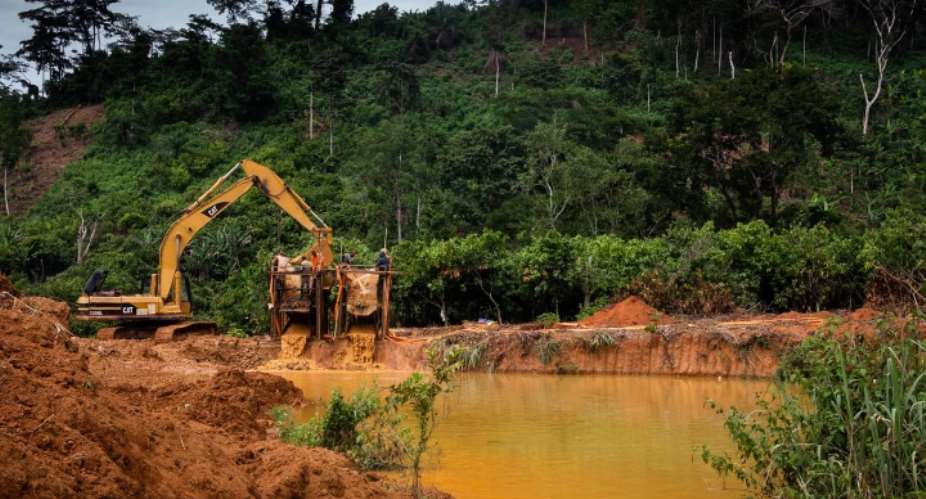
A group of women known as Women in Forestry have expressed their displeasure at the rampant mismanagement of the country's natural resources, including the destruction of water bodies and forest reserves. At a workshop in Kumasi, these women voiced their concerns about how forest reserves, water bodies, and conservation sites have been allocated for mining and other extractive activities, which they believe will have dire consequences for the nation, especially for those living in nearby communities.
During a plenary session, one member recounted a harrowing experience where she and her mother nearly died from cyanide poisoning after consuming cassava bought from a different region. "Who would have thought that cassava from a distant region could poison us? This highlights the need for nationwide concern about illegal mining, or galamsey, regardless of location," she said. A test at the Food and Drugs Authority (FDA) revealed that the cassava was contaminated with cyanide from a mining area where it was cultivated.
Other participants blamed regulatory bodies and security agencies for issuing licenses for mining in reserves and conservation sites and for compromising with illegal miners. They argued that rural poverty significantly contributes to community members' involvement in destructive illegal mining and called on the government to initiate livelihood improvement projects in such areas.
The group expressed their willingness to join Women in Timber in demonstrating against the government over the issuance of licenses for mining and timber harvesting in reserves.
The workshop, organized by the Rights and Advocacy Initiative Network (RAIN) in collaboration with the Taylor Crabbe Initiative and Client Earth, brought together women from various sectors of the forestry and conservation industry, including Civil Society Organizations (CSOs), academia, and the media.
Madam Doreen Asumang-Yeboah, Director of RAIN, stated that the workshop aimed to build the capacity of women in the industry to enable them to play their roles at various levels in the conservation of nature. She challenged the women to be actively involved in protecting conservation sites and forests from destruction, emphasizing their importance to human lives.
Madam Ernestina Owusu Banahene, President of Women in Timber Ghana, informed the participants about an impending demonstration to protest the conversion of conservation sites into mining and timber harvesting areas. She called on all women to join the demonstration as their contribution towards conserving nature.
Albert Agyepong, a legal practitioner at the Taylor Crabbe Initiative, briefed participants on the new European Union Deforestation Regulation (EUDR), which requires products entering the EU market to meet certain conditions, including proof of production free from deforestation and child labor. He noted that the major challenge for countries like Ghana is the practical definition of terms such as deforestation and child labor. "It is non-negotiable. It is about what the EU wants because it is their law, and you either agree to their terms and definitions or keep your products," Mr. Agyepong stated.
The workshop also included sessions on mental health and gender-based violence.

 Education breaks prison chains: Senior Correctional Centre inmates score 100% pa...
 Sosu calls for probe into $260m cocaine shipment from Ghana seized in France
 Owusu Bempah has no power to stop Bawumia from becoming President – Kwadaso MP
 22-year-old lynched after allegedly murdering farmer, butchering chief at Offins...
 "God did not call you to lift your shoulders!” — Dr. Godfred Andoh blasts pride ...
 Thousands attend Kenya opposition rally amid anger over political violence
 Trump slams AI sceptics as Altman pauses OpenAI IPO plans over safety concerns
 WASSCE: School officials helped students cheat for years, but we now see the tru...
 Probe alleged military killing of lecturer in Bawku – Kusaug Youth demands
 Police interdict officer over death of 23-year-old Ivan Baidoo on Tema Motorway


