




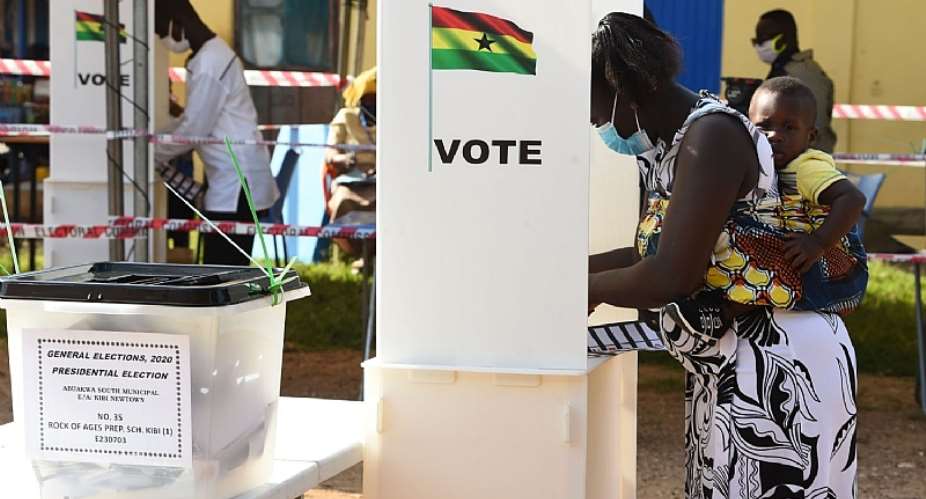
The issue of vote-buying in Ghanaian elections is deeply troubling, as noted by Nana Kobena Nketsiah V, the Omanhene of Essikado Traditional Area. Instead of engaging in the exchange of party philosophies and ideas for the continuous improvement of Ghana, a disturbing trend of political slavery has taken center stage. It is evident that politicians and political parties in Ghana are facing a deficit of innovative ideas, resorting to the purchase of votes as a means to secure power. This raises serious questions about the moral compass of both the politicians involved in such practices and the electorate accepting monetary inducements for their votes.
The lack of decisive action by law enforcement agencies witnessing vote-buying during elections adds another layer of concern. Granting power based on the ability to bribe voters, rather than assessing competencies and delivery capabilities, poses a significant threat to the present and future generations.
Vote-buying in Ghana’s elections goes beyond being a mere concern; it holds the potential to inflict severe consequences on the democratic process and the overall health of the political system. This practice undermines democratic values, compromising the fundamental principle that elections should genuinely reflect the will of the people. When voters accept monetary incentives in exchange for their votes, the electoral outcome becomes a distorted representation of the electorate’s true preferences.
Furthermore, the implications of vote-buying extend to the realm of corruption and institutional weakness. Politicians engaging in vote-buying may divert public resources for personal gain, thereby undermining institutions meant to ensure fair and transparent elections. This diversion of funds away from public services like healthcare and education further perpetuates corruption.
Besides, vote-buying leads to a shift in policy focus, as candidates prioritize short-term strategies to win votes at the expense of addressing key policy issues. This compromises the long-term development needs of the country and weakens the foundation of a robust political system.
Moreover, the social implications of vote-buying are stark, contributing to social inequality and potentially leading to unstable governance. By favouring specific groups or regions, vote-buying exacerbates existing social and economic disparities, fostering division along class lines and risking social unrest.
The erosion of trust in the political process is yet another consequence of vote-buying. When citizens perceive elections as determined by monetary incentives rather than genuine support for policies and values, trust in the democratic process diminishes and voter engagement wanes.
Addressing the issue of vote-buying in Ghana is imperative for upholding the integrity of the democratic process. Strengthening electoral laws and enforcement mechanisms is crucial, with a focus on explicitly criminalizing and penalizing vote-buying. Collaborative efforts between the Electoral Commission and law enforcement agencies should ensure strict enforcement, incorporating severe penalties for offenders.
Public awareness campaigns play a pivotal role in rectifying this issue. Launching extensive campaigns to educate citizens about the adverse effects of vote-buying is essential. Emphasizing the importance of informed choices based on policies and candidates’ qualifications rather than short-term gains should be a central message. Utilizing testimonials from respected individuals who highlight the long-term benefits of fair elections can effectively contribute to public awareness.
Technological interventions can also enhance transparency in the electoral process. Implementing electronic voting systems, biometric voter registration, and real-time monitoring can detect and prevent irregularities. Blockchain technology can be integrated to ensure the integrity of the voting process, making it more resistant to external manipulation.
Empowering civil society and independent observers is crucial. Actively involving these entities, providing necessary resources, and ensuring legal protection to monitor elections will contribute to accountability. Establishing partnerships with reputable local and international organizations for independent election monitoring will bring transparency to the forefront.
Promoting civic education is fundamental to addressing the root causes of vote-buying. Civic education programmes should prioritize creating a culture of civic responsibility and informed voting. Integrating civic education into school curricula, conducting community workshops, and collaborating with local leaders will foster a sense of civic pride and responsibility, encouraging citizens to view voting as a civic duty rather than a transaction.
In the face of these challenges, a concerted effort is required from all stakeholders to preserve the integrity of Ghana’s democratic process. By tackling vote-buying head-on, the nation can pave the way for a more transparent, accountable and participatory democratic future.


 'God will deal with all those pushing for Mahama's third term; they want to dest...
 NPP regional elections: 'It's a family affair, no violence' – Afenyo-Markin tell...
 COKA joins NPP women to fry eggs at Ashanti regional election centre
 I accept responsibility for NPP’s poor performance in Greater Accra Region – Out...
 NPP Upper West regional elections disrupted as Nandom delegates interrupt voting
 'Our election 2028 victory largely depends on candidates you are about to pick t...
 NPP regional executive elections underway nationwide
 NPP Accra Chairman Election: ‘I'll be a servant, not a boss' — Okoe Boye rejects...
 NPP Northern Regional elections: ‘No one can bribe or influence us’ – Election C...
 GRIDCo announces power interruption in parts of Accra for emergency transmission...

