




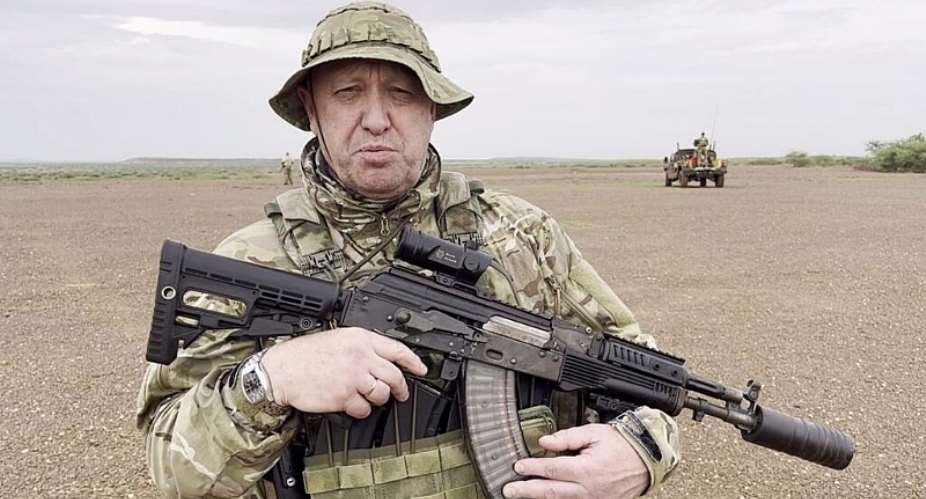
Russian mercenary chief Yevgeny Prigozhin has posted his first video address since leading a short-lived mutiny in late June. In the unverified footage published Monday, Prigozhin said the Wagner group was making Africa "freer", adding that it was also recruitung fighters.
A former Kremlin ally, Prigozhin, has made few public appearances since his failed mutiny.
The group maintains a strong military presence in Africa, where it has partnered with several nations, including Mali and the Central African Republic.
"We are working. The temperature is above 50 degrees Celsius. Just how we like it," Prigozhin said in the video, which AFP was unable to immediately verify.
The video shows Prigozhin holding an assault rifle, before panning around to reveal military vehicles parked on a large, desert-like plain.
"The Wagner Group is conducting reconnaissance and search activities. Making Russia even greater on every continent – and Africa even freer," Prigozhin said.
Fight against colonisers
Wagner's apparent activities in Africa come as tensions brew in Niger, which was rocked by a coup in July that saw its government deposed and a military junta installed.
A Russian organisation affiliated with Wagner shared a message apparently from Prigozhin, who said the events in Niger were part of the nation's fight against "colonisers".
Russian social media channels linked to the mercenary leader said Prigozhin was recruiting fighters to work in Africa and also inviting investors from Russia to put money in the Central African Republic through Russian House, a cultural centre in Bangui.
The CAR is one of the countries where Wagner's soldiers for hire have been active and accused of committing human rights abuses.
The Kremlin has used the Wagner Group since 2014 as a tool expand Russia's presence in the Middle East and Africa.
Prigozhin spent months criticizing Russia's military performance in Ukraine before he called for an armed uprising on June 23 to oust the defense minister and headed from Ukraine toward Moscow with his mercenaries.
Under a deal brokered by Belarusian President Alexander Lukashenko, Prigozhin agreed to end his rebellion in exchange for amnesty for him and his fighters and permission to relocate to Belarus.
Before moving to Belarus, Wagner handed over its weapons to the Russian military, part of efforts by Russian authorities to defuse the threat posed by the mercenaries.
Putin branded Prigozhin a traitor as the revolt unfolded and vowed harsh punishment, but the criminal case against the mercenary chief on rebellion charges was later dropped.
Unusually, the Kremlin said Putin had a three-hour meeting with Prigozhin and Wagner Group commanders days after the rebellion.
A video in July apparently showed Prigozhin in Belarus but he was photographed after that on the sidelines of a Russia-Africa summit in the Russian city of St Petersburg.
His current whereabouts are unknown.
(with newswires)

 KMA Deploys Vacuum Sweepers to Tackle Dust, Waste and Flooding in Kumasi
 UCC Probes Death of Level 200 Student Found at Hutchland Beach
 BoG Cracks Down on Crypto Dollar Wallets; Orders Banks to Cut Ties Immediately
 BoG Extends IMTO Registration Deadline to July 31 — Non‑Compliant Operators Face...
 Ato Forson Pushes for New ‘Auditors’ Court’ to Tackle Waste, Strengthen Accounta...
 Big Payout, Big Changes: MMMF Declares 30p Dividend, Endorses New Board
 C/R: Missing UCC student found dead at Hutchland Beach
 Man collapses and dies in front of pharmacy at Abura in Cape Coast
 Gov’t Should Have Anticipated Partey Visa Trouble — Asafo-Adjei Ayeh Fires
 Swiss Vote on Population Cap Sparks Fierce Immigration Debate Ahead of Sunday Re...


