




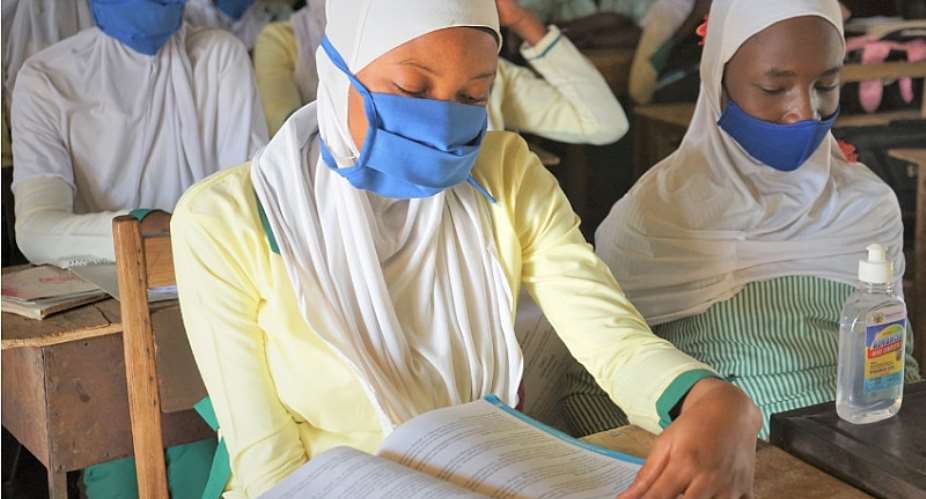
Why Do We Need School Rules and Regulations?
But before we can answer the above question let's attempt to understand why schools and organizations are established. Schools and organizations are established because a goal needs to be satisfied. Typically, when you establish a business your goal is to make profit for your shareholders and others.
Similarly, if you establish a non-governmental organization your goal is to advocate for a purpose or various goals or purposes. For example, School for Life advocates for lifelong learning while Water Aid for example, seeks to provide potable water for all in developing societies.
Thus, to achieve the goals and purposes for which an organization is established there must also be a set of rules, regulations and policies that govern how these goals would be achieved. In precolonial Africa, we had indirect rule that established the relationship between the colonial masters and African kings in areas such as land acquisition and trade, churches and schools and civil order.
The following are the importance of school rules and regulations.
To Establish Standards in Schools.
This is where the educational establishment states categorically what they want to achieve and how that would be achieved. Say example, I established a secular school in Ghana, what do I want my students to accomplish? Is it going to college? Is it ensuring that every student understands the role of religion in society? Or every student becomes a “good moral student” by upholding the standards of the constitution and the laws of the land?
Or do I want everyone to be academically superior to their peers in other schools? Or do I want every student to be a STEM student and pursue careers in only science and technology? The point here is that whatever your goal for establishing a school, your rules and regulations should provide the guidelines for school leaders and administrators to follow.
To Establish School Safety for All.
In our current era of school violence and safety, most parents and students need assurance that the school system will keep their wards safe. How do we provide school safety? The establishment of anti-hazing and bullying laws are welcomed. The establishment and enforcement of sexual harassment laws by both teachers and students are important.
This gives parents the assurance needed that academics, recreational sports and other extra-mural activities would be done safely. In Ghana, school safety is critical because when there is inclement weather most schools do not have shelter for their wards as school buildings are dilapidated. Sexual harassment laws though are available as a policy yet are hardly enforced leaving most female students vulnerable.
To Establish Accountability for All
What punishment do we recommend to those who breach school rules and regulations? Breaching school rules and regulations must carry consequences as lack of discipline impacts teaching and learning and the school social order. Establishing accountability teaches both students and teachers and administrators the importance of adherence to school rules and regulations. For example, how do educators ensure that students do not cheat during testing? What are the consequences for cheating?
How are Ghana Schools Governed?
The administration of pre-university education is under the responsibility of the Ministry of Education. The Ghana Education Service (GES) is responsible for the coordination of national education policy. The National Inspectorate Board (NIB) {currently the name of this body is under review}, the National Teaching Council (NTC) and the National Council for Curriculum and Assessment (NCCA) are autonomous bodies that assist the GES in carrying out its mandate as the sole policy implementor for the Government on matters of pre-university education.
The terminal examinations of the pre-tertiary education are conducted by the West African Examination Council (National Office, Ghana): it includes the BECE and the WASCCE but also foreign professional examination. The Council for Technical and Vocational Education and Training is dedicated to the management of TVET. Policies are implemented in cooperation with the local education offices at the Regions and Districts.
Schools in Ghana are governed by the rules and regulations of the Ghana Education Service (GES). Schools in Ghana are not governed by statutory boards or stakeholders be it a religious body or otherwise under the umbrella of the Ghana Education Service.
Schools in Ghana are not governed by adhoc rules and regulations made by elected boards. Instead, the Ghana Education Service has rules and regulations governing key educational practices but allow schools to formulate local policies in the implementation of key policies (this can be described as discretionary rules and regulations). The GES pays teacher salaries and emoluments, retirement benefits and appoints the heads of all schools in Ghana. The headteachers and headmasters are not appointed by any other organization but the Ghana Education Service.
The Importance of School Law and Policy in Ghana
More and more parents and students are suing schools and administrators today for various reasons. Some of these suites are important and some are frivolous because of lack of merit but generally important for the country to revisit the relationship between schools and GES along the following broad guidelines:
- Equity and Discrimination.
- Ethnicity and Social Mobility.
- School Governance.
- Religion and constitutional provisions.
- School Safety and Laws.
- Health and Nutrition.
- Privacy and Technology.
- School Facilities.
Specifically, what are the laws governing the operations of schools and religion, equity, diversity, and many more. Should there arise a conflict how are they laws interpreted? Who has the final say in terms of interpretations of school rules and regulations? The GES, the Courts. Stakeholders, or Religious Organizations that claim school ownership or affiliations?
So, what is the purpose of education in Ghana today?
There are varied answers as the perspectives of parents, students, educational policy practitioners may differ, but Article 25 and 38 of the 1992 Constitution which states makes it clear:
1) All persons shall have the right to equal educational opportunities and facilities and with a view to achieving the full realization of that right:
a) basic education shall be free, compulsory, and available to all
b) secondary education in its different forms, including technical and vocational education, shall be made generally available and accessible to all by every appropriate means, and, by the progressive introduction of free education
c) higher education shall be made equally accessible to all based on capacity, by every appropriate means, and by progressive introduction of free education.
d) functional literacy shall be encouraged or intensified as far as possible
e) the development of a system of schools with adequate facilities at all levels shall be actively pursued.
2) Every person shall have the right, at his own expense. To establish and maintain a private school or schools at all levels and of such categories and in accordance with such conditions as may be provided by law.
Article 38
- The State shall provide educational facilities at all levels and in all Regions of Ghana, and shall, to the greatest extent feasible, make those facilities available to all citizens.
- The Government shall, within two years after Parliament first meets after the coming into force if this Constitution, draw up a program for implementation within the following ten years, for the provision of free, compulsory, and universal basic education.
- The state shall, subject to availability of resources provide:
- Equal and balanced access to secondary and other appropriate pre-university education, equal access to university or equivalent education, with emphasis on science and technology
- A free adult literacy program, and a free vocational training, rehabilitation, and resettlement of disabled persons and
- Life-long education.
Thus the 1992 Constitution makes is clear that regardless of your religious affiliation you have the legal rights to education. That is “All persons shall have the right to equal educational opportunities and facilities and with a view to achieving the full realization of that right.”
Unfortunately, our current framework for educational practice and governance seems to be oblivious to these basic human rights of all in Ghana.
The purpose of education in Ghana is not to make a Christian out of animist Ghanaians or Muslims out of traditional Africans but rather to preserve and protect basic human rights and equal opportunity to pursue education. Thus, the purpose of education is to make every child a good civic citizen, who is a contributing member of the society and an active member of society who is equipped through the school system to be fair and just to all, respect the laws of the land and contribute to the wellbeing of society.
The policy guidelines and frameworks are very clear so why is it difficult to implement? Some have decided to flaunt the rules and regulations provided by the Ghana Education Service and to wallow in ignorance under the pretense of religion. The State and Church are separate for a reason as enshrined in the Constitution. All school administrators should have a basic understanding of school laws and policies governing school and religion, school safety, discipline, equity and discrimination, privacy and technology, dress codes, and ethical practices all designed to ensure equal opportunities for all.
Dr. Augustine M. Amenyah
Education Practitioner
Montgomery, Alabama
USA

 Contractors begin construction of 120-bed trauma hospital at Bole – Kwakye Ofosu...
 Gov’t procurement must prioritise local farmers for school feeding – Dr. Ato For...
 Vacate by October 4 or face demolition – KMA warns Abrepo Junction occupants
 Star Oil and GOIL assure no fuel price increase for new window
 Diesel will not hit GH¢22 at pumps – NPA CEO assures
 Ghana records 3,876 cybersecurity incidents in seven months – Communications Min...
 “We never knew life was going to be hard like this in Ghana; we can’t even get j...
 $1.17bn GoldBod gave BoG is repayment, not new money’ – Dr. Gideon Boako
 Baffour Awuah didn’t help his case if he ignored EOCO’s invitation – Appiah Danq...
 Carlos Queiroz leaves Black Stars role after poor AFCON qualifying start


