




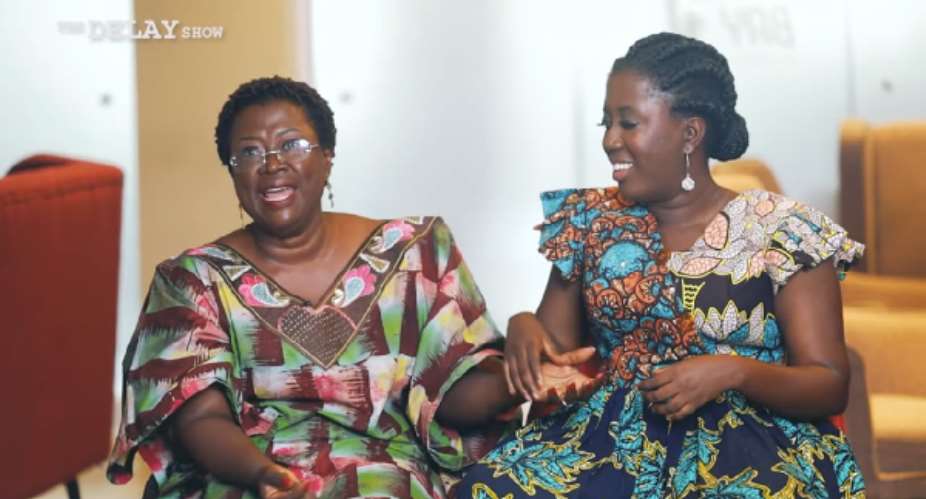
It was both deeply heartwarming and profoundly moving to watch Nana Yaa and her mother sit across from Delay on television, sharing the unvarnished reality of their autism journey. However, beneath the warmth of their embrace lies a sobering truth about the society they navigate daily—a reality that turns a mother’s love into an act of quiet, daily heroism.
The Weight of Rejection and the Courage of Acceptance
In many traditional Ghanaian households, the birth of a neurodivergent child is met not with support, but with a paralysing fear of "what people will say." Burdened by deeply entrenched social stigmas, many families choose the path of least resistance: they shun, maltreat or hide their children away as though disability were a generational curse. Others exhaust themselves chasing fraudulent "cures", or retreat into denial, refusing to accept a narrative that does not fit their ideal blueprint.
Nana Yaa’s mother chose a vastly different, infinitely harder path. This was not the future she envisioned or planned for, yet she chose her daughter anyway. She takes Nana Yaa out into a judging world, walks beside her proudly, and wraps her in open, uninhibited affection.
Yet, the most heartbreaking moment of the interview arrived when her mother whispered a devastating prayer: that she might die alongside her daughter, just to spare Nana Yaa from the cruelty of the world left behind.
The Weaponisation of Piety, Beliefs, and the Cult of Optics
That maternal fear is far from unfounded. It stems from a grim awareness of how merciless public scrutiny can be. The way some segments of Ghanaian society weaponise mockery—targeting everything from physical disabilities and mental health challenges to different personal beliefs—is a cultural crisis that demands urgent introspection.
What makes this cruelty especially jarring is its paradox. While it is rarely seen among communities holding other beliefs, many of the individuals who engage in public shaming, gossip, and malicious ridicule proudly identify as devout Christians or Muslims. Yet, this outward piety often masks a profound vacuum of basic human empathy. True righteousness is replaced by self-righteousness, where judging others is perversely viewed as a moral virtue that elevates the gossip's own status. In extreme cases, this lack of pity extends even within households, where parents sacrifice their own children's emotional and physical well-being on the altar of public approval.
A Narrow Escape from Tragedy
If Nana Yaa had been born into a home where social optics were prized above all else—where the family name, neighbourhood gossip and outward appearances mattered more than human dignity—her story would have unfolded as a tragedy.
Instead, because of a mother who dared to choose love over reputation, Nana Yaa’s story is one of profound resilience. Her mother’s unwavering stance stands as a fierce indictment of a society that values conformity over compassion, proving that the truest form of grace is found not in hollow religious labels, but in standing resolutely by the vunerable.
Link to the interview :

 Don't be a Bar that flips on principles but a Bar that is consistent — AG tells ...
 24-hour economy market projects poorly planned, lacks consultation – Minority
 Stan Dogbe orders Greater Accra Regional Coordinating Council to restore Kpeshie...
 Police probe mysterious death of popular primary school teacher at Ampabame No. ...
 NACOC arrests three members of ‘Bolle Jos’ Network over French cocaine seizure
 Regular sex is not prostate cancer prevention — Urologist cautions
 Bawumia will use digitalisation to create opportunities for youth – Afenyo-Marki...
 NAPO calls for improved systems to address SHS placement concerns
 Bawumia listens to NASTAG concerns, outlines strategic agricultural transformati...
 Laboma Beach demolition leaves businesses counting losses


