




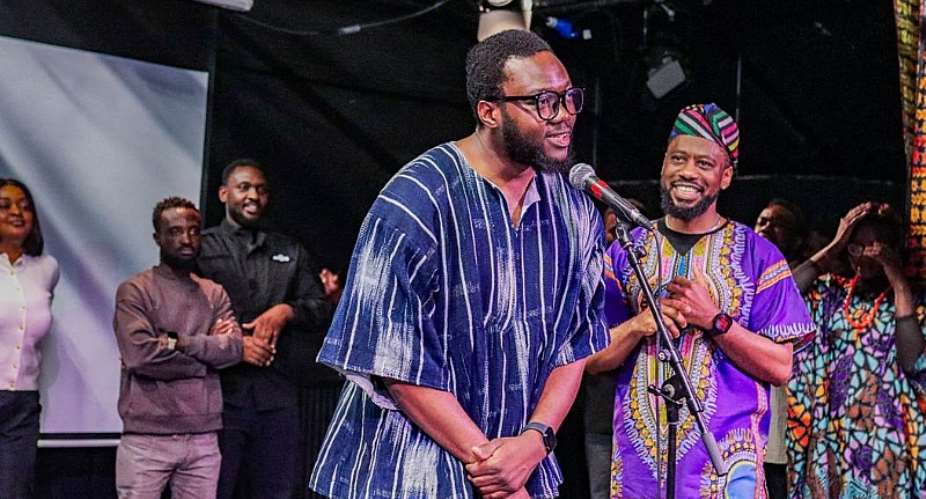
A Ghanaian-led organisation just made Bradford, UK, stop and pay attention. And it did it with a sold-out house, a full cast, and a story every African knows.
On Wednesday evening, ReachArts Network CIC was launched with a debut production that those who witnessed will not quickly forget. The audience, made up of people from different ethnic backgrounds, sat together in Theatre in the Mill to witness something that does not happen often in British arts. A new African-led arts and culture organisation stepped onto a major institutional stage for the first time, leaving no doubt in the minds of those present in the theatre and those who streamed online beyond the borders of Bradford about what it had come to do.
That production was Joseph: Pit to Palace, a multidisciplinary live experience reimagining the biblical story of Joseph through the lenses of migration, African cultural identity, and human resilience.
Co-written by Damilola Oligbinde (Ifenla) and Kelvin Edinam Amevor, and directed by Amevor, the drama highlighted African cultural identity and was performed in modern language for even younger generations. Curated and produced by Carl Dovi, who also performed as Joseph's father in a Ghanaian fugu, the production brought together a Bradford-based Nigerian and Ghanaian cast, many of them students with a growing interest in the creative economy, alongside live music, dance, and live painting to create a fully immersive experience.
The role of Joseph was played by Damilola Oligbinde (Ifenla), a woman in a bold departure from tradition that carried real artistic purpose, opening the story of displacement and rise to anyone who has lived it, regardless of gender.
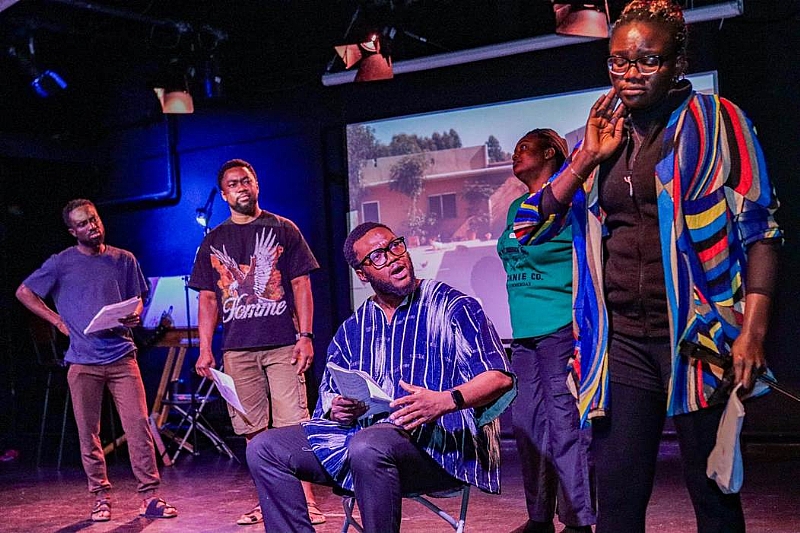
The production did not stop at one bold casting decision. In the original biblical narrative, Potiphar is a man and his wife a woman. Here, that was flipped: Elizabeth Hansen played Potiphar and Daniel Okezue her husband, a quiet but pointed provocation about power and who holds it. Rotimi Olorunfemi brought the full weight of Nigerian culture onto the stage, arriving as the King in traditional royal regalia that commanded the room before he spoke a word. Nigerian members of the audience sat up a little straighter. That is what representation does.
Comfort Obiribea, James Baafi, and Nana Agyei played Joseph's siblings with a natural chemistry that made the betrayal sting. Desmond Boahene Bilson and Nana Sagoe gave the prison scenes genuine humanity. Anthonio Ghattie, as the guard, was one of the most warmly received performances of the evening, moving between comedy and intensity with real ease and supported ably by Ezekiel Nortey Noi.
Tope Dada's live music completed the drama at every moment language ran out, while Ruth Agbolade painted live throughout, her canvas growing alongside the production and visualising the concept of increase at the heart of Joseph's story. The result was a fully immersive experience where every art form earned its place.
In the room were also major arts and culture practitioners who expressed admiration for the production and believe the organisation has come at the right time, and they look on with the desire to have more.
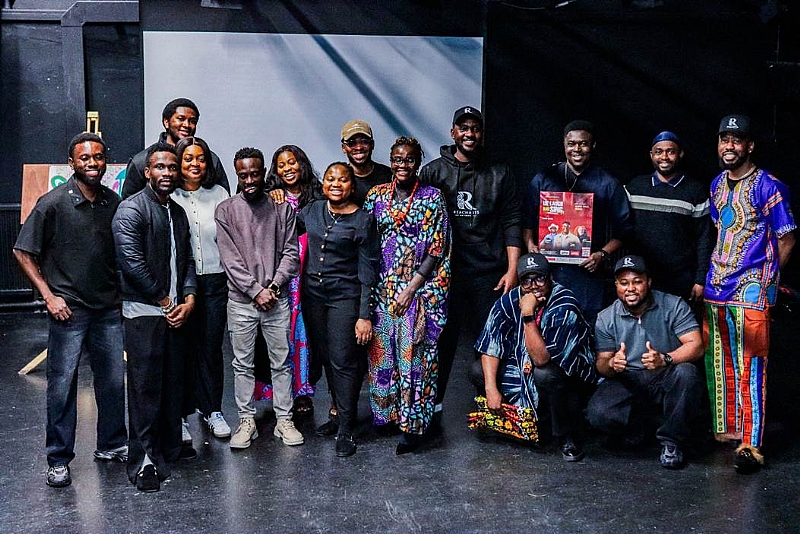
Image 2: A group photo of cast members and officers of the ReachArts Network
ReachArts Network CIC is a Bradford-based community interest company founded by Ghanaian cultural producer Carl Dovi, with a mission to bring African and diasporan heritage arts into mainstream British cultural life, not as occasional guest programming, but as a sustained and institutionally credible presence.
Dovi, who holds an MSc in Project Planning and Management from the University of Bradford and has built a career spanning arts and culture production and community development across both Ghana and the UK, established the organisation from a conviction that African communities in Britain have stories worth telling, artists worth platforming, and audiences worth serving.
Operating at the intersection of professional arts production, creative talent development, and community engagement, the organisation ambitiously plans to host an African Culture Villa as a public celebration of Ghanaian and African culture timed to the Ghana vs England fixture in June 2026, Footprints in Reverse (a combined arts production that explores African migration and what it means to carry culture across borders without losing yourself), Sagrenti War (a theatre production in partnership with Centre for National Culture, Kumasi, Ghana telling the story of the war between the Ashanti people and the British Empire) and in August 2027, the celebration of one of Ghana's most prestigious cultural festivals in Bradford, the first of what it intends to become a permanent annual tradition.
In a conversation after the show, Dovi said his goal is to bridge the gap in African cultural representation in the UK. “In ten years,” he said, “Bradford should be producing the world leaders contributing to the UK’s creative economy and will be a place people travel to specifically for African culture. That is not a vision statement, but our key programme.”

 Speaker Bagbin adjourns Parliament indefinitely after rejecting narcotics probe ...
 Food Buffer Stock seeks stronger liquidity buffer despite record GH¢91.7 million...
 Ex NAFCO Boss trial: Court adjourns trial to hear application for return of seiz...
 Bagbin backs Mahama’s call for national dialogue on social media insults
 Speaker Bagbin got it wrong by rejecting our narcotics inquiry motion - Afenyo M...
 National conversation should not become an exercise in suppressing dissent — Bag...
 ‘Don’t reward only bitter tongues, it encourages others to copy’ – Bagbin tells ...
 We have cut cost of capital by more than half since Mahama took office – Ato For...
 Customs intercepts three firearms, 610 rounds of ammunition at Tema Port


