




The implementation of the Feed Ghana Programme has contributed to a sharp reduction in food inflation, from 28.3 per cent in January 2025 to 2.2 per cent in April 2026.
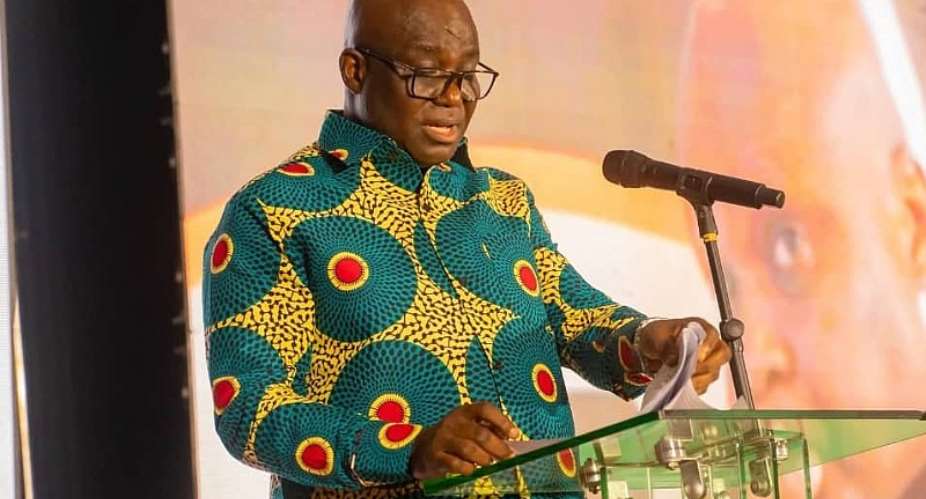
The Minister of Food and Agriculture, Mr Eric Opoku, noted that the reduction followed increased domestic food production under the programme, which was introduced to strengthen food security and reduce Ghana’s dependence on imported food commodities.
He made this statement at an agricultural engagement in the Upper East Region on Friday.
According to him, Ghana was importing rice and maize to supplement local production when the government assumed office, following major disruptions to farming caused by floods and prolonged dry spells.
He said the situation contributed to high food prices, with food inflation reaching 28.3 per cent in January 2025.
“After one year of the implementation of the Feed Ghana Programme, food inflation reduced to 2.2 per cent in April 2026,” he said.
The minister noted that the April 2026 figure was the lowest food inflation rate recorded in the country’s history.
He added that the latest inflation figures released by the Ghana Statistical Service showed overall inflation had fallen to 4.6 per cent, driven largely by declining food prices.
He said the figures demonstrated the contribution of farmers to stabilising food prices and improving the country’s food security.
“A clear indication is that Ghanaian farmers have contributed to bringing down food inflation in our country,” he said.
The Feed Ghana Programme encourages broad participation in agriculture, including school farming, faith-based organisations, state institutions and other entities.
The Minister said the programme was designed to increase domestic food production while creating opportunities for farmers to earn sustainable incomes from agriculture.
He said the government had also identified the Upper East Region as Ghana’s vegetable production hub because of its potential for year-round farming.
Under the initiative, 500 hectares at the Kono Irrigation Site have been earmarked for tomato production, while a special tomato production programme is being implemented in 130 communities across 35 districts.
Farmers registered under the tomato programme are expected to receive a sub-loan of GH¢20,000 per acre. Of this amount, GH¢1,200 will cover insurance.
The Minister said the insurance arrangement would provide farmers with compensation of up to GH¢50,000 if their farms were destroyed by a disaster.
He said government was also working with financial institutions and buyers to provide guaranteed markets for farmers and reduce post-harvest losses.
“Post-harvest losses in Ghana cost us $2 billion annually, equivalent to 30 per cent of all our agricultural produce,” he said.
He explained that buyers engaged by the Ministry of Food and Agriculture would work with farmers and purchase their produce after harvest, helping to prevent food from being left to rot because of inadequate markets.

 Mahama summons TDC, TMA officials over disputed Tema development project
 Govt disburses GH¢23.1 billion to clear road contractors' arrears - Roads Minist...
 Mahama commissions Paga SHS E-Block
 Ghana to expand pharmaceutical manufacturing capacity - Mahama
 Wiawso College of Education student produces raincoat and umbrella from empt wat...
 We will hold referendum on proposed constitutional amendments in 2027 - Mahama
 Roads Minister announces 267km of road projects for Upper East Region
 Feed Ghana Programme drives sharp fall in food inflation to 2.2% — Agric Ministe...
 Government to establish Ghana Scholarships Authority to improve scholarship admi...
 Legal vacation trials: ‘Where is the constitutional violation?’ – Prof Azar quiz...

