





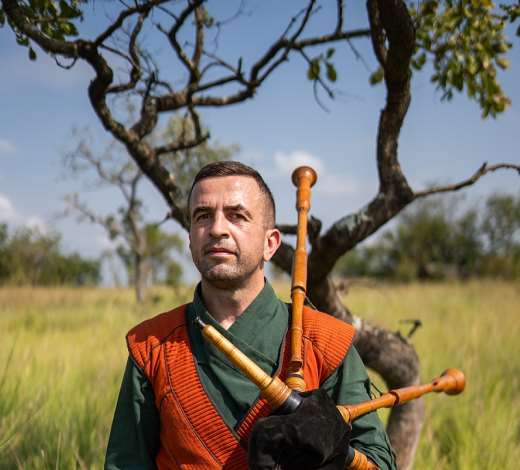
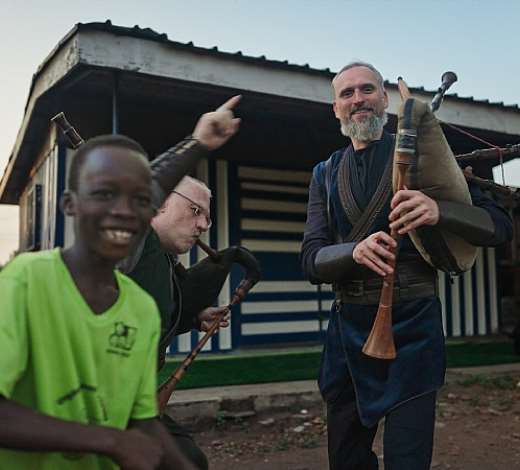
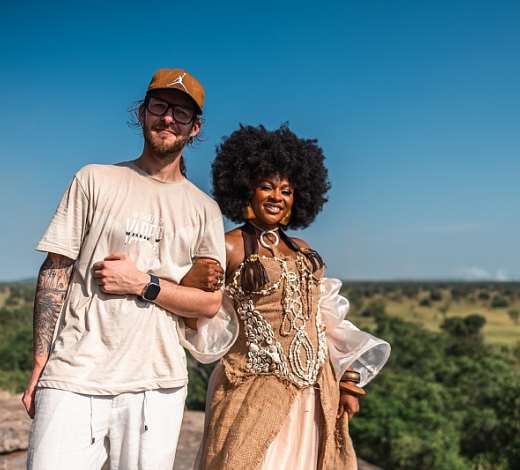
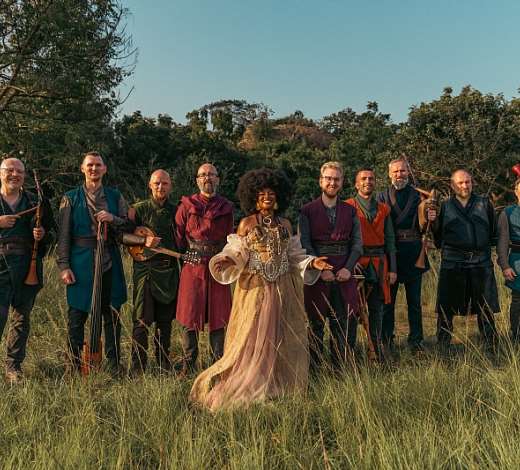
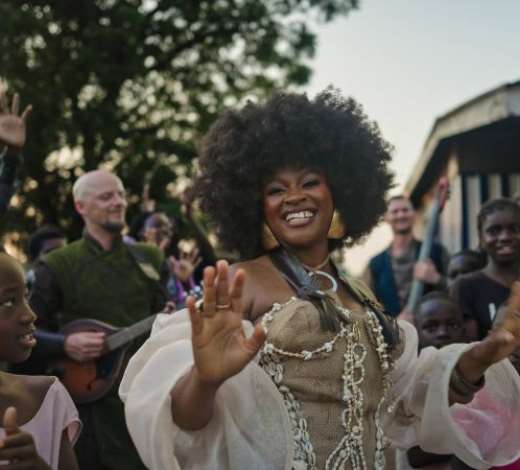
Latvia’s bagpipe and drum group Auļi have surprised audiences with a new music video created far from home – in Ghana. The video features one of the West African country’s musical divas, Abiana, whose voice blends with Auļi’s bagpipes and drums, rising skyward above the African continent in a powerful shared soundscape.
Author: Maris Pukitis
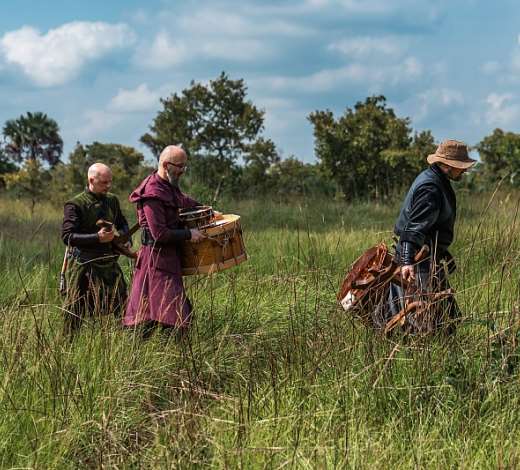
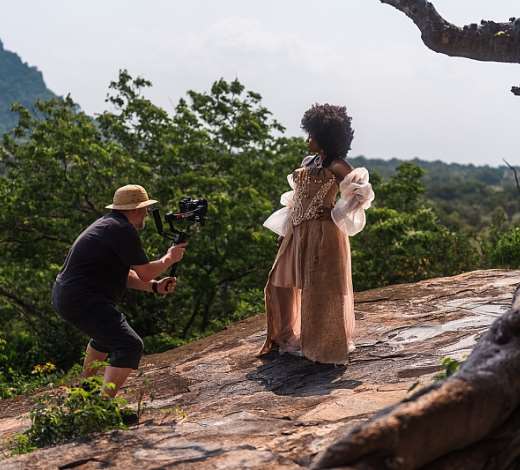
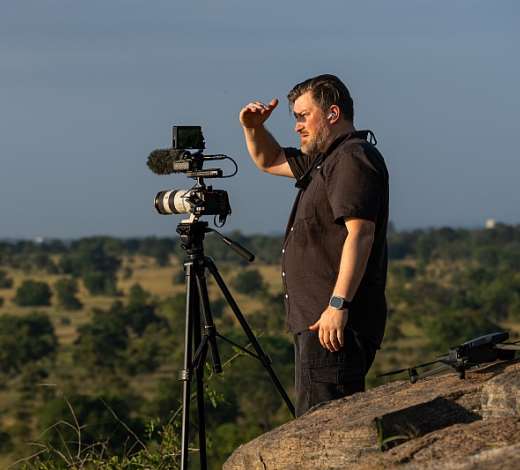
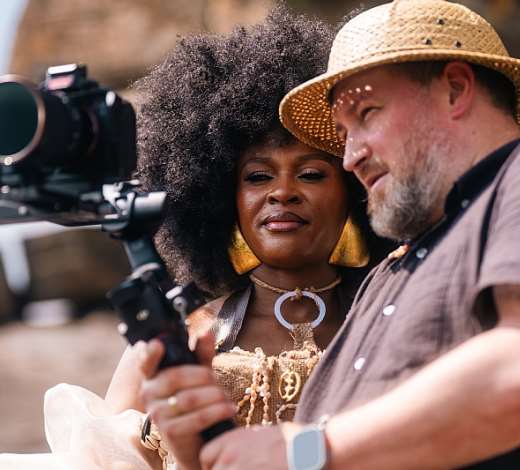
The video for the song “Senwa De Dende” was filmed in Shai Hills National Park in southern Ghana and directed by Kaspars Barbals, the leader of Auļi. But what does “Senwa De Dende” mean, sung in Abiana’s language, which sounds unlike any foreign language familiar to Latvians?
More in Common Than Different
Kaspars explains to Latvijas Avīze (Latvian Newspaper): “Actually, this song is a combination of two. ‘Senwa De Dende’ roughly means the same as in Latvian ‘rumtai, rumtai, rallallaa’. The second part is a lullaby, where a mother tells her child about the vulture – a bird that wanders and sleeps in a different place every night. But we humans do not live that way; we must care for our home and our family.”
No matter how different we may be, caring for one’s own people is characteristic of all nations and cultures. It is also symbolic that the project is titled “Voices of the Ancestors.” It serves as a reminder that humanity originates from Africa, and that deep in the distant past we all share common ancestors. In the oldest layers of folk music – whether Latvian, African, Native American or Mongolian – something shared can be sensed, and Auļi have managed to find that common ground together with a singer from another continent.
Kaspars agrees with this reflection: “Exactly – that is precisely the idea behind our project. When we were playing only in Latvia, we drew inspiration mainly from Latvian folk music. Looking more broadly, we decided to explore how other nations do things – what we have in common and what is different. When we reach the human, emotional level, we realize that we have far more in common than separates us.”
Auļi already have experience with intercultural collaboration. In the first season of “Voices of the Ancestors” seven years ago, the project featured Mongolian throat-singing master Batsorig Vaanchig, Norwegian joik rock star Kaj Somby, and Austrian Alpine bagpipe player and singer Albin Paulus. This was followed by sold-out concerts in Latvia.
Singing About Warriors Together with a Ghanaian Artist
Now it was Africa’s turn. While attending the world music forum WOMEX in Manchester, England, in 2024, Kaspars met Michael Bamfo, head of Ghana’s leading music distribution platform Apprise Music. It was through him that Auļi’s leader learned about Abiana, and both were intrigued by the idea of exploring how Ghanaian folk music might intertwine with Auļi’s contemporary sound rooted in Latvian musical heritage.
Three Latvian folk songs have also been selected for collaboration with Abiana. Kaspars is not yet revealing which ones, as the project is still ongoing. Auļi’s goal is to establish partnerships with singers from three different countries, recording three Latvian folk songs with each of them. This has already been completed with Abiana; in February, a mini-album with a singer from Japan’s southern islands is expected, and a third collaboration is also planned. At some point in the more distant future, all three international artists are intended to be invited to Latvia for a joint mini-tour with Auļi.
Working together in the studio revealed that Abiana approached the music very differently from what Auļi had initially planned – but the result turned out beautifully.
“We didn’t ask her to learn Latvian,” Kaspars explains. “Instead, we wanted her presence, vocalizations and emotions to enrich the piece.”
Naturally, the lyrics were translated for her, so she could understand the story being told. Kaspars reveals that one of the songs is about young men going off to war and never returning: “When we explained the idea, she understood that she could insert phrases in one of Ghana’s languages that convey a similar message.”
A Different Climate and Sense of Time
For Auļi, this was not only a new musical experience but also their first real encounter with Africa. Kaspars admits that culture shock was unavoidable: “The intense heat and traffic chaos forced us to adapt. Fortunately, our local partners from Apprise Music helped us with transportation, accommodation and filming logistics. For a European arriving for the first time, it would not have been easy.”
They also had to accept the local perception of time – if something was agreed upon, delays of at least a couple of hours were to be expected. “We’re used to working by the clock, with schedules planned hour by hour, but we quickly realized we had to surrender a bit to the flow,” Kaspars says.
One day was lost when half of their luggage failed to arrive at the airport – 12 suitcases containing costumes and filming equipment. When the bags eventually arrived, one suitcase was missing. Locals later explained that a payment had been expected. In the end, the suitcase was recovered – but almost at the very end of the trip.
At times, Kaspars felt the need to be cautious: “I didn’t feel completely safe. Without local friends, situations could have turned out very differently. Of course, it depends on the time of day and the neighborhood. I probably wouldn’t want to travel there with my family, but with Auļi and for this purpose, it was possible.”
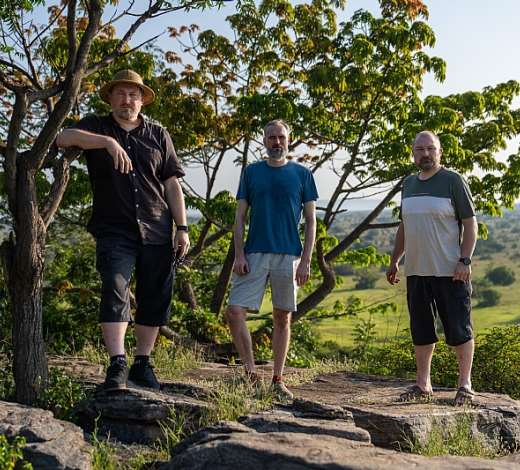
No serious incidents occurred, though one group member, Gatis Indrēvics, had to embark on a full-day hike in the African heat together with a park ranger to retrieve a drone that had become stuck in the treetops on a rocky jungle hill.
Teaching Locals a Latvian “Dung-Heap Song”
At the end of the visit, Auļi and Abiana performed at the RocAfrik music and arts festival in the capital, Accra. One part of the event consisted of discussions with local artists and music industry professionals, sharing experiences and exploring cooperation opportunities. The other part took place on stage at the memorial square dedicated to Ghana’s first president. The audience was specially selected – invited guests who registered via the website, including diplomats, businesspeople and government representatives.
As is common in Ghana, the schedule slipped, and by the time Auļi – despite being the evening’s main performers – took the stage, some guests had already left. Still, a few hundred people remained, and Auļi managed not only to play for them, but to involve them actively.
“Through clapping and dancing, we taught them one Latvian refrain,” Kaspars says with a smile. “We have a traditional song sung during communal farm clean-ups – in Latvian it’s called ‘The Shit Song’ – and the refrain goes ‘rumtai rumtai rīdi rallallā’. We explained that it’s a Latvian farmers’ work song.”
Kaspars is pleased that the concert turned out beautifully, even though it was still extremely hot at night and sweat poured down while they played.
Meeting a Latvian in Ghana
Interestingly, the musicians also met a fellow Latvian in Ghana – Aldis Ozols. In the early 2000s, he worked in real estate and frequently appeared in society magazines. After the 2008 economic crisis, he moved to Ghana. His planned gold-mining venture failed, but today Ozols successfully runs a company specializing in diesel engine technology.
“We didn’t know Aldis beforehand,” Kaspars says, “but he wrote to us himself after hearing about our concert and wanted to meet. He helped promote the event, met us at the airport, invited us to lunch, told us what it’s like to live in Ghana as a Latvian, enjoyed speaking Latvian, and came to the concert. It was a very warm meeting.”
Kaspars and Auļi are happy to confirm once again that Latvians really are everywhere.
Who Is Abiana
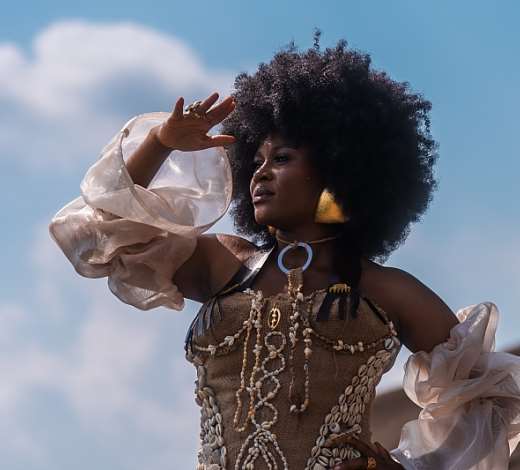
Abiana, whose full name is Eldah Naa Abiana Dickson, is a major stage star in Ghana. She holds a bachelor’s degree in marketing but chose a career in music. In 2021, Abiana received the Vodafone Ghana Music Award for Best Female Vocal Performance. She has performed at a presidential inauguration dinner and at the 70th birthday celebration of Ghana’s First Lady.
Photo: publicity / “Auļi”
 |  |
 |  |
 |  |
 |  |
 |  |
 |  |
 |  |
| View All | |

 I didn’t disrespect Nana Yaa Jantuah — Afenyo-Markin clarifies
 People and institutions at the centre of US trial and Asante Berko bribery convi...
 I’ll miss Mahama Ayariga, he doesn't hold grudges — Afenyo-Markin
 Ada Traditional Council summons NDC leadership, MP over disputed Asafotufiami ev...
 UTAG rejects GAUA discrimination claims over university remuneration disparities
 EOCO begins tracing assets linked to Asante Berko bribery conviction
 Nine suspects in Police grip over GHS30,000 Momo robbery and murder at Fiapre
 Busia has been treated unfairly in Ghana’s political history — Kufuor
 Government upholds Adamus mine lease revocation, assures workers of job security
 Ghana Maritime Authority facilitates repatriation of 12 stranded seafarers

