




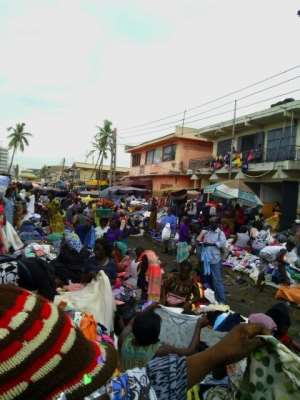
Sometimes all it takes for you to upgrade your fashion style is to visit a bend down boutique. This is where affordability meets preference. What do you really want? From shirts to bags to sneakers, “Kanta” got you. The biggest fashion ecosystem for second hand clothing highly patronized by Ghanaians. This is Kantamanto. However, as we push to a Ghana that will cut down import dependency, expand the local industry, and ensure the greater happiness for the people, it is imperative to recognize every angle of benefits and drawbacks.
The Brighter Side
It is very evident that second hand clothing business has increased employment measuring by the staggering number of traders in Kantamanto and making it possible for a secondary source of income for creative individuals who alter these second hand clothing into other fashionable forms. And of course, thanks to Kantamanto, now the average earning Ghanaian can also appear polished.
The Price We Pay
Everything looks very perfect until I remind you of these years ;2011 ,2013 , 2020, 2022 and 2025. These were years of chronic livelihood shocks, environmental degradation, land issues and market- wide psychological trauma from fire outbreaks in Kantamanto. And yet, these are only a fraction of the prices we continue to pay.
The Reality of Kantamanto
The very moment you step into Kantamanto the glinting clothes can deceive you into thinking that the traders are hitting the jackpot. It is known that approximately fifteen million garments arrive in Kantamanto. These garments are wrapped in bales weighing 50-70 kilograms averagely. Bales are like mystery bags with two different reactions. You either get excited or disappointed. Excitement comes from unveiling quality clothing and disappointment when you unveil torn, low-quality and faded clothing. Traders pay between two thousand five hundred to twenty thousand cedis, depending on the capacity of business and category of order be it jeans, shirts, jackets or children’s wear. Imagine being a trader hoping to find at least three hundred quality clothes to sell only for you to open and get seventy torn dresses, thirty stained, eighty very outdated and twenty pieces having size issues for the Ghanaian. This is the everyday story of a trader in Kantamanto. Here is what you need to know :
Market Competition- With the thousands of traders selling similar items, the exhausted trader has to strategize to keep customer interest by bringing down prices despite the loses.
Transportation- Bales imported into the country at the harbors are transported to the market for sales regardless of the heightened fuel prices. This compels the trader to raise the prices of the clothes potentially leading to a reduction in daily sales.
Cedi depreciation- Anytime the cedi depreciates, it loses value against the United States dollar or Euros ( since most imports are from the United States and European countries) traders have to pay more cedis which is detrimental to the profit margin.
Conclusion
Kantamanto will forever be the ultimate fashion hub for Ghanaians but the big questions are: Should the European Union and United States pay environmental compensation? Should Kantamanto be rebuilt as a modern, fireproof market ? Is it still a market or just a global waste processing site ?
Fun fact: Bend down boutique was derived from the common way of bending down to pick up clothes from piles in the market.

 “We never knew life was going to be hard like this in Ghana; we can’t even get j...
 $1.17bn GoldBod gave BoG is repayment, not new money’ – Dr. Gideon Boako
 Baffour Awuah didn’t help his case if he ignored EOCO’s invitation – Appiah Danq...
 Arrest warrant against Manhyia South MP does not mean conviction – Kwasi Kwarten...
 October 1: Cedi sells at GHS12.25 on forex market, GHS11.72 on BoG interbank
 Institutions, public policy must remove barriers facing women – Vice President
 Ghana has lost the fight against galamsey — Barker-Vormawor
 Fire outbreak at Avenor disrupts power supply in parts of Accra
 Accra: Fire breaks out at Avenor Industrial Area; two feared dead
 Carlos Queiroz leaves Black Stars role after poor AFCON qualifying start



Comments
Hmmm. The government must really look into our imports very well.