




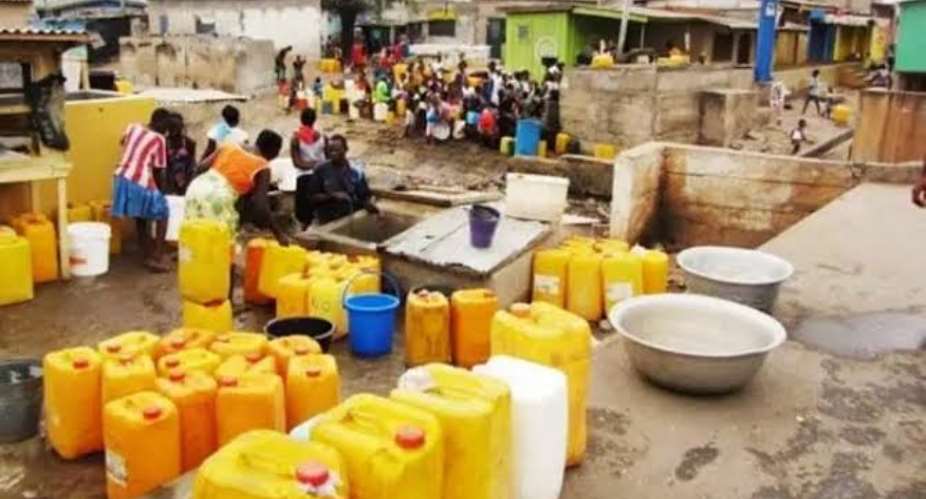
Water in the 1980s: The Drought and Its Lessons
Just after the devastating drought of 1983/84, water supply in the Sekondi-Takoradi metropolis improved significantly. New pipelines were laid, old ones repaired, and many homes — both old and newly built — were connected to the Ghana Water and Sewerage Corporation (now Ghana Water Company).
Although dug-out wells were common at the time, water from such wells was largely reserved for household chores such as washing, bathing, and cleaning. For drinking, however, residents relied almost exclusively on pipe-borne water due to its cleanliness and reliability. Sachet and bottled water were not yet available, making treated water from pipelines the most trusted option.
Urban III & IV Projects: A Period of Stability
The situation improved further after the Urban III and IV water projects under the Rawlings regime. Communities such as Kwesimintsim, Effiakuma, Sekondi Township, Sekondi Zongo, and other parts of the greater Sekondi-Takoradi metro were reconnected to the water system. This expansion enhanced flow and stability, making access to clean water easier for residents. For many, this period marked a high point in urban water provision.
Today’s Reality: Boreholes Take Over
Fast-forward four decades, and the story has taken a worrying turn. Taps that once flowed reliably now run dry for weeks. Boreholes — once considered a rural alternative — are steadily replacing pipe-borne water as the main supply source in Sekondi-Takoradi.
Mechanized boreholes have become the new water economy. Families fetch water daily, schools and hospitals depend on boreholes to function, and small businesses now budget for water purchased from private suppliers.
The Galamsey Connection
This crisis is not caused by another drought but rather the distant effect of galamsey (illegal mining). Rivers that feed the Daboase and Inchaban treatment plants have been polluted with silt and mercury, making it difficult for Ghana Water Company to treat enough water for safe urban distribution.
Communities in Sekondi-Takoradi — far removed from mining pits — are paying the price for environmental destruction happening upstream.
Health and Environmental Concerns
Public health experts warn that not all boreholes are tested before consumption, exposing residents to unsafe water. Environmentalists also caution that over-extraction of groundwater could deplete aquifers and invite saltwater intrusion in this coastal city. What appears to be a short-term solution may create even bigger crises in the future.
The Way Forward
Civil society groups argue that Sekondi-Takoradi’s reliance on boreholes is a symptom of Ghana’s wider water crisis. They are calling for urgent measures to protect rivers from galamsey, strengthen investment in water infrastructure, and safeguard the sustainability of underground water.
Unless decisive action is taken, boreholes may permanently replace pipe-borne water — a backward step for a metropolis that once celebrated modern water supply infrastructure.
By : Dawda Mohammed Kakale
Writer/Journalist-Takoradi

 Govt to distribute first batch of 129 vehicles to MMDCEs in 12 regions
 UG Vice-Chancellor calls for oral exams, project-based assessment to deal with A...
 'I will use everything I have to clear my name' – Obuasi SHTS headmaster fights ...
 NPA to strengthen ties with UMaT to drive downstream petroleum sector
 'Report school abuse directly to Education Ministry' – Deputy Minister tells stu...
 'It's a curse on you' – Water Minister badmouths 'malware' workers sabotaging Gh...
 Tap water no longer drinkable near South Africa capital
 96 health facilities under construction in Ashanti Region
 GoldBod reforms create 4,866 direct jobs in less than two years — Sammy Gyamfi


