




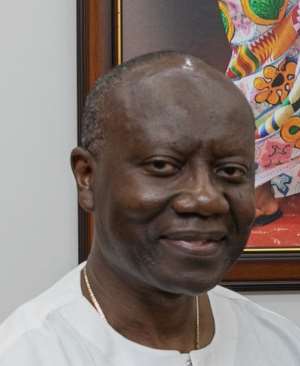
Recent discussions in Ghana’s political and economic circles have been stirred by reports suggesting that former Finance Minister Ken Ofori-Atta may be pursuing U.S. permanent residency after serving at the highest levels of Ghana’s economic management. While such claims remain subject to confirmation and careful interpretation, they have opened a wider national conversation one that goes beyond one individual and touches on trust, governance, elite mobility, and political accountability.
But beneath the headlines lies a more complex set of questions that many are hesitant to ask openly.
A National Figure and a Global Question
Ken Ofori-Atta, as Ghana’s former Finance Minister, presided over some of the most defining economic periods in recent history ranging from debt restructuring pressures to IMF negotiations and pandemic-era fiscal responses. His role placed him at the center of Ghana’s economic architecture.
So when reports emerge suggesting he may be seeking permanent residency abroad particularly in the United States it naturally raises questions in the public mind:
Why would a high-ranking former state official seek long-term settlement abroad after serving his country?
Is this a personal, family, health, or lifestyle decision or something more politically symbolic?
Does timing matter, especially after leaving office?
These questions are not accusations. They are reflections of public curiosity in a democratic society where leadership decisions often carry national meaning.
Why Now? The Timing Question
One of the most debated aspects is timing.
If an individual serves at the highest level of government and only considers foreign residency afterward, citizens often ask:
Why not earlier, during private life before public office?
Why now, after shaping national economic policy?
Does post-office relocation reflect satisfaction, fatigue, concern, or strategic personal planning?
These are not unique questions to Ghana. Across the world, former ministers, presidents, and senior officials often relocate after service but the timing always invites scrutiny.
Has Ghana Seen This Before?
Historically, Ghana has had several senior officials travel, reside abroad, or maintain dual international ties after service. However, the specific pursuit of permanent residency by a former Finance Minister is not commonly documented in public discourse.
Globally, however, the pattern is more familiar:
Former finance ministers and central bank officials from various countries often take international advisory roles or relocate after public service.
In some cases, they pursue residency for academic, consultancy, or family stability reasons.
In others, they distance themselves from political cycles or legal scrutiny in their home countries.
The key distinction is always context not just movement, but motivation.
Fear, Freedom, or Future Planning?
A sensitive but unavoidable question emerges:
If a former public official served without wrongdoing, what motivates permanent relocation?
Possible interpretations raised in public debates include:
Personal safety or privacy concerns
Family and medical considerations
Professional opportunities abroad
Desire for a quieter post-political life
Or concerns fair or unfair about future political or legal exposure
Importantly, none of these explanations are confirmed in this case. But they reflect the kinds of questions citizens naturally ask when high-profile leaders shift their life trajectory abroad.
Comparing Global Political Behavior
In many democracies, former ministers often:
Join global financial institutions (IMF, World Bank)
Become professors or consultants in Western universities
Relocate for retirement or dual citizenship benefits
For example, in countries like the United States, United Kingdom, and France, former treasury secretaries or finance ministers frequently transition into global advisory roles without public controversy.
However, in developing democracies, such moves are often interpreted differently sometimes as loss of national confidence or elite detachment.
This difference in perception is critical.
What Does This Mean for Ghana’s Political Image?
The broader question is not just about one individual but about political symbolism.
Does such a reported move affect the image of New Patriotic Party (NPP), under which he served?
Public interpretation may vary:
Critics may see it as a sign of disconnect between political elites and national confidence.
Supporters may frame it as a normal post-service transition in a globalized world.
Neutral observers may simply see it as a personal life decision unrelated to governance performance.
Ultimately, political parties are often judged not only by policies but by the post-service behavior of their senior figures.
The Questions Nobody Wants to Ask
Beyond headlines, deeper societal questions emerge:
Should public office require a stronger long-term commitment to national residence?
Do elite politicians in developing countries trust the systems they help build?
Why do post-service trajectories of leaders often trend outward rather than inward?
Does governance success correlate with staying in the country after service?
Or is global mobility now simply the new norm for political elites?
These are uncomfortable but necessary questions in a maturing democracy.
Conclusion: Beyond One Man, a National Reflection
Whether or not the reports about Ken Ofori-Atta’s residency plans are accurate in full detail, the conversation they spark is significant.
It forces Ghana to reflect on deeper issues:
Trust in leadership
Post-office accountability
Elite mobility
And the emotional bond between governance and homeland
In the end, the most important question may not be “Why is he leaving?” but rather:
What does it say about the evolving relationship between Ghana’s political elite and the country they serve?
By:
Patrick Belebang Yagsori
+233240292413
[email protected]
 Government to introduce ID verification for access to porn sites — Sam George
 African governments failing on commitments to increase agriculture funding — Eri...
 45-year-old ex-convict arrested over alleged rape and murder of wife's 17-year-o...
 We’re working to provide shelter for police officers displaced after barracks fi...
 No arrests made over Accra Central Police Barracks fire yet — Police
 Mahama told UK Prime Minister anti-LGBTQ+ bill is far from becoming law — Minori...
 Leaked judgment? NDC activists confirms jail term for Wontumi on social media
 Minority demands passage of original 2024 anti-LGBTQ+ bill, accuses NDC of decep...
 "Flagrant disrespect" — Court remands Abronye over failure to surrender passport...
 High Court remands Abronye over failure to surrender passport


