




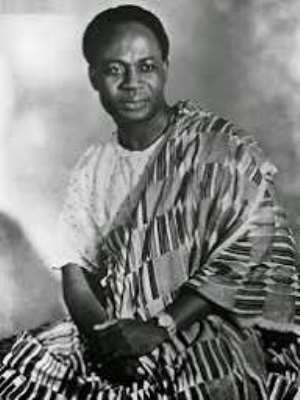
The question of Ghana’s true “founder” has lingered in the nation’s political and historical discourse for decades. While Dr. Kwame Nkrumah is universally celebrated as the first Prime Minister and President of an independent Ghana, the debate continues over whether he should be officially recognized as the sole Founder of Ghana.
With the possibility of a two-thirds parliamentary majority enabling a constitutional amendment, the issue has re-emerged: should Ghana move to enshrine Nkrumah’s role in law, and if so, what would it mean for the country’s history and unity?
Nkrumah’s Central Role
There is little dispute that Nkrumah played the most decisive role in Ghana’s independence struggle. His leadership of the Convention People’s Party (CPP), his use of mass mobilization strategies such as “Positive Action,” and his ability to rally ordinary Ghanaians across class and ethnic divides gave momentum to the independence movement.
On March 6, 1957, it was Nkrumah who stood on the podium at the Old Polo Grounds to declare Ghana’s independence to the world. For many, this moment cemented him as the nation’s founder.
The Broader Independence Struggle
Critics of the “sole founder” position, however, point to the contributions of other nationalist leaders such as J.B. Danquah, Edward Akufo-Addo, and others who formed part of the “Big Six.” They argue that independence was a collective achievement, with each leader playing an essential role at different stages of the struggle.
This divergence of views has created two dominant traditions in Ghanaian.
The 1992 Constitution does not currently name a founder. If Parliament chooses to amend the Constitution to recognize Nkrumah as the Founder of Ghana, the process would depend on whether the clause is entrenched or not.
An entrenched clause would require both a two-thirds majority in Parliament and a referendum with at least 75% approval.
A non-entrenched clause could be amended with just a two-thirds parliamentary majority.
Thus, a government with strong parliamentary control could feasibly initiate such a change.
The Airport Debate
The discussion also extends beyond the Constitution to national symbols. The Kotoka International Airport, named after Lt. General Emmanuel Kotoka, who led the 1966 coup that ousted Nkrumah, is frequently cited in this debate.
Some argue that renaming it Dr. Kwame Nkrumah International Airport would be a fitting tribute if he is recognized as Ghana’s sole founder. Others, however, caution that such a move risks politicizing national monuments and inflaming partisan divisions.
Moving Forward
Nearly seven decades after independence, Ghana is still shaping its historical narrative. Declaring Nkrumah the sole founder through constitutional amendment—and possibly renaming national landmarks in his honor—would resolve one side of the debate but could deepen divisions on the other.
The real question may not be whether Nkrumah deserves recognition—his role is unquestioned—but whether Ghana should enshrine that recognition in law, or continue to honor independence as a shared struggle.
By Dawda Mohammed Kakake
Writer & Journalist -Takoradi

 Govt to distribute first batch of 129 vehicles to MMDCEs in 12 regions
 UG Vice-Chancellor calls for oral exams, project-based assessment to deal with A...
 'I will use everything I have to clear my name' – Obuasi SHTS headmaster fights ...
 NPA to strengthen ties with UMaT to drive downstream petroleum sector
 'Report school abuse directly to Education Ministry' – Deputy Minister tells stu...
 'It's a curse on you' – Water Minister badmouths 'malware' workers sabotaging Gh...
 Tap water no longer drinkable near South Africa capital
 96 health facilities under construction in Ashanti Region
 GoldBod reforms create 4,866 direct jobs in less than two years — Sammy Gyamfi


