




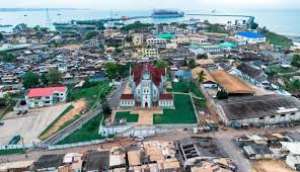
Sekondi-Takoradi, also known as the Twin-City, is Ghana’s third-largest and one of its most developed urban centers. Located in the Western Region, the metropolis was once celebrated for its affordable , where ordinary residents never considered rent a major financial burden. Today, that reality has shifted dramatically. With landlords demanding as much as two years’ advance payment, tenants are increasingly finding rent in the Twin-City a nightmare upon the expiration of their leases.
According to the 2021 Population and Census, Sekondi-Takoradi had 42,162 units serving 96,535 households, with an annual population growth rate of 2.6%. Despite new settlements emerging in recent years, demand continues to far exceed supply, especially in prime areas such as Beach Road, Chapel Hill, Windy Ridge, and Airport Ridge. In these neighborhoods, rent for a two-bedroom flat that once cost between GH₵700 and GH₵1,000 monthly has now doubled to between GH₵1,500 and GH₵2,000.
The situation is no different in non-prime communities like New Takoradi, Amanful, Essikado, Kwesimintsim, and Effiakuma. Between 2010 and 2015, a single room in these areas rented for GH₵40–60 per month, meaning a tenant could secure two years’ accommodation with just GH₵1,200. Today, that same single room costs between GH₵1,200 and GH₵1,500 per month—a sharp escalation that has priced many families and young workers out of the market.
What was once a source of pride for residents—the affordability of Sekondi-Takoradi’s —has now become one of the city’s greatest challenges.
Causes of High Rent in Sekondi-Takoradi and Its Surrounding Towns
The surge in rental prices across Sekondi-Takoradi can be attributed to several interrelated factors:
1. Rapid Urbanization and Population Pressure
As the third-largest city in Ghana and the Western Region’s administrative capital, Sekondi-Takoradi continues to attract migrants seeking jobs, education, and business opportunities. The expansion of companies into the Twin-City, alongside the presence of institutions such as Takoradi Technical University, has intensified demand for . This population pressure, unmatched by an equal supply of , has pushed rental costs upward.
2. Oil and Gas Industry Boom
Since Ghana’s oil discovery in 2007, Sekondi-Takoradi has become the heart of the country’s oil and gas activities. The Agona Nkwanta–Takoradi industrial enclave hosts numerous support companies, drawing expatriates, skilled workers, and entrepreneurs. Their higher purchasing power has driven up competition for quality , prompting landlords to raise rents. While the oil industry has boosted the local economy, it has also raised the cost of living—especially in accommodation.
3. Inflation and Rising Cost of Building Materials
The prices of cement, iron rods, roofing sheets, wood, and labor have all risen steeply over the past five to six years. This increase in construction costs translates into higher rental prices for new units. For instance, a single-room self-contained apartment in Anaji, Kwesimintsim, or Windy Ridge now costs between GH₵700 and GH₵1,200 monthly. To keep up, landlords of older houses often raise rents without renovations, creating a general upward trend across the market.
4. Conversion of into Commercial Stores and Office Spaces
Driven by the Twin-City’s booming business environment, many landlords are converting residential buildings into shops and office spaces, which fetch higher returns. While profitable, this trend reduces available stock, displacing families and further tightening the rental market. The result is an artificial scarcity that fuels higher rents.
5. Limited Supply
The 2021 census revealed a clear deficit: 42,162 units for 96,535 households. Despite the emergence of new settlements, most private developers prioritize high-end apartments targeted at wealthier tenants and expatriates, leaving low- and middle-income residents with limited affordable options. The imbalance between demand and supply continues to fuel competition and higher rents.
Overall Effect
The combined effect of these factors has created a crisis in Sekondi-Takoradi. Families, young workers, and even middle-class professionals are finding it increasingly difficult to secure affordable . The city risks becoming segregated, with prime locations reserved for the wealthy and expatriates while ordinary residents are pushed to overcrowded or poorly serviced peripheral communities. This not only widens social inequality but also undermines the Twin-City’s reputation as a place of affordable living.
Possible Solutions to the Crisis
1. Investment in Affordable Projects
Government and private developers must prioritize affordable schemes for low- and middle-income earners. Public initiatives or subsidized projects would ease the deficit.
2. Strengthening Rent Control Mechanisms
The Rent Control Department should be strengthened to enforce regulations, especially on advance payments, and to ensure tenants are not exploited by speculative landlords.
3. Incentives for Private Developers
Tax reliefs, subsidized land, and access to low-interest loans should be provided to developers who commit to affordable projects, rather than luxury-only developments.
4. Urban Planning and Expansion of Settlements
Municipal authorities should promote well-planned satellite communities with infrastructure such as roads, water, and schools to reduce the pressure on central areas of the city.
5. Regulation of Conversion
Policies should regulate the conversion of residential buildings into commercial spaces, ensuring a balance between business growth and residential needs.
6. Cooperative Schemes
Worker groups and community associations can be supported to develop cooperative projects, pooling resources to provide affordable alternatives for members.
Conclusion
Sekondi-Takoradi’s transformation from a city of affordable into one of high rents is a double-edged sword. On the one hand, it reflects economic growth, industrial activity, and urban expansion. On the other hand, it exposes ordinary residents to economic hardship and uncertainty.
With deliberate intervention—through affordable projects, stronger rent regulation, and inclusive urban planning—the Twin-City can strike a balance between growth and accessibility. The challenge is urgent: without solutions, the rising cost of will continue to push more people to the margins.
The question remains: who can truly afford to live in the Twin-City?
By: Dawda Mohammed Kakale
Writer & Journalist- Takoradi

 Govt to distribute first batch of 129 vehicles to MMDCEs in 12 regions
 UG Vice-Chancellor calls for oral exams, project-based assessment to deal with A...
 'I will use everything I have to clear my name' – Obuasi SHTS headmaster fights ...
 NPA to strengthen ties with UMaT to drive downstream petroleum sector
 'Report school abuse directly to Education Ministry' – Deputy Minister tells stu...
 'It's a curse on you' – Water Minister badmouths 'malware' workers sabotaging Gh...
 Tap water no longer drinkable near South Africa capital
 96 health facilities under construction in Ashanti Region
 GoldBod reforms create 4,866 direct jobs in less than two years — Sammy Gyamfi



Comments
Topic were discussed thoroughly. Readers, students and academics are going to benefit from information . Thank you