




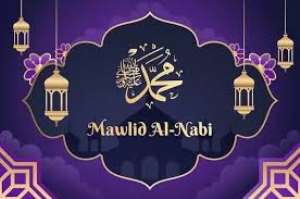
Every 12th of Rabi’ al-Awwal, the third month of the Islamic calendar, Muslims across the world commemorate the birth of the Holy Prophet Muhammad (SAW). Known as Maulid Nabiyu, this celebration brings together communities in mosques, madrasas, and open spaces to remember the life and mission of Islam’s final Messenger.
Over the years, Maulid has become one of the most widely observed events in the Islamic calendar, ranking after the two great festivals—Eid al-Fitr and Eid al-Adha. However, the observance of Maulid has not been without controversy. Certain scholars, particularly from the Ahl al-Sunna tradition, have dismissed it as Bid‘ah (innovation), pointing out that it was never practiced by the Prophet (SAW), his rightly guided successors, or the companions. Critics argue that some aspects of Maulid do not align with the spirit of Islamic worship and fail to benefit the Muslim Ummah.
Yet, despite these criticisms, Maulid remains deeply ingrained in the religious and cultural life of millions. If celebrated in line with the Prophet’s teachings, Maulid has the potential to deliver immense spiritual, health, educational, and socio-economic benefits to the Ummah and humanity at large.
Allah (SWT) reminds us in the Qur’an:
“And We have not sent you, [O Muhammad], except as a mercy to the worlds.” (Qur’an 21:107)
The Prophet (SAW) himself declared: “I was sent to perfect noble character.”
This means the commemoration of his birth should go beyond rituals and festivity. It must reflect his exemplary life, embody his noble character, and translate into deeds that serve both Muslims and society.
Towards a Purposeful Maulid
To make Maulid impactful, Muslims must integrate social responsibility and communal sacrifice into the celebration. This can be achieved through four dimensions:
1.Muslim must use the celebration of Maulid as a means of Spiritual Renewal, these could be achieved through the organization of Qur’an recitation and Tafsir sessions.
Deliver sermons on the Prophet’s teachings of mercy, justice, and humility.
Offer prayers for peace, unity, and national development.
Link acts of charity during Maulid to spiritual rewards. This ensures total spiritual upliftment during Maulid.
2. Health Promotion
Maulid celebration could be used as a vehicle to undertake community sanitation and clean-up exercises, inspired by the Prophet’s saying that “purity is half of faith.”
Organize free medical outreach programs for diseases such as malaria, diabetes, and hypertension.
Promote blood donation and health awareness campaigns.
3. Educational Empowerment
To ensure full scale benefit of Maulid, Muslim celebrants should hold public lectures on the relevance of the Prophet’s example to today’s challenges.
Organize Qur’an recitation, poetry, and essay competitions for the youth.
Establish scholarship funds for needy but brilliant students.
Distribute Islamic books and biographies of the Prophet (SAW).
4. Socio-Economic Development
The benefits of celebrating maulid could be enhanced by distributing meals for the poor and needy as an act of communal sacrifice.
Introduce skills-training workshops in tailoring, soap-making, and entrepreneurship.
This can be done to facilitate networking sessions for Muslim entrepreneurs and professionals.
Set up small revolving funds to support petty traders and artisans.
Conclusion
The Prophet Muhammad (SAW) came as a mercy to mankind. Any celebration of his birth must reflect that mercy through acts that uplift humanity. By transforming Maulid from a cultural festivity into a platform for spiritual renewal, health awareness, educational growth, and socio-economic empowerment, Muslims can ensure that the Prophet’s message continues to inspire and benefit generations.
Maulid Nabiyu, therefore, must be more than a celebration—it should be a call to action, a moment of renewal, and a lasting source of benefit to the Ummah and the wider society
By Dawda Mohammed Kakale
Writer & Journalist -Takoradi
 I have not been invited by OSP over fake GH¢70,000 memo — Patricia Appiagyei
 Vetting committee has never taken bribes or gifts from nominees — Bernard Ahiafo...
 Chief Justice Baffoe-Bonnie clarifies controversial remarks
 Dunkwa-Ayanfuri road construction to commence in 2027 – Finance Minister
 PRESEC, St. Augustine’s College and Accra Academy set for NSMQ grand finale on S...
 Appiagyei denies alleged GH¢70,000 vetting payment in memo
 Lawyer challenges GRA’s power to grant passenger baggage tax exemptions
 Agbogbloshie waste heap is as high as 10-storey building – Mahama Ayariga
 'How did we get here, to be told to go to Rwanda to learn cleanliness?' – Mahama...
 'After getting the gold, you will get thirsty' – Kwaku Bonsam explains why galam...

