




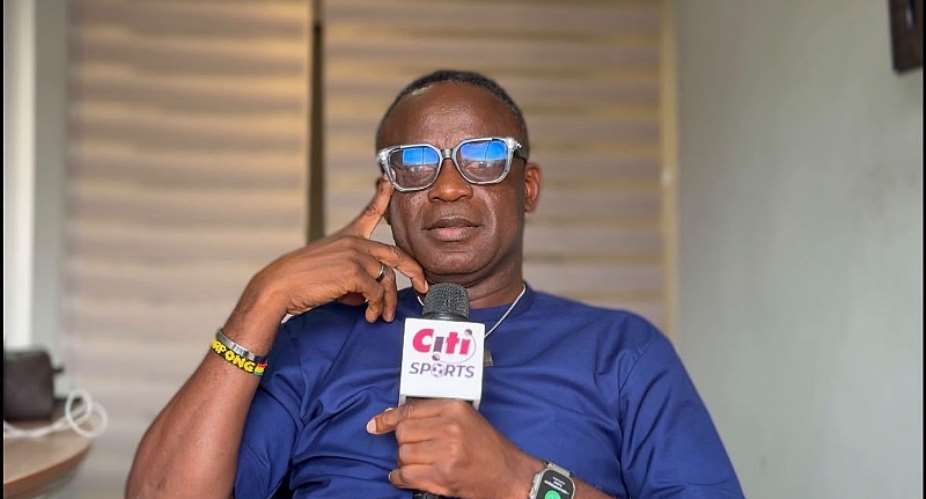
Acting Director-General of the National Sports Authority (NSA), Prof. Emmanuel Osei Sarpong, believes appointing high-profile coaches alone will not resolve Ghana’s sporting challenges without long-term planning, adequate infrastructure and sustained investment in athlete development.
His comments come amid concerns over Ghana’s sporting performance, particularly football, where the men’s and women’s national teams have faced disappointing results, questions over their tactical direction and broader concerns about administration and player development.
The Black Stars have come under particular scrutiny following a 2-0 loss to Ivory Coast and a 4-2 defeat to The Gambia in their opening games of the 2027 Africa Cup of Nations qualifiers.
The results have intensified calls for changes within the Ghana Football Association (GFA) and renewed debate about the country’s football development system.
Speaking to Citi Sports, Prof. Osei Sarpong believes Ghana’s sporting challenges extend beyond coaching appointments, pointing instead to inadequate long-term planning, weak coordination among key institutions and insufficient investment in developing athletes.
“Our problem with Ghana sports, not football alone, has been long-term planning, long-term development of athletes,” he said.
He called for closer collaboration among the NSA, the Ghana Olympic Committee (GOC) and sports federations to establish a structured system for identifying and nurturing young talent.
He questioned whether Ghana had clear, sustained plans to develop promising athletes, stressing that talent identification must be supported by consistent investment, structured training and access to the necessary facilities.
Prof. Osei Sarpong proposed identifying talented athletes at age 12 and developing them through a six-year programme to prepare them for elite competition by age 18.
He also challenged Ghana’s reliance on foreign expertise, particularly in football, arguing that resources spent recruiting foreign professionals could instead be invested in training local coaches and sports specialists.
“As we speak now, there is no Ghanaian who is qualified as a fitness trainer, strength and conditioning coach, specifically for football,” he said.
“Why can’t you use that money to develop some coaches in Ghana so that they will become multipliers of their knowledge?”
The NSA boss stressed that sustainable sports development required more than high-profile coaching appointments, calling for investment in infrastructure, training resources and long-term development programmes to establish a stronger pipeline of athletes.
He described the establishment of the Grassroots Sports Secretariat as an important step towards building a sustainable framework for identifying and developing sporting talent.
Prof. Osei Sarpong also cited France’s National Institute of Sport, Expertise and Performance (INSEP), which he visited in September to study its athlete development model.
He said the institute trains national athletes and attracts competitors from other countries, offering lessons Ghana could adapt to strengthen its own sports development system.


 South Africa evacuation expenditure: Ablakwa harassing Foreign Ministry staff ov...
 Bawumia engages health professionals on sector challenges
 'Backbone of the web': What is PHP and how has it raised AI hacking fears?
 Russian missiles hit Kyiv as Moscow signals readiness for peace talks
 Meta fined $25 billion in New Mexico over Cambridge Analytica scandal
 Health Ministry assures Ghanaians of readiness to manage Ebola cases
 FDA shuts down Arcan Bitters factory again over illegal production in Ashanti Re...
 PAC chair praises NPA CEO Edudzi Tameklo’s performance at committee hearing
 Ghanaian jailed nine months in US for using relative’s social security number to...
 Ukraine war: I'm going to Russia to convince President Putin to ceasefire — Maha...


