




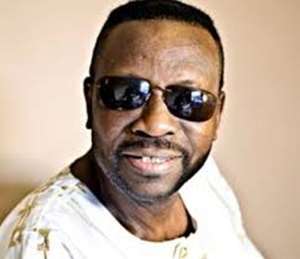
NO better compliment could have been paid to a citizen by the head of state of his country than has just been paid to Mr Martin Amidu by President Akufo-Addo, with his nomination of Amidu to Parliament as Ghana's first-ever Special Prosecutor.
Mr Amidu should know that a lot of people – and not just in the NPP fold – strongly believe that President Akufo-Addo may have taken a “monumental risk” (as someone put it!) in gifting the post to Mr Amidu.
For Mr Amidu's political antecedents are not hidden. Many remember him as one of the most strident promoters of authoritarian rule during some of the worst periods of NDC rule.
But President Akufo-Addo has been fair-minded enough to brush that aside, in the hope that Mr Amidu has jettisoned some of the more toxic elements in his make-up. Certainly, the tenacity of purpose he has exhibited; his public-spiritedness in defying the late President J A Mills over the Woyome issue; and his relentless pursuit of the said Woyome in the courts to retrieve for Ghana, moneys to which Woyome was not entitled – these attributes of Amidu speak louder than words.
That Amidu did all this whilst the people who had taken the taxpayer's shilling and solemnly sworn to prosecute those who fraudulently siphoned money out of the Ghana treasury, sat idly by, must have impressed the President. Certainly, as a former Attorney-General himself, the President is well-schooled in the nuances of the hundreds of “discretionary decisions” that the denizens of the AG's Department are privileged to take on a daily basis.
So he is very well-placed to appreciate the incredible toughness of mind that enabled Amidu to expose the possible cupidity of some of his own erstwhile colleagues in the AG's Department.
Those Ghanaian citizens who detest – and are amazed at the audacity of – the obnoxious NDC practice of “create, loot and share”, will thus be looking to Amidu to perform legal “miracles”, no less. But they should be warned that the law is made by people (legislators) and interpreted by people (judges) at the instance and instigation of people (lawyers).
So, at each stage of the process by which the legal game is played out, there can be misjudgements and/or mistakes. The Ghanaian public ought, therefore, to prime itself not to set the bar of expectations of what Mr Amidu can do in his new job, at too high a level. That, is, of course, a challenge that Mr Amidu, having accepted the post, must face squarely. His performance will be watched with eagles' eyes.
Now, one personality flaw in Mr Amidu that has been observed by some people, even as he crafted the position of “Citizen Vigilante” for himself before the eyes of the Ghanaian public, is that he is not only volatile but also – all too voluble!
Such verbosity is no doubt appreciated by the fraternity of lawyers, who are constrained to consider every possible argument about every aspect of a case that could be made by their “learned friends” (counsel). Unfortunately, the public has a shorter attention span! It wants issues to be more focused and easily understood.
Mr Amidu could dismiss this as professionally irrelevant, but he would be wrong because he must remember that this new job is partly politicaland that he must always to try to carry the public with him. In other words, his new role requires that he tailors his verbalization(s) away from the “book-long” variety he is used to. Clear, crisp presentations – that is what will turn him into a real “Public” Prosecutor, whose word can reach far and wide, as it is relayed to one another (as tutorials in public morality, no less) by the people on whose behalf he goes to court.
One is suggesting, in fact, that Mr Amidu will probably have to “reinvent” himself if he is fully to satisfy the expectations of the public. He will also have to obtain a high success rate in the courts, which means being sensitive enough to anticipate and address the doubts and prejudices of the judges before whom he appears.
Being truculent before judges is, of course, an invitation to self-defeat, given the fact that a ruling made by a a judge can only be overturned by another judge. And, of course, there surely must exist a subterranean “trade union” ethic, whereby judges generally look unfavourably upon lawyers who show “disrespect” to their “brother judges”, or who preen themselves ad act as if they “think they are too clever by half”!
It is a pity that the legislative processes through which the Public Prosecutor Act passed were so convoluted that, as I write, we do not know, for sure, whether the Prosecutor's office can take on what I consider to be one of the most shameful occurrences in our judicial system today: the incredibly lenient fines imposed on galamsey offenders by our courts.
Here are a group of people who have deliberately elected to destroy the water-bodies whose presence in certain localities persuaded their own ancestors to site human settlements there!
And yet when these people, whose crimes will make it impossible for human life to continue to exist in many of our habitats in the next few years, are taken to court, they are given a mere slap on the wrists by finely-robed judicial officers who live in our country but do not adequately understand what is going on in it: they are “punished” with fines not exceeding a few thousand cedis!
Incompetent – or possibly corrupt – prosecuting authorities levy charges against galamseyers that are quite laughable (such as staying in the country without visas; or after their visas had expired; or disobeying the orders of the immigration authorities (Chinese galamseyers). Ghanaian offenders are usually charged with “mining without licence”. These charges amount to no more than misdemeanours (not strictly in the technical sense but that will suffice) whereas they should be charged with serious “crimes against humanity”. Or potentialgenocide; that is, creating conditions that will inexorably result in future genocide.
When will our legislature advise itself of the seriousness of these crimes that are destroying our water-sources and amend the law (relating to galamsey) to take cognisance
of the deadly repercussions awaiting our succeeding generations?
By the way, who are the financiers of the galamseyers? Who pays to bail galamseyers when they are taken to court? Are these hidden miscreants not aiding and abetting the crimes of the galamseyers? Why are the police not pursuing them but rather colluding in hiding their identities from the public? For surely, one of the questions the police should be asking arrested galamseyers is, “WHO bought your machines for you and pays you to use them”? Or: “WHO brought you to dig on this parcel of land and how was it acquired?”
Furthermore, why does the prosecution consistently fail to apprise the courts of how these offenders are killing rivers like the Prah, Ankobra, Oti, Offin, Birem, Densu and the Black Volta, and that killing these rivers literally means killing whole populations not yet born?
When the Nazis began to “brand” the Jews, no-one knew that it was the beginning of a process that would lead to the liquidation, in gas chambers, of SIX MILLION JEWS IN A MATTER OF YEARS. We have passed the “branding” stage but are so blind that we don't want to act until the actual gassing begins? Are we not showing ourselves to be complete idiots?
I bet the Chinese can't stop laughing at us. Anyone who did to the Yangtze River what galamseyers have done to the Ankobra or the Prah or Birem or Densu would know what committing “anti-people” crimes means.
I hereby call upon the Public Prosecutor to be clever enough to expand,or find room in his functions, to include offences related to endangering life by wantonly destroying water-bodies, forest reserves and food farms, thus making the continuation of human habitation impossible in Ghana
. He must begin by appointing investigators to revisit all the prosecutions that have taken place in recent years, which resulted in over-lenientsentences being handed down in galamsey cases, and – expertly appealagainst those sentences.
For, yes, it is worth pursuing the Woyomes of this world for stealing millions of cedis. But what are the Offin, the Prah, the Ankobra, the Birem, the Densu and the Black Volta worth to the nation of Ghana? Both today and in the years to come?
The Public Prosecutor should determine that the public interestextends beyond the narrow confines of retrieving stolen funds. It applies to every aspect of crime that endangers the Republic. And if the Public Prosecutor Act needs to be amended to reflect this wider definition, then it behoves Mr Amidu to propose such an amendment.
Immediately!


 'Chief Justice was talking as a citizen; you have to look at the context in whic...
 Mandatory towing to remove broken-down, stationary vehicles from roads to begin ...
 Domelevo backs OSP probe into alleged GH¢70,000 payment to Appiagyei despite den...
 WAEC releases 2026 WASSCE results, cancels entire results of 861 candidates for ...
 Baffour Agyeman-Duah explains why profitability may not be only reason behind SO...
 Kofi Bentil defends Mahama’s dissolution of nine State Boards
 5-year-old girl dies after falling into water-filled manhole at Winneba
 Sierra Leone ex-president to return after treason case dropped
 'Explain how you spent your Common Fund' — Boako, Annoh Dompreh challenge Tano N...
 Ghana ends South Africa evacuation; brings home nearly 1,900

