




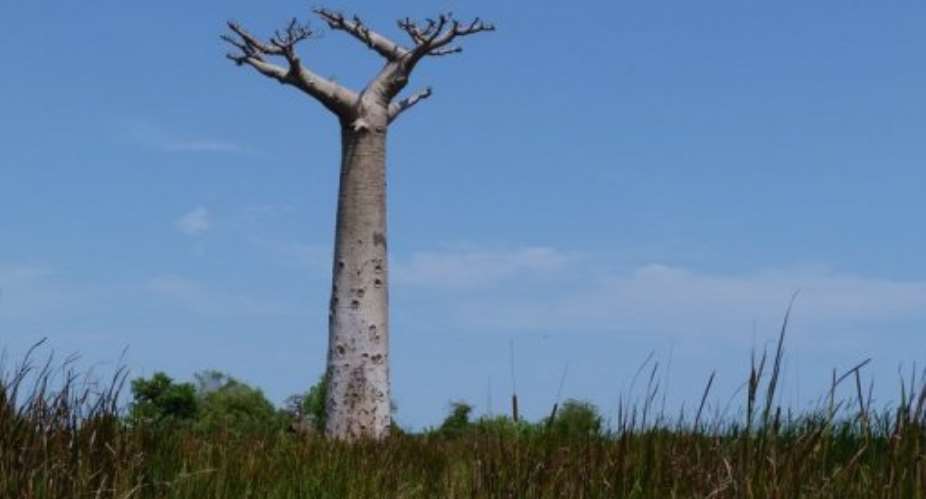
MORONDAVA, Madagascar (AFP) - Majestic trees line the dusty road known as the Avenue of the Baobabs, their large trunks crowned with clawing branches that reach 20 metres (70 feet) high.
These giants seem immortal but the trees -- national symbols of Madagascar -- are only alive thanks to a last-minute rescue operation that kept them from drowning.
"A sugar mill diverted water to the site, and the local people used this water to grow rice. The baobabs were in the middle of the rice fields and their trunks stood in water all year," said Anselme Tilahimena, of the environmental organisation Fanamby.
Mired in the rice paddies, the trees rotted from the inside. Their trunks weakened, about two baobabs were blown down every year in cyclones.
The baobabs' fate began to brighten in 2007, when a 320-hectare (790-acre) area outside the west coast town of Morondava was declared a protected area, home to 313 baobabs which Fanamby cares for.
Since then, authorities stopped the dumping of water in the area. The rice paddies dried up, replaced by marshes covered with purple-pink hyacinths.
Children paddle around happily while their mothers throw nets in the water to catch small fish. Around 250 people live in the area.
"Since 2007 we have developed alternative agricultural activities in dry farming, like peanuts or market gardens" with green vegetables, Tilahimena said.
But farmers in this country long dogged by poverty find it difficult to change. Runoff from the sugar mill fertilised the land, which produced abundant rice harvests.
"It's important to protect the baobabs, but you don't earn as much with peanuts," said 56-year-old farmer Vontana, known by one name, who used to plant rice around the base of the trees.
"I am going to grow rice again if they build a canal."
Construction is underway on a seven-kilometre (four-mile) canal that will allow farmers to replant paddies without endangering the baobabs, by irrigating 187 hectares outside the protected zone.
"We've understood that it's the only solution, to find other land to grow rice. Market farming has given good results here, but it's difficult to change people's practices. That's a long-term job," said Tilahimena.
Fanamby has also taught residents to make crafts, which they sell to the 6,000 tourists who travel every year to photograph the striking baobabs -- some hundreds of years old. The trees are a testament to dense tropical forests that once blanketed Madagascar, which has suffered severe deforestation, and subsequent desertification and depletion of water resources.
A wood-and-raffia stall at the entrance to the park sells fresh drinks and miniature baobabs sculpted out of rosewood.
The profits go to the sculptors and site management.
Father-of-three Mahotoeky Randrianirina works the counter several times a week, when he is not working in his maize and sweet potato fields.
"I am good at sculpture now. Thanks to that, I earned a lot more and could build a house and buy goats with the money," the smiling 28-year-old said.
Randrianirina counts on tourism development to improve his family's lives, but the stall is the only building on the site.
To ensure the avenue's future, Fanamby and the villagers' association are now planting new baobabs across the protected area.
 BoG's $260 million building: It was Ato Forson who first proposed 'sell-and-leas...
 'We have to do soul-searching' — Mahama orders nationwide flood assessment
 Court orders woman beater to pay GHS5,000 compensation to midwife at Tema Commun...
 Over 12,000 women living with obstetric fistula in Ghana — Asokwa MP
 Mahama secures 1,840 farm equipment deal from Belarus
 Titus Glover slams Mahama’s flood report directive, calls it “waste of energy an...
 We have increased posting of doctors from 12 to 100 to underserved regions in 20...
 'You had the effrontery to call me struggling lawyer, you won't come back to pow...
 Belarus manufacturers to storm Ghana next week after President's visit
 Government to offer tax incentives for factories located outside Accra


