




STATISTICS FROM the United Nations Office for Drug Control (UNODC) World Drug Report indicate that there are signs of an increase in drug use and abuse in developing countries, including those in the West African region, which has further metamorphosed from shipment routes to drug consumption centres.
It is reported that there are about 14 - 22 million cannabis abusers, 160, 000 - 340,000 opiate addicts, and 640,000 - 830,000 cocaine users for the population aged between 15 - 64 in the West African region in 2008, while the rate of abuse of drugs by youth is higher than the world average, especially for cannabis use, which went up to 12% for users aged between 15 - 64.
The Economic Community of West African States (ECOWAS) Commission, concerned by the growing trend of drug use, organised a meeting of experts on Drug Demand Reduction in May this year, that highlighted important challenges member states faced, with regards to drug abuse among the youth and vulnerable population.
These included constant drug use by youths, low age of initiation into drugs, alcohol abuse increase in many countries of the region, and that alcohol was associated with a wide variety of health and social problems, among others.
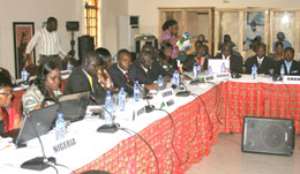
To further increase awareness around alcohol and/or substance use disorder and HIV-related sexual risk behaviours, the Commission is hosting a four-day regional workshop on 'Drug Use, HIV Risk among Young People in West Africa,' in Accra.
The workshop also aims to educate stakeholders on the global strategy to reduce the harmful practices, educate them on specific prevention and treatment interventions, and encourage greater commitment to the inclusion of alcohol issues in HIV prevention and treatment approaches.
In view of this, the participants included experts from Member States' Focal Point on Youth, Drug and HIV/AIDS in the Ministry of Youth and Sports, Ministry of Health or National Drug Law Enforcement Agency, National Youth Councils/Associations, Civil Society Organisations, International and Development Partners, and United Nations (UN) agencies.
In a welcome address at the opening ceremony yesterday, the Deputy Minister for Youth and Sports, Mr. Nii Nortey Dua, speaking on behalf of his Minister, said the epidemics of drugs, their transit through the sub-region, their use by young people, and HIV/AIDS have become a sub-regional, national, and local concern, due to its adverse effects on the human and socio-economic development efforts in the sub-region.
He expressed worry that while the drug trade soared high a couple of years ago in Ghana, HIV/AIDS combined to take their toll on the vulnerability of the youth, adding, 'One can safely say that these two evils contributed directly or indirectly to the low expectancy of 56 years only of Ghanaians.'
According to him, the gloomy picture of abuse seems to be on the ascendency with the drug menace, including the use of alcohol, cannabis, cocaine and heroin among others, saying, 'the resultant effect on our countries is seen in the rise in violence and HIV/AIDS at the local, national, and sub-regional levels.'
In all of these, it is the youth who form the human capital resource base of the West African economies, that were vulnerable and invariably exposing the vulnerability of the sub-region as a whole, he noted.
In view of this, he called for continuous concerted efforts by member states to address the problem of drug use among the youth, while commending the ECOWAS Commission for its efforts to help address the problem.
Also, he advised that 'it is wise to check one's status and get good counsel. Let us join hands with our governments to halt the drug-driven HIV risk.'
In a keynote address, the Director of Gender, Youth and Sports, and Drug Control of the ECOWAS Commission, Dr. Sinkiti Ugbe, on behalf of the Commissioner for Human Development and Gender of the Commission, said critical to the challenges ravaging Africa's young men and women were the issues of drug abuse and HIV/AIDS epidemic.
She pointed out that the spiral increase in the number of arrests being made of drug traffickers, the high proliferation of light weapons, and increasing demand and use of illicit drugs and substances, posed a great threat to the development of the region.
In addition, the abuse of prescription drugs, self medication and tranquilizers, sleeping pills, and stimulants were on the increase in the region, she stated, and lamented that 'Apart from facing the heterosexual transmitted HIV, some Sub-Saharan countries are experiencing significant changes in the patterns of illicit drug use, through both non-injection and injection drug use, which has implications for the potential spread of HIV.'
She, therefore, noted that it was expedient for the participants to be equipped with adequate and valuable knowledge to share with their peers and communities, saying, 'As you settle for highly technical and interactive session, you will be better enlightened and better equipped to face the challenges.'
A representative of the African Union (AU) Commission, Dr. Mohammed Kyeri, also indicated that though the African sub-region was in a period of unprecedented rapid socio-economic change, that change was not without complex dynamics.
According to him, key causes for the growing trafficking included Africa as a whole, which constitute a growing market for illicit drugs, frequent international travels, inadequate trafficking controls, and convenient transit point for drug trafficking to Europe, North America, and corruption amongst some law enforcement and custom officers based at the ports, among others.
He observed that drug abuse and addiction had been closely linked with HIV/AIDS since the beginning of the epidemic, while 'Drug and alcohol intoxication affect the way a person makes decisions, and can lead to unsafe sexual practices, which puts them at risk of getting HIV or transmitting it to someone else.'
Dr. Kyeri noted that while the world population had reached seven billion, Africa's population has just passed one billion, with about 450 million youths, who account for about over 50% of the total labour force.
However, unlike other continents, Africa's population was becoming more youthful, hence, 'the pace, depth and scope of Africa's development in the 21st Century would depend on how best the continent's youth resources are nurtured and deployed.' He pledged the AUC's continued efforts to curtail the menace of illicit drug use, in collaboration with Member States, Regional Economic Communities, and development partners.

 Mysterious illness leaves children struggling to walk, hear in Mafi Kope
 ‘We’ve come back to make sure our father's ideas never die’ – Nkrumah family
 Ghana Jollof: Akosua Manu appeals to Naana Jane to use her influence to free Sal...
 Yellow fever confirmed in Sissala East after 21 mysterious deaths
 Kenyasi man allegedly attacked by prison officers and inmates over yam theft cla...
 Germany’s far-right AfD makes strong gains in two state elections
 Savannah Regional Minister, IGP Yohuno visit Gbindabuor following lynching of po...
 Jehovah's Witnesses make blood component decisions a matter of personal conscien...
 Road contractors fed on contracts for years without completing projects – Alhass...
 Ghana Jollof saga: ‘She has no right to do what she’s doing’ – Inusah Fuseini


