




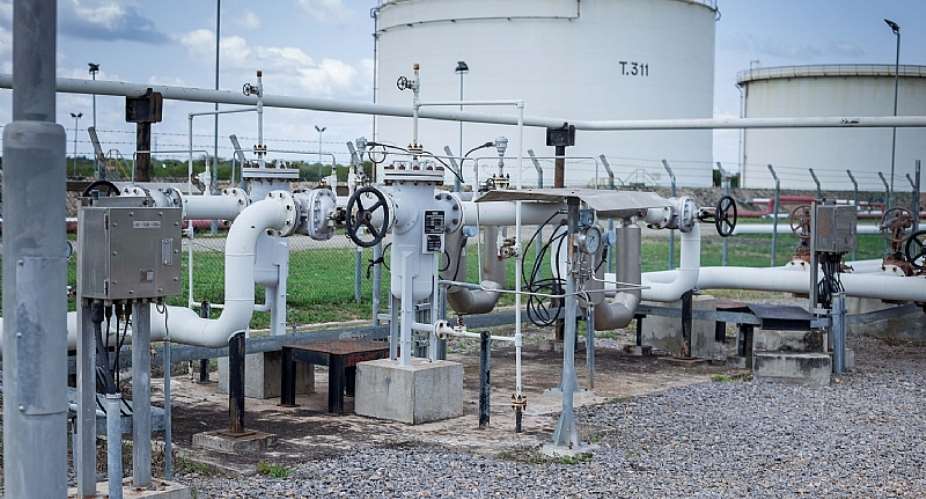
The Alliance for Accountable Governance (AFAG) has raised concerns over the proposed National Petroleum Authority (NPA) Bill, 2026, warning that some of its provisions could weaken the financial and operational capacity of the Bulk Oil Storage and Transportation Company Limited (BOST).
The pressure group has accused the government of pursuing reforms that could undermine a major national petroleum infrastructure company and potentially pave the way for private interests to take control of strategic state assets.
In a statement dated November 17, 2026, AFAG said although it supported efforts to modernise Ghana's petroleum downstream regulatory framework, its assessment of the proposed legislation had revealed provisions it considered harmful to BOST's ability to fulfil its national responsibilities.
The group argued that the proposed law could undermine BOST's capacity to maintain strategic fuel reserves, operate storage facilities, invest in petroleum infrastructure and sustain specialised employment.
AFAG maintained that BOST remained a critical national asset because of its role in petroleum storage, transportation, logistics and emergency fuel supply.
To support its position, the organisation cited BOST's 2025 financial performance, which it said included revenue of approximately GH¢3.81 billion, profit after tax of GH¢683.96 million, total assets of GH¢3.99 billion and shareholders' equity of GH¢1.47 billion. It also noted that the company had paid its first dividend to the government.
AFAG STATEMENT - NPA.pdf
One of AFAG's major concerns relates to Clauses 116 and 117 of the proposed Bill, which provide for the designation of some or all of BOST's depots as strategic fuel storage facilities, with the National Petroleum Authority responsible for monitoring the reserves.
The group said the arrangement could impose substantial financial obligations on BOST without providing a clear mechanism for recovering the costs associated with purchasing, storing, insuring, securing and maintaining strategic fuel reserves.
It warned that requiring the company to finance such national responsibilities from its own resources could weaken its balance sheet and undermine its commercial operations.
AFAG is therefore calling for a statutory cost-recovery mechanism to ensure that BOST receives full compensation for the additional expenses incurred in maintaining strategic fuel reserves on behalf of the government.
The organisation has also questioned provisions governing storage and transportation tariffs under Clauses 104 and 105, which require depot operators and bulk transporters, including pipeline, barge and rail tanker operators, to provide open access without discrimination, subject to tariff controls and prior written approval by the NPA.
According to AFAG, the proposed arrangements could prevent BOST from charging rates that adequately cover its operational, maintenance, depreciation and financing costs.
It argued that maintaining storage tanks, pipelines and marine logistics infrastructure required substantial capital investment and continuous maintenance, making cost-reflective tariffs necessary to ensure commercial sustainability.
The group has consequently proposed a tariff framework that would allow efficient operators to recover legitimate costs while earning reasonable returns on their investments.
AFAG further expressed concern that the proposed open-access provisions could create an uneven competitive environment between BOST and private operators.
It argued that BOST had public service obligations, including maintaining strategic reserves, ensuring continuity of national fuel supply, serving commercially unattractive locations and responding to emergencies, which private operators might not be required to undertake.
The organisation warned that allowing private companies to concentrate on profitable routes while BOST carries the financial burden of less commercially attractive national responsibilities could distort competition and weaken the state-owned company's market position.
It also questioned the proposed Distribution Fund and Infrastructure Fund, particularly their relationship with BOST's existing storage and transportation infrastructure.
AFAG said the Bill did not sufficiently clarify ownership, operation, maintenance, depreciation and investment returns between infrastructure owned by BOST and facilities financed through the proposed funds.
It cautioned that the lack of clear institutional boundaries could result in the development of a parallel state-funded infrastructure system that duplicates BOST's existing assets and reduces the company's operational relevance.
Another provision attracting criticism is Clause 157, which empowers the Minister, during a war, state of emergency or national crisis, to assume direct control of petroleum infrastructure and products.
AFAG said although emergency powers were necessary for national security, the proposed provision could allow the Minister to take control of BOST's assets, direct uneconomic supply routes and deploy its fuel inventory without guaranteeing compensation.
The group wants the legislation to establish clear conditions governing the exercise of such powers and make full financial compensation mandatory for costs incurred by BOST under emergency directives.
On employment, AFAG warned that the proposed reforms could affect specialised jobs if BOST's commercial revenue and investment capacity declined.
It identified engineers, pipeline operators, instrumentation technicians, safety personnel and logistics experts as among the professionals whose technical expertise could be threatened by a reduction in the company's operational capacity.
The organisation has called for a comprehensive employment and skills-impact assessment to determine the potential consequences of the Bill for workers and the country's technical capacity.
It has also demanded transitional provisions to protect BOST's existing assets, credit facilities, debt-financed projects, long-term commercial agreements and approved infrastructure investments.
AFAG further insisted on a clear separation between the regulatory responsibilities of the NPA and the commercial operations of BOST, arguing that the regulator should enforce standards, issue licences and ensure compliance without interfering in the company's daily management.
It wants BOST to retain managerial autonomy over its commercial contracts, staffing, inventory management, deployment of assets and business planning.
Among its key recommendations are the protection of BOST's strategic role in national petroleum storage and transportation, the introduction of a reserve cost-recovery mechanism, cost-reflective tariffs and clear boundaries between BOST's infrastructure and assets financed through the proposed funds.
The group is also demanding legal provisions to guarantee compensation for emergency directives and a mandatory impact assessment of the proposed legislation before it is presented to Parliament.
AFAG said the assessment should examine the Bill's potential effects on BOST's profitability, borrowing capacity, contribution to national energy security and employment levels.
Despite its concerns, the organisation maintained that Ghana needed a strong and independent petroleum regulator alongside a financially sustainable national infrastructure company.
It argued that the proposed reforms could strengthen the NPA without undermining BOST's ability to maintain strategic reserves, operate pipelines and depots, respond to national emergencies and invest in new infrastructure.
AFAG has urged the government to address what it considers problematic provisions before presenting the Bill to Parliament, warning that weakening BOST could expose Ghana's petroleum security to excessive private sector influence.
The group also called on stakeholders reviewing the proposed legislation to pay particular attention to provisions on strategic reserves, storage, transportation, infrastructure financing, tariffs, competition, emergency powers and investment protection.
It disclosed that it would submit a petition to the Speaker of Parliament in the coming days to formally present its concerns and proposals.

 Bank of Ghana cuts policy rate to 11% as economic conditions improve
 El Niño: Ghana Health Service urges early preparedness against meningitis, heat-...
 24-Hour Economy is a subset of the New Economy – Ricketts-Hagan
 Some people contest elections to strengthen political bargaining power, not to w...
 Polls help presidential aspirants assess chances and avoid wasting money – Mussa...
 $60m presidential jet could save Ghana up to $2m annually in charter costs – Nkr...
 August 6 helicopter crash should end politicisation of presidential jet purchase...
 Three leaders, three agendas: Who wants what from Xi-Trump-Putin summit?
 Policewoman allegedly insults Don Little, says 'My clitoris is longer than you'
 GRA identifies 19 out of 22 non-compliant shops at West Hills Mall


