




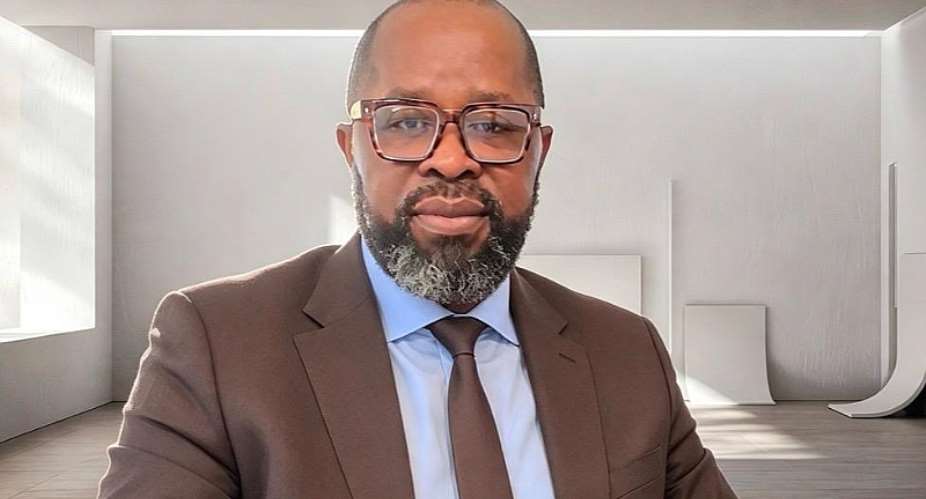
WORAWORA, Oti Region — Philanthropist and development advocate, Reverend Daniel Ohene Ahenkora, has called for the urgent rehabilitation of the Worawora–Jasikan Road, warning that residents of the Biakoye and Buem constituencies may embark on a peaceful demonstration if concrete steps are not taken to address the deteriorating condition of the road.
He questioned what he described as the prolonged neglect of the road, arguing that it serves as a critical transport link whose poor condition continues to affect economic activities, healthcare delivery, and the general well-being of residents.
Speaking on Bubune FM's Morning Show, Rev. Ahenkora said the approximately 11-mile stretch connects the Biakoye and Buem constituencies in the Oti Region, making it an important route for residents, businesses, and commuters.
According to him, the road consists of approximately five miles from Worawora to Kuje within the Biakoye Constituency and six miles from Jasikan to Kuje in the Buem area.
He maintained that the road should not be regarded as an ordinary feeder road, citing its strategic role in facilitating economic activity and connectivity between the two constituencies.
“This is not just any road. It is not a feeder road. It is a road that enhances business and connects two major constituencies. I don't know why it has been neglected for so long,” he lamented.
Rev. Ahenkora further warned that the deteriorating condition of the road poses serious challenges to healthcare delivery, particularly for patients requiring referrals to health facilities in Jasikan and Worawora.
He explained that delays in transporting critically ill patients could endanger lives, especially in communities with limited access to adequately equipped healthcare services.
As a result, he urged authorities to treat the rehabilitation of the road as both a development and public safety priority.
Questions MPs' Commitment to Road Rehabilitation
The development advocate expressed concern over what he described as the silence of the Members of Parliament for Biakoye and Buem regarding the state of the road.
He argued that the two legislators, who are members of the governing National Democratic Congress (NDC), could collaborate in advocating for the project and pushing for its inclusion among the government's development priorities.
Rev. Ahenkora disclosed that he had engaged the Member of Parliament for Buem, Kofi Adams, on the matter and was informed that the road was not currently among projects under consideration because of funding constraints.
According to him, the explanation was troubling, particularly the indication that the project would only be considered when funding became available.
He also appealed to the Member of Parliament for Biakoye to publicly communicate her efforts and position on securing rehabilitation of the road.
Responding to suggestions that road construction falls outside the responsibilities of Members of Parliament, Rev. Ahenkora argued that lawmakers have an obligation to advocate for development projects in their constituencies.
“An MP is a representative of the people and the mouthpiece of those they represent in Parliament. It is their responsibility to advocate and lobby for development in their respective areas,” he stated.
He further urged parliamentarians to engage government officials, development partners, and private investors to attract development projects rather than relying solely on central government funding.
Threatens Peaceful Demonstration
Rev. Ahenkora said he is advocating for a peaceful demonstration involving residents of the affected constituencies as a means of drawing attention to the road's condition.
He indicated that the planned demonstration would only proceed if there were no visible signs of rehabilitation work before the proposed action.
However, he stressed that any meaningful commencement of work would eliminate the need for a protest.
“If something tangible has started on the ground, then there will be no need for the demonstration. The reason for demonstrating would have been addressed. But if nothing has started, we will go ahead with it,” he stated.
He emphasized that the intended demonstration would be peaceful and aimed solely at highlighting the development concerns of residents.
Bamboo Resources Remain Untapped
Beyond infrastructure concerns, Rev. Ahenkora identified bamboo as one of Biakoye's most valuable yet underutilized natural resources.
He argued that the constituency possesses significant economic potential that could be unlocked through local investment and industrialization, particularly in the bamboo sector.
According to him, the widespread availability of bamboo presents an opportunity for industrial development through the establishment of a bamboo-processing factory.
Drawing inspiration from China's commercial and industrial use of bamboo, he suggested that Biakoye could attract investors to establish processing facilities capable of producing charcoal and other bamboo-based products.
“God has blessed Biakoye with bamboo, just as He blessed Kuwait and Iran with oil. Bamboo is a very valuable resource, and we must find ways to turn it into wealth for our people,” he said.
He explained that such an initiative could create employment opportunities while helping reduce the cost of charcoal, a commonly used household fuel within the constituency.
“What do we need to do? We need to establish a factory where bamboo can be processed into charcoal and other products. We have the resource; what we need is the leadership and vision to make it happen,” he added.
Rev. Ahenkora argued that the primary challenge was not the absence of resources but the lack of deliberate efforts to identify, develop, and maximize their economic value.
Development Advocacy Is Not Politics
Responding to suggestions that his involvement in development issues amounted to political interference, the Reverend Minister maintained that citizens, including religious leaders and development advocates, have a responsibility to speak out on issues affecting their communities.
He argued that political decisions directly influence people's lives and that active citizen participation in governance and development discussions is essential.
“If you don't speak because you don't want to meddle in politics, you will suffer in silence. I will always advocate for the vulnerable, and I will continue to do that,” he stressed.
He also encouraged journalists to continue holding public officials accountable, describing the media as the Fourth Estate of the Realm and a key institution in promoting accountability and development.
Appeal to Biakoye Residents
Rev. Ahenkora urged residents of Biakoye to unite in demanding improved infrastructure and stronger representation from elected leaders.
He called on constituents to make their concerns known to public officials and warned that residents may resort to a peaceful demonstration if there is no significant progress on the Worawora–Jasikan Road and other development needs by next year.
“We must rise up and let them know that we are also Ghanaians. We pay taxes, and we deserve development. But let me emphasise that this is not about violence; it is a peaceful demonstration,” he said.
He reiterated his commitment to advocating for the concerns of residents until meaningful action is taken.
Story: Asiamah Coomson Samuel

 Bank of Ghana cuts policy rate to 11% as economic conditions improve
 El Niño: Ghana Health Service urges early preparedness against meningitis, heat-...
 24-Hour Economy is a subset of the New Economy – Ricketts-Hagan
 Some people contest elections to strengthen political bargaining power, not to w...
 Polls help presidential aspirants assess chances and avoid wasting money – Mussa...
 $60m presidential jet could save Ghana up to $2m annually in charter costs – Nkr...
 August 6 helicopter crash should end politicisation of presidential jet purchase...
 Three leaders, three agendas: Who wants what from Xi-Trump-Putin summit?
 Policewoman allegedly insults Don Little, says 'My clitoris is longer than you'
 GRA identifies 19 out of 22 non-compliant shops at West Hills Mall


