




Ghana is committing US$200 million to a 24-month programme aimed at preparing the country for the construction of its first nuclear power plant.
The initiative, scheduled to run from January 2027 to December 2028, is expected to conclude with the signing of an engineering, procurement, construction and financing contract for a fully state-owned nuclear power facility.
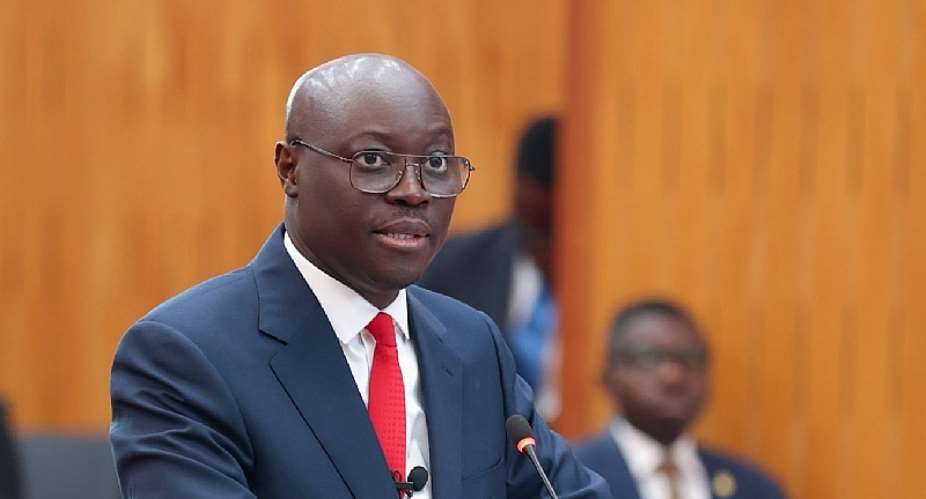
Finance Minister Dr Cassiel Ato Forson announced the investment while presenting the 2027 Budget Statement and Economic Policy to Parliament on Thursday.
He said the programme would address critical requirements for the project, including site suitability, technology selection, environmental assessments, financing arrangements, licensing, safeguards, emergency preparedness and safety standards.
“By December 2028, our target is to complete nuclear power readiness and sign the engineering, procurement, construction and financing contract for a fully state-owned nuclear base load power plant,” he said.
Dr Forson clarified that completing the preparatory phase by 2028 would not mean the plant would begin generating electricity in that year. Rather, it would position the country to proceed with the construction contract.
He stressed that the facility would remain a strategic national asset under full government ownership and would not be developed through an Independent Power Producer (IPP) arrangement.
Although international partners would provide technology, financing, engineering expertise and specialised services, ownership of the plant would remain with the state.
As part of efforts to build local capacity, the government also plans to train more than 2,000 Ghanaian scientists to support the country's nuclear energy ambitions.
“Energy sovereignty means Ghana must have control over the generation and transmission of the electricity that powers our economy,” he said.
The government is targeting the integration of the country's first nuclear power plant into the national electricity generation mix by 2030.
Nsuban in the Western Region has been selected as the preferred location for the facility, with Obotan in the Central Region identified as an alternative following technical assessments by Ghanaian experts.
The project follows President John Dramani Mahama's announcement in October 2026 that Ghana had begun discussions with Russia's State Nuclear Energy Corporation, Rosatom, over plans to establish the country's first nuclear power station.
The proposed facility is expected to provide baseload electricity to complement existing hydropower and thermal generation.
Beyond the nuclear project, Dr Forson announced plans to construct a fully state-owned 600-megawatt solar power plant supported by 2,000 megawatt-hours of battery storage, alongside a 1,450-megawatt thermal power facility.
He said the investments would form part of a broader strategy to eliminate all emergency power plants by December 2030.
The government also intends to spend US$500 million between 2027 and 2030 to upgrade the electricity transmission network and install 2 million prepaid meters as part of efforts to reduce distribution losses.
Performance-based private sector participation in electricity distribution is expected to be fully implemented by the end of 2027, while strategic public assets will remain under state protection.
According to the Finance Minister, the planned investments are expected to eliminate the government's annual US$1.4 billion expenditure on energy sector shortfalls and bring down the cost of power generation from approximately 16 US cents to 8 US cents or less per kilowatt-hour.

 2027 Budget: ‘Another round of slogans with no jobs’ – Afenyo-Markin
 Women's Development Bank to begin operations in early 2027 – Ato Forson
 Govt to settle US$590m Eurobond and domestic bond obligations by December 31 – A...
 Govt allocates GH¢1bn to complete 35 Agenda 111 hospitals in 2027
 Ato Forson outlines eight pillars of government's US$10bn economic transformatio...
 Govt allocates GH¢600 million for construction of 10 regional stadia
 Government rules out new taxes in 2027, targets GH¢323.4bn revenue
 2027 Budget: Gov't to improve revenue collection without introducing new taxes –...
 New Economy to help Ghana process more of its resources locally – Ato Forson
 [Full text] Ato Forson presents 2027 budget in Parliament


