




INTRODUCTION
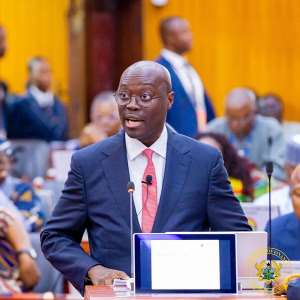
1. Rt. Hon. Speaker, on the authority of His Excellency President John Dramani Mahama and pursuant to Articles 179 and 180 of the 1992 Constitution of the Republic of Ghana, and sections 21 and 23 of the Public Financial Management Act, 2016 (Act 921), I respectfully present to this House the Budget Statement and Economic Policy of Government for the 2027 Financial Year.
2. Mr. Speaker, this address is an abridged version of the full 2027 Budget Statement and Economic Policy of Government.
3. I respectfully request that the Hansard Department captures the entire Budget Statement and Economic Policy of the government for the year ending 31st December 2027.
4. Mr. Speaker, I accordingly move that, this House approves the Budget Statement and Economic Policy of Government for the year ending 31st December 2027.
5. Rt. Hon. Speaker, Ghana has made significant gains and has emerged from the most painful economic crisis in our history.
6. Stability has returned. Confidence is back. Ghanaians can breathe again.
7. Now, Ghana must decide what to do with that breathing space.
8. That decision will shape the lives of millions of Ghanaians and improve their circumstance:
i. the young graduate searching for a job;
ii. the farmer seeking a reliable market;
iii. the market woman whose capital was eroded by inflation;
iv. the pensioner whose life savings were wiped out overnight by the debt restructuring; and
v. the entrepreneur with the courage to build but without affordable long-term finance.
9. Mr. Speaker, Ghanaians have endured modest economic progress that arrives in bursts and disappears before families can build secure lives around it.
10. Our people have experienced repeated episodes of:
i. hope followed by hardship;
ii. growth followed by instability;
iii. fiscal expansion followed by painful correction;
iv. a stable currency followed by sharp depreciation; and
v. new opportunities followed by job losses.
11. These boom-and-bust cycles must cease.
12. At independence, Ghana carried the hope of Africa.
13. We had natural and human resources and a place of distinction in the world, admired and respected by many.
14. Osagyefo Dr Kwame Nkrumah understood that political freedom required economic emancipation.
15. His generation reached for an industrial nation, supported by power, infrastructure, education and purposeful state capacity.
16. The bare truth is that, after Dr. Nkrumah, our nation has struggled to sustain a shared economic direction long enough to fulfil its potential.
17. Governments have built. Businesses have grown. Yet these have too often been interrupted intermittently by instability, changes in direction and the urgent work of repairing another crisis.
18. We have grown, but we have not built enough resilience into that growth.
19. Between 1990 and 2025, real GDP growth averaged 5.2 per cent.
20. That record tells us that Ghana is capable of economic expansion.
21. But it also conceals the volatility within that growth.
22. Commodity upswings have lifted revenue and national confidence.
23. When prices dropped or fiscal discipline weakened, the cedi came under pressure, inflation rose, interest rates climbed and investment declined.
24. Our long dependence on raw commodities deepened this vulnerability.
25. Gold, cocoa and later oil dominated exports, while extractive industries accounted for about 16 per cent of GDP growth over the last decade.
26. The result is an economy that can post growth figures while leaving too many citizens outside the promise of that growth.
27. Unemployment stood at about 12.8 per cent in 2025, despite more than three decades of economic expansion.
28. The best measure of an economy must be an improvement in the quality of life.
29. Mr. Speaker, the crisis of 2022 exposed the weaknesses of the old pattern.
30. Temporary booms had financed permanent commitments.
31. Reckless spending, weak revenue and expensive debt produced deficits that could no longer be sustained.
32. Debt distress followed and Ghana could no longer afford to pay its debt.
33. By the end of 2022:
i. inflation reached 54.1 per cent;
ii. the primary balance stood at a deficit of 4.3 per cent of GDP;
iii. the IMF debt sustainability analysis put our debt at over 100 percent of GDP; and
iv. the Gross International Reserves had fallen to less than three weeks of import cover.
34. These numbers describe the scale of the economic meltdown but do not fully capture the human cost.
35. The crisis affected every household and business:
i. it imposed severe hardship on families;
ii. it made food too expensive;
iii. it raised transport fares and the cost of medicine;
iv. it diminished pensions and savings; and
v. it collapsed businesses through high interest rates and rapid cedi depreciation.
36. Families were forced to make impossible choice: postpone education, housing and healthcare.
37. The debt restructuring imposed painful and crude haircuts on households, pension funds, banks, businesses and investors.
38. Mr. Speaker, the Ghanaian people paid a heavy price.
39. We owe them something greater than recovery.
40. We owe them a country that honours their sacrifices and ensures that the hardship they have endured does not become their children’s inheritance.
41. Mr. Speaker, in 2025, we immediately begun to restore order, credibility and economic stability.
42. By the end of 2025, within one year:
i. inflation had fallen from 23.8 per cent to 5.4 per cent;
ii. the primary balance had significantly improved from a deficit of 4.1 per cent to a surplus of 2.5 per cent of GDP;
iii. public debt had declined to 44.7 per cent of GDP; and
iv. the Gross International Reserves had risen to 5.7 months of import cover.
43. These gains give households greater certainty, allow businesses to plan and create room for Ghana to think beyond the next emergency and crises.
44. No statistic can refund the years families lost to instability.
45. Their sacrifices will be honoured when restored stability becomes production, jobs, rising incomes and opportunity.
46. Mr. Speaker, in the past, Ghana has often created fiscal space and then failed to direct it with sufficient purpose.
47. Once the immediate pressure eased:
i. scarce resources were spread thinly across competing demands;
ii. projects multiplied without rigorous appraisal; and
iii. short-term consumption crowded out investment in productive capacity.
48. We repaired the public finances but did not use the recovery to alter the structure of the economy.
49. Before long, the productive base remained too narrow to carry the obligations of the State, and the cycle began again.
50. Mr. Speaker, fiscal space is a national asset.
51. It is earned through:
i. the painful sacrifices of the Ghanaian people;
ii. the taxes of the Ghanaian people; and
iii. the discipline of Government.
52. We have a moral obligation to use the fiscal space wisely.
53. Every cedi of that space must answer a national question:
i. what jobs will it create;
ii. what imports will it replace;
iii. what exports will it generate; and
iv. what lasting value will it leave behind?
54. Mr. Speaker, our economic programme, The New Economy: New Ghana, Jobs and Prosperity, provides the answer.
55. The New Economy is the Government of Ghana’s four-year programme to transform the structure of the Ghanaian economy.
56. Mr. Speaker, in 2027, Ghana will mark 70 years of independence.
57. Yet the economic transformation envisioned by Osagyefo Dr. Kwame Nkrumah has not been realised.
58. Our economy continues to carry the burden of longstanding structural weaknesses.
59. We depend too heavily on raw material exports, add too little value at home and create too few productive jobs for our people.
60. Mr. Speaker, our 70th anniversary must mark a decisive turning point.
61. The New Economy is the Government of Ghana’s four-year programme, beginning in 2027, to confront these weaknesses and transform the structure of our economy.
62. We will expand production, process more of our resources at home and turn our nation’s wealth into decent jobs, higher incomes and lasting prosperity.
63. As Ghana turns 70, we owe the next generation an economy worthy of the freedom we inherited and the sacrifices our people have made.
64. As we begin the next 70 years of our national journey, let us resolve to build a fully developed, first-world Ghana.
65. This demands a fundamental shift in our thinking, our priorities and our actions.
66. Therefore, over a four-year period, from 2027 to 2030, Government will spendUS$10 billion to create a modern Ghanaian economy for jobs and prosperity.
67. The Programme has eight connected pillars:
i. macroeconomic stability and affordable finance;
ii. commercial agriculture;
iii. energy infrastructure;
iv. critical minerals value addition;
v. tourism, culture and creative arts;
vi. textiles and garments;
vii. pharmaceuticals and biomanufacturing; and
viii. the technology economy.
68. The pillars form one production system:
i. affordable finance must reach farmers, manufacturers and exporters;
ii. agriculture must supply food and industrial raw materials;
iii. reliable energy must support a 24-hour economy;
iv. minerals and cocoa must gain value in Ghana before export;
v. tourism, culture and creative arts must turn our rich heritage and creativity into thriving businesses, jobs and foreign exchange;
vi. textiles and garments must expand local manufacturing, create jobs and connect Ghanaian skills and enterprise to global fashion markets;
vii. pharmaceuticals and biomanufacturing must produce more medicines and vaccines in Ghana, strengthen health security and supply markets across Africa; and
viii. technology must widen our sources of jobs and foreign exchange. Rural connectivity must allow talent in every region to participate in the New Economy.
69. This integrated approach will guide the use of fiscal space.
70. Mr. Speaker, Government will preserve stability, provide strategic infrastructure, prepare bankable projects and create predictable conditions for enterprise.
71. The private sector will carry the principal responsibility for investment, innovation, production and sustainable employment.
72. Government support will be transparent, time-bound and linked to verified results.
73. We will protect the recovery through fiscal discipline, greater accountability and diligence.
74. We will pursue faster growth and higher employment.
75. The measure of success will be how many jobs we create, improvement in the quality of life and how quickly our communities develop.
76. Mr. Speaker, I call on Ghanaians to make a defining national choiceabout the future we want to build.
77. We can spend the recovery as though history has taught us nothing or invest in a productive base strong enough to carry the next generation.
78. We can allow this recovery to pass or use this period of stability to change what Ghana produces and sells to the world:
i. we choose production;
ii. we choose jobs with dignity; and
iii. we choose a national purpose that can survive electoral cycles and outlast governments!
79. Mr. Speaker, the New Economy begins with a solemn pledge:
i. the suffering caused by recurring crisis must end;
ii. the fiscal space bought by the sacrifice of the people must be used solely for the benefit of the people; and
iii. Ghana's resources must build Ghanaian jobs and prosperity.
80. Mr. Speaker, with that duty before us, I now present the 8 pillars of the New Economy programme.
PILLAR ONE: MACROECONOMIC STABILITY AND AFFORDABLE FINANCE
81. Rt. Hon. Speaker, the first pillar will institutionalise the stability on which every farm, factory, household and public institution depends.
82. Our duty is to protect the gains made and apply them to the benefit of Ghanaians.
83. From 2027:
i. we will maintain a positive primary balance of at least 0.5 per cent of GDP;
ii. we will keep public debt consistent with the 45 per cent of GDP;
iii. we will preserve single-digit inflation; and
iv. strengthen our external buffers.
84. By 2030:
i. we are targeting real GDP growth of about 8 per cent;
ii. unemployment below 8 per cent; and
iii. a credible path to investment-grade sovereign credit rating.
85. Investment-grade sovereign rating cannot be conferred by a speech.
86. It must be earned through sustained performance.
87. Government will publish an annual Investment-Grade Readiness Report covering:
i. fiscal performance;
ii. debt affordability;
iii. reserves;
iv. monetary credibility;
v. financial sector strength;
vi. institutional quality; and
vii. economic diversification.
88. Mr. Speaker, affordable finance will turn stability into opportunity.
89. Lower interest rates will translate into credit that businesses can access, afford and repay.
90. From the market woman seeking working capital, to the manufacturer investing in new machinery, Ghanaian enterprises need financing that supports growth.
91. We will strengthen bank lending, deepen corporate bond markets, and create the conditions for cheaper, longer-term credit.
92. Government will work through the Development Bank Ghana, Ghana EXIM Bank and participating financial institutions to expand financing for productive businesses.
93. Credit guarantees, equipment leasing and export finance will help viable enterprises overcome financing barriers.
94. Patient capital will give farmers and industrialists time to invest, produce and earn before repayment falls due.
95. Support will be transparent and tied to investment, production and employment.
96. Mr. Speaker, our ambition is to bring the cost of capital into single digits and make finance more widely available.
97. We will sustain fiscal discipline and create greater room for banks to finance private enterprise.
98. Affordable financing means businesses can expand and provide more jobs for our young people.
99. That is how the gains of stability will reach homes, workplaces and communities across Ghana.
100. These are national commitments.
101. Fiscal discipline will apply throughout the election cycle.
102. The room created by discipline will be directed purposefully towards irrigation, energy, transport, industrial infrastructure, technology, skills and the productive sectors set out in this Programme.
103. Stability will improve the balance sheets of Ghanaian businesses.
104. The purpose of stability is productive confidence:
i. a farmer will be able to plan the next season without fearing an inflation shock;
ii. a manufacturer will be able to price an order without gambling on the exchange rate;
iii. an investor will be able to commit capital beyond one political term; and
iv. a young Ghanaian will see economic growth reflected in jobs, wages and opportunities.
105. We will judge growth by the jobs it creates, the incomes it raises and the productive capacity it leaves behind.
106. Commodity windfalls and debt-financed consumption will no longer define progress.
107. Ghana's next phase of growth must be investment-led, export capable and job-intensive.
NEW ECONOMY PROGRAMME FINANCING
108. Mr. Speaker, Government will invest US$10 billion over the period 2027 to 2030 to finance the New Economy Programme through two fiscal measures.
109. First, we will reduce Ghana’s primary surplus target by 1 percentage point of GDP over the period, creating room for investment in productive infrastructure, industries and jobs.
110. Second, tax reforms already approved by Parliament and compliance measures are expected to generate 0.5 percent of GDP.
111. In 2027, we will invest 1.5 per cent of GDP, equivalent to GH¢30 billion, in the New Economy.
112. This will finance the foundations for economic transformation needed to expand businesses, increase exports and create jobs for the Ghanaian people.
113. We will sustain it throughout 2027 to 2030 to fund the New Economy, while preserving macroeconomic stability and protecting our hard-won gains.
114. Every project will undergo rigorous appraisal and value-for-money assessment.
115. All commitments will be budgeted, authorised and transparently reported.
116. Every cedi invested will help build a stronger economy and improve the lives of our people.
117. Public funds will concentrate on strategic assets and public goods.
PILLAR TWO: COMMERCIAL AGRICULTURE
118. Mr Speaker, our second pillar will invest US$3 billion to build a commercially organised agricultural economy.
119. Agriculture already accounts for about 20 per cent of Ghana's economy, almost 40 per cent of employment and nearly 25 per cent of export earnings.
120. The reach is even wider when transport, processing, packaging, trade and rural services are included.
121. Yet, Ghana spends billions of dollars each year importing food and agricultural products that can be produced competitively at home.
122. That import bill weakens the cedi, transmits external price shocks and denies Ghanaian communities a fair share of national demand.
123. Every avoidable import is more than a customs entry:
i. it is a farm that was not financed;
ii. a factory that remained idle;
iii. a transport contract that was never signed; and
iv. a job that was created somewhere else.
124. This pillar will turn Ghanaian land, water and enterprise into food security, lower inflation, rural incomes, industrial raw materials, exports and decent work.
125. We will build eight integrated industries: rice, sugar, poultry, maize and soya feed, aquaculture, oil palm, vegetables and cocoa value addition.
126. Each industry will have its own commercial plan, financing structure, production targets, processing capacity, market rules and delivery unit.
127. They will operate through one national farm-to-market system.
128. That system will connect secure land and water to improved seed and breeds, irrigation, mechanisation, extension, anchor farms and organised outgrowers.
129. It will then connect production to storage, processing, packaging, transport, institutional purchasing, retail markets and exports.
130. The farm must no longer stand alone at one end of the value chain while the market waits at the other.
131. Production without storage creates gluts and losses.
132. Processing without reliable supply creates idle factories.
133. Credit without markets leaves farmers in debt.
134. Mr. Speaker, we will fix this value chain!
135. Let me start with our interventions for the rice value chain.
136. We will create Rice Development Hubs in Afram Plains, Volta Basin, Western Ghana and Northern Ghana to organise production around irrigation, mechanisation, silos, modern mills, packaging and logistics.
137. The hubs will bring an additional 100,000 hectares under production, target yields of five to six metric tonnes per hectare and support about 125,000 jobs.
138. Mr. Speaker, all rice development hubs will benefit from targeted tax incentives covering irrigation, mechanisation, silos, modern mills, packaging and logistics.
139. These incentives will lower investment costs, reduce post-harvest losses and help Ghanaian rice reach consumers at competitive prices.
140. Mr. Speaker, we are amending the public procurement laws to require that public funds spent on rice and other staples for our schools, hospitals and other public institutions purchase ONLY foodstuff grown in Ghana.
141. This will ensure that public spending feeds our children, patients and other beneficiaries while providing a reliable market for Ghanaian farmers and creating jobs at home.
142. Mr. Speaker, the principle is simple: the money of the Ghanaian people must create opportunity for the Ghanaian people.
143. If you spend their money to put rice on the table, that rice must come from their farms.
144. Our public purse must nourish both those who eat and those who produce.
145. Mr. Speaker, if you use Ghana’s money to buy rice, you must buy Ghana rice!
146. Beginning 2027, rice import licences will be tied to purchases from verified Ghanaian farmers and millers.
147. The local-purchase ratio will rise as domestic output expands and import quotas decline.
148. Mr. Speaker, Commercial rice imports will be prohibited by 2030.
149. That decision will be backed by domestic production, milling, storage, quality assurance and reliable distribution.
150. The rice on a Ghanaian table should increasingly come from a Ghanaian field, pass through a Ghanaian mill and support Ghanaian work.
151. Mr. Speaker, our second intervention will be in the sugar value chain.
152. Ghana will pursue self-sufficiency in sugar requirements by 2030, through:
i. locally grown cane;
ii. irrigated production zones;
iii. nucleus estates;
iv. organised outgrowers and;
v. commercially viable mills.
153. Sugar development zones will be selected according to land suitability, water security, logistics and bankability.
154. We shall introduce import permits and quotas which will decline as verified Ghanaian output rises.
155. Mr. Speaker, the third and fourth areas of intervention will be in the poultry value chain and competitive poultry feed industry.
156. Ghana will build the full value chain, from breeder farms and hatcheries to day-old chicks, feed, vaccines, veterinary laboratories, modern poultry houses, processing plants, cold storage and retail distribution.
157. Commercially capable anchor farms will work with existing small and medium-sized producers and organised outgrowers.
158. Institutional buyers, retailers and hospitality businesses will use transparent multi-year contracts for safe Ghanaian chicken.
159. Mr. Speaker, feed accounts for 60-70 per cent of poultry production costs.
160. The future of poultry therefore depends on the future of maize and soyabean, which are the main ingredients for poultry feed.
161. Commercial maize and soyabean clusters will link farmers directly to feed mills through bankable contracts.
162. Lower feed costs will strengthen poultry and aquaculture at the same time.
163. One productive chain will reinforce another.
164. Mr. Speaker, our fifth intervention is to ensure fish security.
165. Ghana has an annual estimated fish-supply gap of about 500,000 metric tonnes. We will fix this!
166. Aquaculture will become the principal source of new supply while marine and inland fisheries are restored.
167. Commercial and smallholder aquaculture clusters will receive quality broodstock, fingerlings, feed, cages, ponds, tanks, aquatic-health laboratories, disease surveillance and water-quality systems.
168. Patient finance and insurance will help responsible operators expand.
169. Production will be linked to cold chain, hygienic processing, testing, transport and assured markets.
170. We will build modern fishing villages and landing sites.
171. We will deal with Illegal fishing, strengthen licensing regime and involve communities.
172. We will increase fish supply without destroying the resources on which future supply depends.
173. Mr. Speaker, our sixth intervention area will be in the oil palm value chain, Ghana's red gold.
174. We will develop 100,000 new hectares across the Western, Central, Eastern, Volta and Ashanti production belts.
175. Integrated oil palm zones will connect certified nurseries, nucleus estates and organised smallholders to mechanisation, modern mills, refineries and downstream manufacturing.
176. A US$500 million patient-finance window, with long tenors and a five-year moratorium, will recognise that a tree crop cannot be financed like short-cycle trading.
177. The programme has the potential to support more than 250,000 jobs and reach self-sufficiency and export scale by 2032.
178. Mr. Speaker, I can now report that 100,000 hectares of suitable land has been identified.
179. The Ministry of Lands and Natural Resources is going through process of acquisition, in line with international best practice.
180. The US$500 million-World Bank financing has been agreed on with the Bank and will soon be presented to Parliament for consideration.
181. Mr. Speaker, our seventh intervention will be in the vegetable industry value chain, anchored by the Pwalugu Multi-purpose Dam.
182. Mr. Speaker, to achieve vegetable self-sufficiency, we will invest US$1 billion to build the Pwalugu Multi-purpose Dam.
183. We will irrigate over 25,000 hectares of land for vegetable production.
184. The reservoir of the Pwalugu Multi-Purpose Dam will also house 1,000 fish cages for aquaculture.
185. Pwalugu will support year-round vegetable production, flood protection, water security and agribusiness across the White Volta corridor.
186. Mr. Speaker, the Pwalugu Multipurpose Dam will also generate 70 MW of hydropower to power agro-industries within and around the Pwalugu enclave.
187. This will connect agricultural production directly to processing, helping businesses add value close to the farms.
188. The electricity will support processing factories, irrigation systems, packhouses and cold storage facilities.
189. Mr. Speaker, the first phase of the Pwalugu Multi-purpose Dam will be ready by early 2029, with full completion by December 2030.
190. Pwalugu will be complemented by serviced vegetable enclaves in other regions, water-harvesting systems and protected cultivation.
191. Mr. Speaker, our eighth and final intervention under the Commercial Agriculture pillar will be in cocoa value addition.
192. Ghana will process at least 50 per cent of its cocoa locally by 2028 and 100 per cent by 2030, completing the transition towards a ban on raw cocoa exports.
193. Domestic capacity will expand beyond primary grinding into cocoa liquor, butter, cake, powder, chocolate, cosmetics and other finished products.
194. Mr. Speaker, the country that grows the bean must retain a far greater share of the industry built around it.
195. Ghanaian enterprises, researchers, brands and skilled workers must participate in that value chain.
196. Mr. Speaker, this pillar will make agriculture a business, agro-processingan industry and food security a source of national strength.
197. It will put irrigation beneath our ambition, finance behind our farmers, factories beside our fields and reliable markets ahead of production.
198. Rt. Hon. Speaker, when Ghana grows more of what it eats, processes more of what it grows and exports more of what it makes, rural prosperity will rise, inflation will become easier to control, and the cedi will face less pressure.
199. That is how a US$3 billion Commercial Agricultural pillar becomes lower food prices, stronger communities, thriving agro-industry and dignified jobs for the Ghanaian people.
PILLAR 3: US$2.2 BILLION ENERGY INFRASTRUCTURE
200. Rt. Hon. Speaker, I now take you to pillar 3 of the New Economy
201. Mr. Speaker, industrialisation cannot advance without reliable and affordable power.
202. Ghana's energy system has expanded, yet high tariffs, distribution losses, weak collections, fuel risks and accumulated obligations continue to burden businesses and the national budget.
203. In 2025, the annual energy sector shortfall was about US$1.4 billion, while arrears to IPPs and fuel suppliers stood at about US$1.7 billion.
204. Mr. Speaker, to ensure energy sovereignty, in December 2026 (this year), we will start the construction of a 1,450-megawatt thermal power plant at Kafodzidzi-Abrobeano in the Central Region.
205. This power plant will be fully funded and owned by the state.
206. The first 600 megawatts will be ready by December 2028, and the remaining 850 megawatts by December 2030.
207. The plant is expected to use about 150 million standard cubic feet of additional gas per day from the Sankofa and Jubilee fields.
208. Mr. Speaker, Government will also construct a fully state-owned 600 megawatts solar power plant, supported by 2,000 megawatt-hours of battery storage.
209. The 2,000 megawatt-hours of battery storage will shift daytime solar power into peak periods and support grid stability.
210. The 1,450MW thermal power plant, the 600 MW solar power plant and the 2,000 megawatt-hours of battery storage, will together supply homes and industries.
211. They will also meet the continuous energy demands of bauxite processing, manganese processing, steel, cement, agro-industry and the 24-Hour Economy.
212. Mr. Speaker, today we announce a decisive shift towards Ghana’s energy independence.
213. There are no rich countries that are energy-poor.
214. That does not exist.
215. Energy capacity is economic capacity. It powers growth, jobs, and prosperity.
216. Affordable and reliable power attracts industry, creates jobs and fuels prosperity.
217. Mr. Speaker, let’s power Ghana’s industrial future now!
218. By 2030, Ghana will phase out emergency power plants.
219. Our new state-owned thermal power plant, together with solar power and battery storage, will make this possible.
220. We will power our industries and our homes with affordable and reliable electricity.
221. Mr. Speaker, we will end our dependence on costly emergency power by 2030.
222. Rt. Hon. Speaker, Government will also dedicate US$500 million from 2027 to 2030 to modernise the transmission system to reduce transmission losses.
223. GRIDCo will strengthen the north-south network, connect new generation to demand centres, support sub-regional power trade and provide dedicated high-reliability connections to strategic industrial enclaves.
224. To reduce distribution losses, 2 million prepaid meters will be deployed.
225. Mr. Speaker, a performance-based private-sector participation in electricity distribution will be fully implemented by the end of 2027.
226. Strategic public assets will remain protected while private-sector expertise will help reduce the distribution losses.
227. These investments in power generation, grid modernisation and electricity distribution, will eliminate the US$1.4 billion taxpayers’ money government is compelled to spend yearly on the energy sector shortfall.
228. Rt. Hon. Speaker, we will work to reduce the cost of power generation from about 16 US cents per kilowatt-hour to 8 US cents per kilowatt-hour or less.
229. Reducing the cost of generating power will accelerate Ghana’s industrialisation.
230. Affordable and reliable electricity will lower production costs, make Ghanaian goods more competitive and give businesses the confidence to invest and expand.
231. This will enable us to process more of our raw materials at home, power new factories and create more jobs for our people.
232. Mr. Speaker, our goal is energy sovereignty.
233. Ghana must have control over the generation and transmission of the electricity that powers our economy.
234. Through strategic investment in state-owned generation and a stronger national transmission network,
235. We will secure our energy future and put the power to industrialise firmly in the hands of Ghanaians.
236. Mr. Speaker, this pillar also begins Ghana's nuclear future with caution and purpose.
237. Government will invest US$200 million in a 24-month nuclear-readiness programme from January 2027 to December 2028.
238. By December 2028, our target is to complete readiness and sign the engineering, procurement, construction and financing contract for a fully state-owned nuclear baseload power plant.
239. Nuclear power readiness in 2028 does not mean nuclear power generation in 2028.
240. It means that:
i. site studies;
ii. technology selection;
iii. environmental assessment;
iv. financing;
v. licensing preparations;
vi. safeguards;
vii. emergency planning; and
viii. the safety case, have reached the standard required for investment and implementation.
241. Mr. Speaker, the nuclear power plant will remain a STRATEGIC NATIONAL ASSET and will not be developed as an independent power producer.
242. International partners will only provide technology, finance, engineering and specialist services.
243. Mr. Speaker, as part of our nuclear readiness journey, Government will train over 2,000 scientists to build local expertise to drive Ghana’s transition to safe and reliable nuclear power.
244. Mr. Speaker, over sixty years ago, Osagyefo Dr. Kwame Nkrumah gave his beloved Ghana its first great source of baseload power at Akosombo.
245. He built for generations he would never meet.
246. Today, we owe future generations that same foresight and courage.
247. For years, we have spoken about developing a nuclear power plant.
248. The time has come to turn that ambition into action.
249. We are determined to develop this new source of baseload power, because a nation’s future is secured by what each generation has the courage to build.
PILLAR 4: US$1.5 BILLION CRITICAL MINERALS VALUE ADDITION
250. Rt. Hon. Speaker, I turn to pillar 4.
251. Mr. Speaker, Ghana has exported mineral wealth for generations.
252. The ore leaves our soil, while much of the refining, metallurgy, manufacturing, technology and skilled employment takes place elsewhere.
253. Pillar 4 will invest US$1.5 billion to build an industrial mineral economy around manganese, bauxite, lithium and gold.
254. Mr. Speaker, success will be measured by:
i. the value retained in Ghana;
ii. export earnings per tonne;
iii. skilled jobs;
iv. Ghanaian suppliers;
v. technology transferred; and
vi. environmental performance.
255. At least 70 per cent of artisanal and small-scale gold will be refined locally by December 2027.
256. Local refining will reach 100 per cent by December 2028, when all exports of raw ASM gold will be prohibited.
257. At least 50 per cent of Ghana's manganese and bauxite will be processed locally by the end of 2028.
258. By the end of 2030, Ghana will process all its manganese and bauxite locally and prohibit raw manganese and bauxite exports.
259. Bauxite will support alumina refining and aluminium smelting.
260. Lithium development will begin with local refining and move progressively into battery-grade chemicals, components and cells.
261. Mr. Speaker, we will build a 24-hour critical-minerals processing enclave in the Western Region.
262. Pillar 3 will supply the power backbone for this minerals processing enclave in the Western Region.
263. Mr. Speaker, beginning 2027, we will use our own resources to construct a railway line from Takoradi to Nyinahin.
264. This railway line will go through major mineral towns such as Nsuta and Awaso.
265. The railway line will carry manganese and bauxite to the western processing enclave for value addition.
266. The Takoradi Port will be developed as Ghana's principal maritime gateway to the Sahel.
267. From 2030, this railway will be extended north-bound from Nyinahin to Hamile in the Upper West Region.
268. A modern inland port at Hamile will serve Burkina Faso, Mali, Niger and the wider Sahel.
269. This railway must power Ghanaian industries, support local processing and create jobs for our people.
270. We must move our minerals towards greater value and our people towards greater prosperity.
Pillar 5: A US$1 Billion for Tourism, Culture and Creative Arts
271. Rt. Hon. Speaker, we now move to pillar 5: Tourism, Culture and Creative Arts.
272. Mr Speaker, Ghana possesses:
i. a history that speaks to the world;
ii. a culture that continues to shape Africa; and
iii. a reputation of peace and democratic stability in a region that needs dependable places to meet, invest and heal.
273. We will invest US$1 billion to turn these strengths into a year-round visitor economy that earns foreign exchange, sustains creative enterprise and creates better jobs across the country.
274. December in Ghana will remain a powerful anchor, while heritage journeys, ancestry services, family reunions, education programmes and the creative arts will create reasons to visit throughout the year.
275. The Black Star Experience will run through all twelve months.
276. A national calendar and competitive destination bidding will spread demand across seasons and regions and turn events into bookable journeys.
277. Our forts, castles and sites connected to the Trans-Atlantic Slave Trade will be treated with historical accuracy, dignity and care.
278. Mr. Speaker, we will:
i. conserve the physical assets;
ii. strengthen museums and archives;
iii. improve multilingual interpretation;
iv. train conservators and guides; and
v. connect the sites to roads, public spaces, hotels, Ghanaian food, transport and local enterprise.
279. Conservation will guide construction and communities will participate in the telling of their histories.
280. Mr. Speaker, our ambition is to make Ghana West Africa’s destination of choice for international conferences and business tourism.
281. To advance this ambition, SSNIT will build and operate an ultra-modern international convention centre at the La Trade Fair Centre.
282. It will be a landmark venue worthy of the Black Star, bringing major international gatherings to Ghana.
283. Accra will anchor this drive as our principal international hub, while Kumasi will be developed as a complementary destination, drawing on its rich cultural heritage to host business, cultural and other major events.
284. Mr. Speaker, in 2027, we will establish a professional convention bureau to bid for recurring African and global conferences.
285. Government will grant tax incentives to SSNIT to also build by 2030:
i. a five-star hotel in Accra;
ii. a five-star hotel in Kumasi;
iii. a modern, affordable four-star hotel to serve the Cape Coast and Elmina heritage corridor;
iv. a modern, affordable four-star hotel in the Volta Region for eco-tourism; and
v. a modern, affordable four-star hotel in Northern Ghana.
286. Government will complete a new National Theatre in Kumasi as a cultural, performance, conference and creative-industry asset.
287. Mr. Speaker, the third engine will be private-sector-led medical tourism.
288. Mr. Speaker, Government will establish a Ghana Medical Tourism Hub linked to specialist hospitals, diagnostics, rehabilitation, hotels, laboratories, and pharmacies.
289. Government will also provide targeted tax incentives for the development of the Ghana Medical Tourism Hub.
290. Government will provide serviced land and trunk infrastructure for the Ghana Medical Tourism Hub.
291. By 2030, we expect higher arrivals, longer stays, greater visitor spending and stronger foreign-exchange earnings.
292. The benefit must reach Ghanaian farmers, food suppliers, transport providers, craftspeople, artists, technology firms and event businesses.
Pillar 6: US$1 Billion Investment to Take Ghana’s Textiles and Garments to Global Fashion Markets
293. Rt. Hon. Speaker, we now move to pillar 6.
294. Mr. Speaker, Government will invest US$1 billion to transform Ghana’s textile and garment industry into a competitive source of production for global fashion markets.
295. Under the 24-Hour Economy and the Accelerated Export Development Programme, we will turn Ghanaian creativity and craftsmanship into industrial growth, exports and jobs.
296. Our ambition is clear:
i. fabrics made in Ghana;
ii. garments sewn in Ghana; and
iii. Ghanaian brands sold across the world.
297. From the factory floor to the fashion runway, this investment will create opportunities for our people.
298. We will support the modernisation of textile mills and the expansion of garment factories.
299. We will create dedicated textile and garment industry enclaves linked to production clusters.
300. We will provide serviced land, reliable power, industrial water, treatment facilities, laboratories, warehouses and factory buildings.
301. These shared facilities will help manufacturers reduce costs and meet large orders.
302. Mr. Speaker, our fashion designers, tailors and dressmakers must have room to grow.
303. We will connect their talent to modern equipment, technical support and commercial partnerships that help them build businesses capable of supplying regional and international buyers.
304. Mr. Speaker, public procurement will help strengthen domestic demand.
305. Mr. Speaker, we will amend the public procurement laws to require that public funds spent on uniforms, hospital textiles, bedding and protective wear for our security agencies, schools, hospitals and other public institutions are purchased from ONLY Ghanaian textile and garment manufacturers.
306. Factories will be supported to meet international standards for quality, traceability and responsible production.
307. In 2027, we will begin enclave infrastructure, modernise priority textile and garment facilities.
308. In 2028, new and upgraded production lines will come onstream, supported by buyer agreements and export orders.
309. By 2030, our goal is a textile and garment industry producing at commercial scale, supplying wider markets and building recognition for Ghanaian design and brands.
310. This investment will create opportunities for machine operators, technicians, designers, dressmakers, factory managers and logistics providers, especially women and young people.
311. Mr. Speaker, our ambition is to put Made-in-Ghana fashion into wardrobes around the world and put dependable incomes into Ghanaian homes.
Pillar 7: A US$1 Billion Pharmaceutical and Biomanufacturing Compact
312. Rt. Hon. Speaker, I now take you to pillar 7 under the New Economy.
313. Mr. Speaker, Ghana currently imports between 70 and 75 per cent of its medicine needs, costing about US$500 million every year.
314. We will invest US$1 billion to strengthen medicine security, create skilled industrial work, conserve foreign exchange and build a pharmaceutical export platform for West Africa.
315. We will establish Pharmaceutical and Biomanufacturing Hubs in the Eastern and Central Regions.
316. Qualified Ghanaian and international manufacturers will enter through transparent leases and operating agreements.
317. Mr. Speaker, we will amend the public procurement laws to require that public funds spent on medicines are used only to purchase medicines produced in Ghana, wherever those medicines are available in sufficient quantity and meet approved quality standards.
318. Mr. Speaker, other countries have shown the way:
i. India requires all government procuring entities to give purchase preference to locally manufactured medicines that meet minimum local content thresholds;
ii. Ethiopia has granted domestic manufacturers preferential access to state supply contracts and set a target to triple their share of public medicine procurement;
iii. Nigeria directs its ministries, departments and agencies to give preference to locally manufactured goods; and
iv. Tanzania grants local manufacturers a price preference in national medicine tenders.
319. Ghana will go further, by making Ghanaian-produced medicines the default choice for every cedi of public money spent on medicines.
320. Mr. Speaker, we are determined to use public procurement to back Ghanaian businesses, buy Ghanaian goods and promote Ghanaian exports.
321. Local preference will never excuse poor quality, late delivery or bad value.
322. Every supplier must hold Food and Drugs Authority registration and meet Good Manufacturing Practice standards.
323. We will also support our manufacturers to attain WHO prequalification so that Ghanaian medicines can compete across the region.
324. In 2027, the state-owned SPV will begin the construction of these Pharmaceutical and Biomanufacturing hubs.
325. Mr. Speaker, the 2030 destination is to manufacture 60 to 80 per cent of Ghana's essential medicine needs locally.
326. Under this pillar alone, we project approximately 20,000 direct and indirect jobs.
Pillar Eight: A US$300 Million Technology Economy
327. Rt. Hon. Speaker, let me now take you to the last pillar under the New Economy.
328. Mr. Speaker, under this Pillar, Ghana will invest US$300 million from 2027 to 2028 to establish a National Artificial Intelligence Centre and upgrade rural 2G networks to reliable 4G.
329. Modern connectivity allows a rural farmer to receive weather and market information, accept digital payments and reach a buyer.
330. It allows a clinic to use telehealth, a student to access learning content and a small enterprise to sell beyond its district.
331. The National AI Centre will provide shared high-performance computing, secure data environments, applied research laboratories, model testing, professional training and startup support.
332. Ghanaian firms, researchers, universities and public institutions will gain access to capabilities that many cannot afford individually.
333. Mr. Speaker, priority will be giver to application in agriculture, health, energy, mining, logistics, Ghanaian languages and public services.
334. Mr. Speaker, the National AI Centre will equip young Ghanaians with practical skills in software development, data analytics, artificial intelligence, networks and digital business services.
335. Through hands-on training linked to industry needs, our youth will gain the skills to secure better-paying jobs, build businesses and compete for opportunities in global digital markets.
336. This investment must turn Ghanaian talent into higher incomes and better livelihoods.
337. Enterprise support will help SMEs adopt digital tools tied to measurable productivity gains.
338. Artificial intelligence will be governed by responsibility as well as ambition.
339. Privacy, cybersecurity, accessibility and human accountability for high-impact decisions will be built into the Centre's work.
340. A Ghanaian's location should no longer decide whether that person can access modern digital services, build a technology-enabled business or participate in the emerging AI economy.
Conclusion of the New Economy: The Republic We Owe the Future
341. Mr Speaker, a budget is written for a year, but its moral horizon must reach far beyond a year.
342. The generation of independence gave us political freedom and taught Africa to believe in itself.
343. Later generations defended constitutional rule, expanded education, built institutions and kept faith with the Republic through periods of hardship.
344. Our generation has inherited a different assignment:
i. to end the economic cycles that repeatedly diminish our freedom; and
ii. to build productive strength as the base of our democracy.
345. We know the cost of postponing that duty.
346. We have watched inflation consume incomes, debt close the space for development and unemployment drain hope from capable young people.
347. Families have carried sacrifices that no table in a budget statement can fully record.
348. Their endurance has created this moment of possibility.
349. We must use it well.
350. The true wealth of Ghana will be found in what our people are able to make, grow, design, discover and sell to the world.
351. It will be seen:
i. in farms linked to factories;
ii. minerals transformed on Ghanaian soil;
iii. reliable power supporting round-the-clock production;
iv. medicines made at home;
v. heritage preserved with dignity; and
vi. technology opening opportunities in every region.
352. Above all, it will be seen in a citizen who can find meaningful work and build a life of purpose here in Ghana.
353. Farm by farm, factory by factory and job by job, we will build that wealth.
354. The work ahead will demand patience.
355. A factory must be financed and built before it can employ.
356. Irrigation must be completed before a dry season can become a productive season.
357. Skills must be developed before new industries can compete.
358. Institutions must enforce discipline year after year before credibility becomes part of our national character.
359. We therefore ask Ghanaians to judge this Programme by honest milestones and visible results.
360. We will report where progress is strong. We will admit where it is slow. We will correct what fails.
361. Public trust grows when leadership speaks truth and keeps faith with the people.
362. Mr Speaker, I ask this House to see beyond one fiscal year and one electoral cycle.
363. The assets we build between 2027 and 2030 should serve governments we cannot yet name, and citizens not yet born.
364. The discipline we establish should restrain future leaders, including ourselves.
365. A national vision proves it’s worth when it survives those who first proposed it.
366. When researchers and future generations study this period, may they find that Ghana learned from the pain of 2022.
367. May they record that, when stability returned, we directed it towards a clear purpose of transformation.
368. May they conclude that the leaders and citizens of this time chose production over dependence, stewardship over waste, and confidence in Ghana over resignation.
369. There will be honest disagreements about means.
370. We may differ on how to get there.
371. Democracy allows that!
372. Yet, the destination must unite us:
i. a Ghana that feeds itself;
ii. a Ghana that powers its industry;
iii. a Ghana that processes its resources;
iv. a Ghana that rewards enterprise; and
v. a Ghana that gives its young people a fair chance to prosper at home.
373. Let this be the period when Ghana stopped recovering from crises and began building beyond them.
374. Let us leave to our children:
i. a Republic whose productive strength secures its freedom;
ii. a Republic whose confidence matches its people; and
iii. a Republic whose institutions outlast its leaders.
375. Mr. Speaker, I began with five Ghanaians:
i. by 2030, the graduate should find work in a mill, a pharmaceutical plant or a technology firm;
ii. the farmer should sell to a contract buyer before planting;
iii. the trader should see the cedi hold its value;
iv. the pensioner should know their savings are safe; and
v. the entrepreneur should find credit at a rate that rewards ambition rather than punish it.
376. That is how this House should judge us.
377. Together, with discipline and faith in one another, we will build the New Economy.
378. We will build the New Ghana.
379. We will create the jobs, widen prosperity and carry this Republic forward.
380. Mr. Speaker, in 2025, we restored stability and renewed confidence in the Ghanaian economy.
381. The question before us in 2026 was whether that stability would hold when it was tested.
382. It was tested, Mr. Speaker, again and again.
383. Conflict in the Middle East almost doubled oil prices, raising the cost of fuel, transport and power for every household and business.
384. Cocoa prices fell sharply early in the year, cutting into the export earnings on which our farmers and our currency depend.
385. In April, fire tore through the Akosombo switchyard and destroyed its control room. In a single blow, the entire 1,020MW capacity of the Akosombo plant was stranded.
386. Then in June, unprecedented rains brought floods that led to the loss of lives, displaced families, destroyed businesses and damaged public infrastructure.
387. Mr. Speaker, in years past, any one of these shocks could have sent us back into crisis.
388. This time, it did not:
i. inflation stayed in single digits, at 5.5 percent by October 2026;
ii. the economy continued to grow strongly, at 6.2 percent by half year 2026; and
iii. we still increased investment in the economy.
389. We responded to the floods by reallocating resources within the Budget this House approved.
390. We did not turn to the Bank of Ghana to finance Government.
391. We did not allow new expenditure arrears to build up.
392. We held our discipline, in the very year it would have been easiest to abandon it.
393. Mr. Speaker, this was no accident.
394. The discipline of 2025 built the buffers for 2026.
395. A strong primary surplus and healthier external reserves meant that when the shocks came, we absorbed them rather than passing them on to Ghanaian families.
396. Stability is not proven in calm years. It is proven in years like this year, 2026.
GROWTH, PRICES AND CREDIT
397. Mr. Speaker, let me report on our performance against the targets reaffirmed in the Mid-Year Fiscal Policy Review.
398. Real GDP grew by 6.2 percent in the first half of 2026, compared with the 2026 growth target of 4.8 percent.
399. Non-oil GDP grew by 5.9 percent over the same period, compared with the target of 4.9 percent.
400. Gross international reserves reached US$12.7 billion at end-September, equivalent to 4.5 months of import cover.
401. The Monetary Policy Rate fell from 21.5 percent in September 2025 to 14.0 percent in September 2026.
402. Headline inflation stood at 5.5 percent in October 2026.
403. The cost of borrowing has come down substantially, bringing relief to businesses and households alike.
404. The Ghana Reference Rate has declined by 1,971 basis points from 29.72 percent in January 2025 to 10.01 percent by October 2026.
405. Average commercial bank lending rates declined from 22.2 percent in October 2025 to 15.94 percent in October 2026.
406. Credit to the private sector grew by 35.5 percent between August 2025 and August 2026.
407. Between December 2025 and first week of November 2026:
i. the 91-day Treasury bill rate fell by 653 basis points, from 11.09 percent to 4.56 percent;
ii. The 182-day rate declined by 632 basis points, from 12.52 percent to 6.20percent; and
iii. the 364-day rate fell by 346 basis points, from 12.94 percent to 9.48percent.
408. Mr. Speaker, cheaper credit is now passing on the gains of stability to households and businesses.
2026 FISCAL PERFORMANCE
409. Mr. Speaker, we sustained fiscal discipline while directing more resources towardscapital investment.
410. Mr. Speaker, provisional data for January to October 2026 show:
i. a primary surplus on a commitment basis of 1.4 percent of GDP. We remain on course to achieve the full-year primary surplus target of 1.5 percent of GDP;
ii. on a cash basis, the primary surplus was 0.1 percent of GDP, far outperforming the programmed deficit of 1.3 percent;
iii. the overall fiscal balance on a commitment basis was a deficit of 1.0percent of GDP, outperforming the target of 3.0 percent; and
iv. on a cash basis, the overall deficit was 2.3 percent of GDP, better than thetarget of 4.5 percent.
411. Stronger revenue performance and firm expenditure controls supported these results.
REVENUE PERFORMANCE
412. Mr. Speaker, provisional data for January to October 2026 show:
i. total revenue and grants for the first 10 months reached GH¢219.3 billion, equivalent to 13.7 percent of GDP. This exceeded the target of GH¢211.8billion by 3.5 percent;
i. domestic revenue amounted to GH¢218.2 billion, exceeding its target of GH¢209.6 billion by 4.1 percent; and
ii. Non-oil tax revenue reached GH¢170 billion while non-oil non-tax revenue amounted to GH¢23.7 billion.
413. These gains were achieved without new taxes or increases in tax rates.
EXPENDITURE PERFORMANCE
414. Mr. Speaker, again, provisional data for January to October 2026 show:
i. total expenditure on a commitment basis amounted to GH¢239 billion, or 15.0 percent of GDP, and was 7.6 percent below target;
ii. primary expenditure, expenditure excluding interest, amounted to GH¢200.1billion, 3.4 percent below target;
iii. interest payments as a share of domestic revenue declined from 25.6percent in October to 17.8 percent, releasing resources for roads, energy and other essential public goods;
iv. transfers to statutory and earmarked funds amounted to GH¢53.7 billion. We honoured our obligations to all statutory funds, paying every cedi due in full and on time; and
v. we also cleared GH¢20.8 billion in legacy arrears.
415. All expenditure categories broadly remained within their programmed limits.
PUBLIC DEBT
416. Provisional public debt stood at GH¢759.3 billion at end-October.
417. The provisional debt-to-GDP ratio stood at 47.5 percent as at October 2026.
418. Mr. Speaker, 56.4 percent of our debt is now domestic, with the remaining 43.6percent owed externally.
419. Mr. Speaker, our strategy is to reduce our external debt exposure, so that movements in the exchange rate do less damage to our total debt.
2026/2027 DEBT REPAYMENTS
420. Mr. Speaker, on 18th August 2026, Government paid GH¢10.8 billion to DDEPbondholders, honouring the seventh coupon and the third full cash payment, bringing total payments since 2025 to GH¢41.36 billion.
421. On 2nd July 2026, we paid US$700 million to Eurobond holders, bringing total payments since 2025 to US$2.1 billion.
422. Mr. Speaker, we have also met every obligation to bondholders who did not participate in the debt exchange.
423. On 16th February 2027, GH¢40.1 billion of DDEP bonds will fall due, comprising principal of GH¢29 billion and interest of GH¢11.1 billion.
424. And in August 2027, GH¢12.5 billion of DDEP bonds will also fall due, comprising principal of GH¢3.3 billion and interest of GH¢9.2 billion.
425. Mr. Speaker, in total, in February and August 2027 alone, about GH¢53billion of DDEP bonds obligations will fall due.
426. As at yesterday, 11th November 2026, the Cedi Sinking Fund Account held GH¢29 billion, enough to cover the full February 2027 principal repayment.
427. Mr. Speaker, we are building enough buffers in the Debt Service Reserve Account to cater for the GH¢11.1 billion of interest falling due in February 2027 and subsequent interest payments.
428. Rt. Hon. Speaker, permit me to announce early redemption of the GH¢29 billion of DDEP bonds falling due in February 2027, effective today, the 12th of November 2026.
429. TO HOLDERS OF THE FEBRUARY 2027 DDEP BONDS, this early redemption offer is there for you, and I invite you to take it.
430. I REPEAT, TO EVERY DDEP BONDHOLDER whose bond falls due in February 2027, hear me clearly: YOUR CASH IS READY. COME FOR YOUR MONEY!
431. NOW TO EVERY OTHER DDEP BONDHOLDER, hear me clearly: every cedi owed to you, principal and interest, will be paid in full and on time.
432. Mr. Speaker, a further US$590 million in Eurobond obligations falls due on 2ndJanuary 2027 and another US$580 million on 2nd July 2027.
433. As at yesterday, 11th November 2026, we had accumulated about US$480 million in the US Dollar Sinking Fund Account.
434. We are on course to increase that balance to about US$600 million by December 2026 in preparation for the January 2027 Eurobond repayment.
435. Mr. Speaker, we intend to pay off both the 2nd January Eurobond and the February domestic bond by 31st December 2026.
436. Together, that is more than GH¢36 billion in debt to be cleared ahead of schedule.
437. Mr. Speaker, more than GH¢36 billion paid back early. More than GH¢36 billion less debt by December 2026.
438. That is what discipline delivers!
439. AGAIN, TO OUR EUROBOND HOLDERS, hear me clearly: every dollar owed to you, principal and coupon, will be paid in full and on time.
440. Mr. Speaker, debt restructuring came at a painful cost to our people.
441. We owe them the discipline to borrow responsibly and plan for repayment.
442. That is the purpose of the financing and borrowing reforms that are contained in this Budget.
443. Mr. Speaker, the previous Government deliberately postponed the DDEP repayment burden, leaving huge debt obligations to fall due in 2027 and 2028.
444. In our assessment, that repayment structure set Ghana up for another debt default.
445. But the good news for the people of Ghana is this: Ghana will not default again, on the watch of President John Dramani Mahama.
446. We are building the buffers and preparing to honour our obligations.
447. The Ghanaian people have sacrificed too much to be taken through that pain again.
448. Mr. Speaker, we will protect their sacrifices, honour our commitments and safeguard Ghana’s restored credibility.
449. Mr. Speaker, Aban Papa Aba!
Market Confidence and Credit Ratings
450. Mr. Speaker, all three major rating agencies have recognised our progress:
i. in May, Fitch upgraded Ghana to B with a positive outlook;
ii. in September, S&P affirmed our B-/B ratings with a stable outlook; and
iii. in October, Moody’s upgraded us from Caa1 to B3.
451. Mr. Speaker, the improvement in Ghana's credit ratings reflects greater confidence in the management of the economy.
FISCAL POLICY OBJECTIVES
452. Mr. Speaker, our fiscal policy for 2027 will preserve fiscal and debt sustainability while creating space for the investments needed to transform the economy.
453. Our fiscal choices will support an economy that produces more, adds greater value to its resources and creates decent work for its people.
454. We will sustain a 0.5 per cent of GDP primary surplus on a commitment basis throughout the medium term, consistent with the targets in the fiscal framework.
455. We will strengthen domestic revenue through the continued implementation of the Medium-Term Revenue Strategy, better compliance and the use of technology to improve administration and taxation of the digital economy.
456. We will improve expenditure efficiency by rationalising spending, addressing leakages and removing operational weaknesses that prevent public resources from delivering their intended results.
MACROECONOMIC TARGETS FOR 2027 AND THE MEDIUM TERM
457. Mr. Speaker, Government has set measurable targets for 2027. We target:
i. overall real GDP growth of at least 5.2 per cent;
ii. a non-oil real GDP growth of at least 5.7 per cent;
iii. an end-year inflation of 8±2 per cent;
iv. a primary surplus of at least 0.5 per cent of GDP on a commitment basis; and
v. Gross International Reserves of not less than six months of import cover.
458. Over the medium term, covering 2027 to 2030, we target:
i. overall real GDP growth of at least 5.0 per cent;
ii. non-oil GDP growth of at least 5.0 per cent;
iii. inflation will be kept within the target band 8±2 per cent;
iv. a primary surplus of at least 0.5 per cent of GDP on a commitment basis; and
v. Gross International Reserves are expected to provide at least six months of import cover over the medium term.
2027 REVENUE MEASURES
459. Mr. Speaker, since 2025, we have acted to give families breathing space and businesses room to grow.
460. We abolished the E-Levy, the withholding tax on betting and lottery winnings, the COVID-19 Levy, the Emissions (Nwusie) Levy and VAT on motor vehicle insurance.
461. This 2027 Budget will not introduce any new tax.
462. Our task is to collect what is lawfully due, close the leakages and make the revenue system work better.
463. Taxpayers deserve clear rules, fair treatment and timely decisions.
464. Mr. Speaker, in 2027 we will review and modernise the:
i. Income Tax Act;
ii. Revenue Administration Act;
iii. Stamp Duty administration;
iv. Communications Service Tax framework;
v. Customs Tariff Grant Duty Concessions on selected raw materials, machinery and inputs to support local industry; and
vi. introduce regulations to support consistent application of the reformed tax laws.
465. Mr. Speaker, we will also review Ghana’s Double Taxation Agreements in line with the United Nations’ Framework Convention on International Tax Cooperation to tackle evasion and treaty abuse while protecting legitimate investment.
466. We will also strengthen dispute resolution to make compliance simpler and less costly.
Import Duty and Import VAT Exemptions for Solar Panels and Batteries
467. Mr. Speaker, Ghana’s sunshine must become a greater source of power and prosperity for our people.
468. Government will exempt solar panels and batteries from import dutiesand VAT, strengthening incentives for households and businesses to go solar and lowering the cost of adopting clean energy.
469. These exemptions will form part of the incentives under the 24-Hour Economy Programme.
470. Solar technology has advanced, and solar power and battery storage have become substantially cheaper over time.
471. For a trader, solar can help keep a shop running.
472. For a farmer, it can power irrigation.
473. For schools, clinics and factories, it can improve reliability and keep essential services and productive activity going.
474. As more electric vehicles enter Ghana, the opportunity of solar power extends to our roads.
475. I encourage electric vehicle owners, transport operators and charging businesses to take advantage of these incentives to invest in solar systems for charging.
476. Ghana’s sunshine can help power both your home and your journey to work.
477. Mr. Speaker, Government is making it easier to go solar. I urge households, farmers and businesses to seize this opportunity.
478. Let us put Ghana’s sunshine to work in our homes, on our farms, in our factories and on our roads.
EXPENDITURE REFORMS AND MEASURES
479. Mr. Speaker, Government will implement expenditure measures that improve efficiency, protect social spending, increase high-impact public investment and contain avoidable consumption spending.
480. Mr. Speaker, we will review and modernise:
i. The Public Financial Management Act; and
ii. The Public Financial Management (Public Investment Management) Regulations, 2020.
AMENDMENTS TO THE STATE PROCEEDINGS ACT
481. Mr. Speaker, Government will submit a Bill to amend the State Proceedings Act, 1998, Act 555, to stop judgment creditors from attaching constitutional and statutory funds, such as the Consolidated Fund and the Contingency Fund, and to confine garnishee and other enforcement orders to the agency whose default gave rise to the proceedings.
482. Mr. Speaker, this House will recall that during the June 2026 floods, the Contingency Fund could not be released despite this House’s approval, because it had been garnisheed.
483. The reform will ensure that court judgments are paid fairly and in an orderly manner, without disrupting public institutions that had no part in the case.
UNCAPPING FUNDING FOR THE YOUTH EMPLOYMENT PROGRAMMES
484. Mr. Speaker, Government will amend the Earmarked Funds Capping and Realignment Act, 2017 (Act 947), to remove the cap on funding earmarked for youth employment programmes.
485. This reform will free up additional GH¢1 billion for youth employment and apprenticeship programmes.
486. Going forward, Communications Service Tax revenue accruing to youth employment and apprenticeship programmes will no longer be capped.
487. This reform will provide more funding to empower young Ghanaians with skills and connect them to employment opportunities.
488. Government will amend and modernise the Youth Employment Act to harmonize youth employment programmes.
UNCAPPING GHANA EXIM BANK LEVIES TO FINANCE THE COMMERCIAL POULTRY INDUSTRY
489. Mr. Speaker, Government will also uncap the levies earmarked for the Ghana Export-Import Bank (Ghana EXIM Bank).
490. With this increased funding, Ghana EXIM Bank will take responsibility for financing commercial poultry and feed production under the New Economy Programme over the next four years, from 2027 to 2030.
491. Beginning in 2027, Ghana EXIM Bank will dedicate at least 40 percent of the revenue from the Ghana Export-Import Bank Levy to the poultry sector, supporting poultry farmers and feed producers to expand production and meet domestic demand.
492. Government has directed the Bank to work with the industry to make Ghana self-sufficient in poultry and feed production.
493. We will put this funding to work on Ghanaian poultry farms, grow Ghanaian chicken, support Ghanaian businesses and create jobs across the poultry value chain.
THE ACCRA-KUMASI EXPRESSWAY AND THE WESTERN CORRIDOR RAILWAY LINE
494. Mr. Speaker, last year, we made a deliberate choice to put Ghana’s resource wealth behind a project that will change how our country moves, trades and grows.
495. With the approval of this House, we dedicated the Annual Budget Funding Amount (ABFA) from petroleum revenues, together with mineral royalties, solely to the Accra–Kumasi Expressway.
496. Through prudent economic management, disciplined savings and efficiency gains, we have accumulated the resources to deliver this project.
497. As of yesterday, 11th November 2026, the project account at the Bank of Ghana held US$2.2 billion and GH¢9 billion, together equivalent to about US$3 billion.
498. The money is in the safe custody of the Bank of Ghana.
499. Mr. Speaker, before actual construction of the Accra-Kumasi Expressway begins, the money is ready.
500. We promised to secure the financing. We have done so. Promise made, promise fulfilled.
501. I thank the Ghana Armed Forces for the dedication and professionalism they have brought to the Accra-Kumasi Expressway project preparatory works.
502. Mr. Speaker, disciplined savings have been matched by careful project preparation.
503. Following detailed feasibility, engineering design, costing, environmental and social studies, the engineer’s construction estimate for the 198.7km, six-lane Accra–Kumasi Expressway now stands at US$2.98 billion.
504. This estimate includes contingencies, supervision, land acquisition and compensation.
505. Mr. Speaker, this engineer’s estimate is more than US$1 billion below the initialestimate of about US$4 billion.
506. Tenders have been issued through international competitive tendering, and we expect the process to conclude by the end of this year.
507. Final contract prices will be determined through that competition.
508. All contract awards will require commitment control approval and a value-for-money assessment, in full compliance with procurement and public financial management laws.
509. Every cedi saved is a cedi available for another national priority.
510. We owe taxpayers this discipline on every major infrastructure project.
511. Mr. Speaker, the estimated saving of more than US$1 billion on the Accra-Kumasi Expressway project will be enough to construct the Accra Orbital Expressway.
512. Feasibility, engineering design, costing, environmental and social studies for the Accra Orbital Expressway are underway.
513. The Ghana Armed Forces will once again secure the right of way.
514. Careful preparation on one major project can therefore create the opportunity to deliver another.
515. Mr. Speaker, we now propose to apply the same financing model for the Accra-Kumasi Expressway to the Western Corridor Railway project.
516. Mr. Speaker, we will build the Western Corridor Railway Line from Takoradi through Nsuta and Awaso to Nyinahin with our own money.
517. Just as we pledged for the Accra–Kumasi Expressway, we will not borrow to build this railway.
518. Our petroleum revenues and mineral royalties will finance it.
519. In 2027 and 2028, we propose to dedicate petroleum revenue accruing to the budget and mineral royalties solely to the construction of the Western Corridor Railway line, linking Takoradi Harbour in the Western Region through Nsuta and Awaso to the Nyinahin bauxite enclave in the Ashanti Region.
520. The Commander-in-Chief has, once again, tasked the Ghana Armed Forces to secure the right of way of the Western Corridor Railway line, while detailed feasibility, engineering design, costing, environmental and social studies are ongoing.
521. For decades, the lack of adequate rail infrastructure has left much of our bauxiteand manganese stranded.
522. The Western Corridor Railway will unlock these mineral resources and put them to work for national development and job creation.
523. Let it be placed on record. The same revenue streams that were for over a decade spread thinly and spent on wasteful expenditures such as astroturfs, air tickets, per diems, newspapers, workshops and conferences, will now finance two monumental national investments in four years: the Accra-Kumasi Expressway and the Western Corridor Railway Line.
524. Mr. Speaker, imagine an expressway linking our capital city, Accra, to our second-largest city, Kumasi.
525. An expressway that connects more than 10 million people. That is about 30 percent of all Ghanaians, nearly 1 in every 3 of us.
526. Mr. Speaker, imagine a railway running from our Takoradi Harbour to Nsuta-Awaso-Nyinahin.
527. This is one of Ghana’s most important mineral corridors. And beneath it lies extraordinary wealth.
528. Ghana holds an estimated 1 billion tonnes of bauxite at Awaso and Nyinahin.
529. Mr. Speaker, that is hundreds of billions of dollars, sitting in our soil, waiting. Waiting for a railway and energy for value addition here in Ghana.
530. Mr. Speaker, Government will address long-standing weaknesses in how we manage our public resources.
531. In 2027, we will introduce a new law on natural resource revenues, establish a Ghana Sovereign Wealth Fund and enact a Loans Act.
532. Together, these reforms will make sound financial management a lasting feature of our economy.
NATURAL RESOURCE REVENUE MANAGEMENT ACT
533. Mr. Speaker, Government will introduce a Natural Resource Revenue Management Act to replace the Petroleum Revenue Management Act.
534. The current law covers only oil revenues.
535. The new law will bring revenues from oil, gold, lithium, bauxite and all other extractive resources under one clear and accountable framework, for the benefit of present and future generations.
536. We have already used oil and mineral royalties to fund the Ghana’s first expressway, the Accra–Kumasi Expressway.
537. Building on that experience, our natural resource revenues will only be directed to major national infrastructure projects.
GHANA SOVEREIGN WEALTH FUND
538. Mr. Speaker, our mineral wealth and public assets can be the foundation of lasting prosperity.
539. Yet, our investment arrangements are scattered, which weakens coordination and long-term planning.
540. Government will therefore merge the Minerals Income Investment Fund and the Ghana Infrastructure Investment Fund to create the Ghana Sovereign Wealth Fund.
541. The Fund will improve investment origination and coordination, increase returns and finance transformative projects.
542. The 24-Hour Economy and Accelerated Export Development Programme is a private sector-led initiative.
543. Ghana Sovereign Wealth Fund will be the equity partner for projects under the 24-Hour Economy and Accelerated Export Development Programme.
544. The Ghana Sovereign Wealth Fund will help originate viable investments, attract private capital and strengthen the 24-Hour Economy and Accelerated Export Development Programme’s impact.
THE LOANS ACT
545. Mr. Speaker, in 2027, the Loans Bill will be laid before this House to align public borrowing with our development priorities and debt sustainability.
546. A loan shapes our public finances long after it is signed.
547. The new law will ensure that every borrowing decision considers both its purpose and its cost over the full life of the loan.
548. It will give lasting legal force to the lessons of the 2022 debt crisis, promote responsible borrowing across public institutions, and protect the fiscal space we need for future development.
ASM GOLD PURCHASE AND GOLDBOD REFORMS
549. Rt. Hon. Speaker, GoldBod’s reforms are strengthening the contribution of our gold to economic stability.
550. Since January 2026, GoldBod has exported 88 tonnes of small-scale gold, valued at US$12 billion, compared with 80.64 tonnes, valued at US$10.23 billion, from the large-scale sector.
551. These earnings are increasing foreign exchange supply, building reserves and supporting the stability of the cedi.
552. Mr. Speaker, we are also reducing the cost of generating foreign exchange and accumulating reserves.
553. The baseline cost fell from 16 percent in 2025 to 5 percent in 2026 under GANRAP.
554. To reduce this cost further to 2 percent, Government will, in consultation with industry stakeholders, introduce a 3 percent discount on small-scale gold purchases in 2027.
555. Mr. Speaker, these reforms will help secure greater national value from our gold while strengthening the sustainability of reserve accumulation.
556. I urge the Ghana National Association of Small-Scale Miners and the Licensed Gold Buyers Associations to support the implementation of these reforms.
557. Together, we can build stronger reserves at a lower cost and ensure that Ghana’s gold delivers lasting benefits to our people.
2027 FISCAL FRAMEWORK AND RESOURCE ALLOCATION
558. Mr. Speaker, the 2027 Budget directs public resources towards the investments that will expand Ghana’s productive capacity and create jobs.
559. I will first set out the fiscal framework, followed by the allocations that will give effect to these priorities.
REVENUE MOBILISATION
560. Total revenue and grants are projected at GH¢323.4 billion, equivalent to 17.9percent of GDP.
561. This comprises GH¢320.2 billion in domestic revenue and GH¢3.2 billion in project grants.
562. Domestic revenue comprises:
i. GH¢256.1 billion in non-oil tax revenue;
ii. GH¢33.5 billion in non-oil non-tax revenue;
iii. GH¢15.5 billion in oil revenue; and
iv. GH¢15.1 billion in other revenue.
EXPENDITURE
563. Total expenditure, on cash basis, is estimated at GH¢389.2 billion, equivalent to 21.6 percent of GDP.
564. We have provided GH¢104.1 billion for compensation of employees. This comprises:
i. GH¢92.6 billion for wages and salaries; and
ii. GH¢11.5 billion for social contributions, including pensions, gratuities and social security.
565. We have allocated GH¢61 billion for interest payments. The interest provision comprises:
i. GH¢51.5 billion for domestic obligations; and
ii. GH¢9.5 billion for external obligations.
566. We have also provided GH¢13.7 billion for goods and services.
567. Transfers to statutory and earmarked funds will amount to GH¢76.5 billion.
568. We have also provided GH¢2.3 billion for social benefits and GH¢17.2 billion for other expenditure, including energy sector payment shortfalls and transfers to GoldBod.
569. We have allocated GH¢100.4 billion for capital expenditure, equivalent to 5.6percent of GDP. This comprises:
i. GH¢88.4 billion domestically financed capital expenditure; and
ii. GH¢12.0 billion external financing capital expenditure.
570. GH¢13.9 billion has been provided for the clearance of arrears. Of this amount GH¢4.3 billion has been allocated to clear legacy arrears owed to independent power producers.
FINANCING OPERATIONS
571. Mr. Speaker, based on the revenues and expenditures above, overall deficit on a cash on basis is projected to be GH¢65.8 billion, equivalent to 3.6 percent of GDP.
572. This will be financed from both domestic and external sources.
573. Net domestic financing will be GH¢84.9 billion with a net repayment of GH¢17.7 billion in external financing.
574. On commitment basis, overall budget deficit is of GH¢51.9 billion, equivalent to 2.9 percent of GDP.
575. The primary balance on a commitment basis is projected at a surplus of GH¢9.0 billion, equivalent to 0.5 percent of GDP.
RESOURCE ALLOCATION
576. Every allocation in this Budget has a destination and a purpose in the life of our nation.
577. The money will go to the places where Ghanaians learn and earn, the farms that feed us and the services that care for us.
578. I will now set out the principal allocations for 2027.
AGRICULTURE AND FOOD SECURITY
579. We have allocated GH¢2.9 billion to the Ministry of Food and Agriculture to help our farmers sow and grow.
580. Out of this amount, Mr Speaker, we have made the following allocations:
i. GH¢800 million to procure agriculture machinery for Phase 2 of the Farmer Service Centers;
ii. GH¢515 million for fertiliser and certified seeds for grains, vegetables, roots and tubers;
iii. GH¢500 million for the construction of silos to improve food purchasing and storage;
iv. GH¢245 million to the Poultry Farm-to-Table project to strengthen domestic poultry production;
v. GH¢200 million to the National Food Buffer Stock Company;
vi. GH¢105 million for ongoing irrigation infrastructure projects to give farmers a more dependable basis for production; and
vii. GH¢60 million to the Feed Ghana Programme to support food production.
FISHERIES AND AQUACULTURE
581. We have allocated GH¢400 million to the Ministry of Fisheries and Aquaculture to support the livelihoods of our fishing and fish farming communities.
582. Out of this amount, Mr Speaker, we have made the following allocations:
i. GH¢100 million for fish markets to improve the infrastructure serving the fisheries value chain;
ii. GH¢100 million for women and youth in aquaculture to widen their opportunities in fish production;
iii. GH¢100 million for fishing inputs and outboard motors to support the people whose work supplies our markets with fish; and
iv. GH¢29 million to the Anomabo Fisheries College to strengthen training for the sector.
ENERGY AND ELECTRICITY
583. We have allocated GH¢3.1 billion to the Ministry of Energy and Green Transition to support electricity access and the development of the energy sector.
584. Of this amount, GH¢3 billion has been allocated to extend the Rural Electricity Acceleration and Urban Intensification Initiative to the Western, Western North, Upper West, Upper East, Northeast and Northern regions.
585. A separate GH¢13 billion has been allocated for energy sector payment shortfalls to meet the obligations that sustain electricity supply.
586. We have also allocated GH¢50 million to support lifeline electricity consumers and ease the burden on households.
ROADS AND TRANSPORT
587. We have allocated GH¢11.3 billion to the Ministry of Roads and Highways to improve the connections between our communities, production centres and markets.
588. Out of this amount, Mr Speaker, we have made the following allocations:
i. GH¢7.8 billion for capital expenditure of the Ministry of Roads and Highways; and
ii. GH¢3.5 billion to Road Maintenance Trust Fund.
589. We have allocated a separate GH¢28 billion to the Big Push Programme to advance the infrastructure that connects people to opportunity.
590. Of this allocation to the Big Push:
i. GH¢2 billion has been allocated to the Ghana Market Access and Connectivity Project; and
ii. GH¢400 million to begin the construction of the Volivo Bridge.
591. We have allocated GH¢724 million to the Ministry of Transport to support the movement of people and goods.
592. Out of this amount, Mr Speaker, we have made the following allocations:
i. GH¢400 million has been set aside for the purchase of an additional fleet of high-occupancy buses,
ii. GH¢174 million will go towards ongoing railway development; and
iii. GH¢69 million for preparatory works towards the establishment of a national airline.
HOUSING, WATER AND COASTAL PROTECTION
593. We have allocated GH¢2.5 billion to the Ministry of Works, Housing and Water Resources to support housing, water supply and coastal protection.
594. Out of this amount, Mr Speaker, we have made the following allocations:
i. GH¢820 million for the northern Ghana water system to strengthen water supply in Tamale, Yendi and Damongo;
ii. GH¢75 million for other water infrastructure to improve access to water;
iii. GH¢500 million to the Housing Fund to help more families secure a home of their own;
iv. GH¢103 million for the District Housing Programme;
v. GH¢250 million to the Blekusu Coastal Protection Project; and
vi. another GH¢500 million to ongoing sea defence projects to protect coastal communities.
595. We have also allocated a separate GH¢685 million, under the environment and science ministry, to Keta Sea defence works under the WACA programme.
EDUCATION AND LEARNING
596. We have allocated GH¢48 billion to the Ministry of Education to support teaching, learning and access to education.
597. This amount is allocated as follows:
i. GH¢11.2 billion to the Ghana Education Trust Fund (GETFund) to support the development of educational infrastructure;
ii. GH¢1.37 billion to transform secondary education and eliminate double track;
iii. GH¢537 million to the No Fees Stress Policy for first-year students so that the cost of entry does not close the door to opportunity;
iv. GH¢292 million for the distribution of free sanitary pads to support girls' participation in education;
v. GH¢227 million for teacher trainee allowances to support the people preparing to teach the next generation;
vi. GH¢169 million for Basic Education Certificate Examination fees;
vii. GH¢166 million for the Capitation Grant;
viii. GH¢133 million for existing education interventions to sustain support for teaching and learning; and
ix. GH¢50 million to special schools to support learners who require specialised educational provision.
598. We have also allocated a separate GH¢250 million to the Scholarship Secretariat to support its scholarship responsibilities.
HEALTH AND HOSPITAL INFRASTRUCTURE
599. We have allocated GH¢40.3 billion to the Ministry of Health to support the people and facilities on which healthcare depends.
600. This amount is allocated as follows:
i. GH¢10.2 billion to the National Health Insurance Scheme;
ii. GH¢2.6 billion to the Ghana Medical Trust Fund, MahamaCares;
iii. GH¢6.8 billion to begin the construction of 2 specialist hospitals, 6 regional hospitals, a new mother and child centre at Korle-Bu and 2 district hospitals;
iv. GH¢1 billion for the completion of the Eastern and Western Regional Hospitals;
v. GH¢1 billion for the completion of 35 Agenda 111 district hospitals;
vi. GH¢70 million to support our psychiatric hospitals;
vii. GH¢60 million for the completion of the La General Hospital;
viii. GH¢11 million to the e-Health Project to support the use of digital systems in healthcare;
ix. GH¢20 million to operationalise the Mental Health Fund to strengthen care for people who too often struggle to be heard;
x. GH¢200 million for the procurement of ambulances;
xi. GH¢100 million to procure and deliver life-saving childhood and maternalvaccines;
xii. GH¢40 million for the construction of two nursing training colleges; and
xiii. GH¢434 million for nursing trainee allowances.
601. Mr Speaker, we have further set aside GH¢275 million for the Obstetrics Emergencies and Maternal and Child Health Project.
SOCIAL PROTECTION
602. We have allocated GH¢3.4 billion to the Ministry of Gender, Children and Social Protection to support vulnerable people and the services intended for them.
603. Mr Speaker, we have set aside GH¢1.1 billion for the Livelihood Empowerment Against Poverty (LEAP) programme to provide relief to extremely poor and vulnerable households.
604. We have allocated GH¢2.1 billion to the School Feeding Programme to help children learn without hunger standing in their way.
605. We have allocated GH¢40 million to the Social Protection Fund to strengthen support for vulnerable people.
606. We have allocated GH¢10 million to the Domestic Violence Fund.
607. And allocated GH¢10 million to the Child and Human Trafficking Fund to support protection and response.
YOUTH SKILLS AND EMPLOYMENT
608. We have allocated GH¢3.5 billion to the Ministry of Youth Development and Empowerment to support young people's participation in the economy.
609. This amount is allocated as follows:
i. GH¢2 billion for youth employment and skills development programmes;
ii. GH¢1 billion for payment of allowance to National Service Personnel;
iii. GH¢170 million to the National Entrepreneurship Innovation Programme; and
iv. GH¢200 million to the National Youth Authority.
610. We have allocated GH¢156 million to the Ministry of Labour, Jobs and Employment to support its work on employment and labour administration.
SPORTS AND RECREATION
611. We have allocated GH¢782 million to the Ministry of Sports and Recreation to support the development of sport and the people who participate in it.
612. We have allocated GH¢600 million within that envelope towards the construction of 10 regional stadia to bring more sporting opportunities within reach.
613. Of this amount, we will begin the construction of:
i. Seven (7) 5,000-seater multipurpose regional stadiums in Western North, Northeast, Ahafo, Upper East, Upper West, Bono East and Oti regions;
ii. Two (2) 10,000-seater multipurpose regional stadiums Savannah and Bono regions; and
iii. One (1) 12,000-seater multipurpose stadium for the Volta Region
LOCAL GOVERNMENT AND SANITATION
614. We have allocated GH¢17.6 billion to local governance, chieftaincy and religious affairs to support local administration and community services.
615. Out of this amount, Mr Speaker, we have made the following allocations:
i. GH¢10.8 billion to the District Assemblies Common Fund to support development in our districts and communities;
ii. GH¢685 million for the construction of a modern Greater Accra Regional Market (New Agbogbloshie); and
iii. GH¢685 million towards the completion of Kejetia Market Phase 2;
iv. GH¢500 million for the construction of rural housing;
v. GH¢200 million for the completion of the Takoradi Market project;
vi. GH¢400 million for integrated recycling and composting plants to turn refuse into reuse;
vii. GH¢200 million for ten engineered landfill sites to improve waste management;
viii. GH¢100 million for twenty-five waste transfer stations; and
ix. GH¢272 million for the renovation of Regional Coordinating Councils and residences to support regional administration.
616. GH¢150 million for payment of allowances to Assemblymen.
INDUSTRY, SCIENCE AND NATURAL RESOURCES
617. We have allocated GH¢188 million to the Ministry of Trade, Agribusiness and Industry to support enterprise, production and trade.
618. We have allocated GH¢1.3 billion to the Ministry of Environment, Science and Technology, including the Keta coastal protection provision I have already announced.
619. This amount is allocated as follows:
i. GH¢51 million for the completion of the Foundry and Machine Tooling Centre to strengthen industrial capability; and
ii. GH¢10 million for the Electron Beam Irradiation Facility to support the development of scientific infrastructure.
620. We have allocated GH¢1.4 billion to the Ministry of Lands and Natural Resources to support the management of our land and natural wealth.
621. This amount is allocated as follows:
i. GH¢400 million for land reclamation;
ii. GH¢200 million to the National Anti-Illegal Mining Operations (NAIMOS) to protect our environment from illegal mining;
iii. GH¢60 million for mineral resource institutions;
iv. GH¢30 million to support Responsible Cooperative Mining and SkillsDevelopment Programme; and
v. GH¢20 million to the Tree for Life initiative.
TOURISM AND DIGITAL DEVELOPMENT
622. We have allocated GH¢186 million to the Ministry of Tourism, Culture and Creative Arts to support the industries through which Ghana shares its heritage and creativity.
623. We have allocated GH¢291 million to the Ministry of Communication, Digital Technology and Innovations to support digital development and connectivity.
624. This amount is allocated as follows:
i. GH¢105 million for the Digital Youth Hub to widen opportunities for young people in the digital economy; and
ii. GH¢45 million for ongoing rural telephony projects to connect more communities to communications services.
SECURITY, JUSTICE AND PUBLIC ACCOUNTABILITY
625. We have allocated GH¢10.1 billion to the Ministry of Defence to support the Armed Forces in protecting our country.
626. Of this amount:
i. we have allocated GH¢405 million towards the acquisition of two offshore patrol vessels for the Ghana Navy to strengthen protection at sea; and
ii. GH¢1 billion for forward operating infrastructure, northern border security, new barracks and an electronic warfare centre.
627. We have allocated GH¢15.5 billion to the Ministry of the Interior to support internal security and public safety.
628. Of this amount:
i. we have allocated GH¢400 million for police housing and completion of the Police Hospital in Accra to support the police officers who protect our communities;
ii. GH¢150 million for the Phase 2 of the Ghana National Fire Service Retooling Programme to acquire fire tenders and assorted firefighting equipment to strengthen emergency response;
iii. GH¢100 million to the Emergency Disaster Management Fund to support assistance when communities face disaster;
iv. GH¢100 million for completion of the Nsawam Remand Prison to improve custodial infrastructure; and
v. GH¢171 million to the National Identification Authority.
629. We have allocated about GH¢500 million to the Office of the Attorney-General and Ministry of Justice.
630. We have also GH¢1.43 billion to the Judicial Service to support the administration of justice.
631. We have allocated GH¢60.3 million to the Legal Aid Commission to support access to legal assistance.
632. We have allocated GH¢123 million to the CHRAJ to support human rights and administrative justice.
633. We have allocated GH¢166 million to the Office of the Special Prosecutor.
634. We have allocated GH¢1.3 billion to the Audit Service to strengthen scrutiny of public resources.
635. We have allocated GH¢2.3 billion to Parliament to support representation, lawmaking and oversight.
636. We have allocated GH¢25 million to NDPC to support national development planning.
637. We have allocated GH¢16 million to the Public Interest and Accountability Committee (PIAC).
638. We have allocated GH¢24 million to the Right to Information Commission to support public accountability and access to information.
639. We have also allocated GH¢10 million to support journalists’ welfare, professional development and investigative reporting.
640. We have allocated GH¢1.2 billion to the Electoral Commission of which GH¢900 million is allocated for the District Level Elections and Constitutional Referendum.
FOREIGN AFFAIRS AND DIPLOMACY
641. We have allocated GH¢1.9 billion to the Ministry of Foreign Affairs to enhance Ghana’s foreign policy and strengthen our standing in Africa and on the world stage.
RETIREMENT BENEFITS AND PAST OBLIGATIONS
642. We have allocated GH¢4.15 billion for pensions to meet our obligations to retired public servants.
643. We have allocated GH¢1.3 billion for gratuities.
644. GH¢6.02 billion for social security to meet the government obligations to its employees.
645. We have allocated GH¢13.9 billion for the clearance of arrears to honour past commitments and support those awaiting payment.
646. Rt. Hon. Speaker, public money belongs to the people. Those entrusted with it must answer to them.
647. We have shown where their money will go in 2027 and the purpose it will serve.
648. This is accountability at its highest, placing our spending choices before the people and accepting their right to judge us by the results.
649. Mr. Speaker, I now take you to a decisive shift towards productive expenditure.
650. Mr. Speaker, this 2027 Budget allocates GH¢98.3 billion for capital expenditure.
651. The 2027 capital expenditure is:
i. over GH¢37 billion or 61 percent more than the interest payment of GH¢61 billion; and
ii. over GH¢5.6 billion or 6 percent more than the wages and salaries of GH¢92.7 billion.
652. Mr. Speaker, in 2027, capital expenditure alone will account for 26.4 percent of total expenditure.
653. When capital expenditure financed through transfers to other government units is included, total capital expenditure rises to GH¢120.5 billion, equivalent to 6.7 percent of GDP.
654. Mr. Speaker, this total capital expenditure of GH¢120.5 billion is:
i. over GH¢59.5 billion or 98 percent more than the interest payment of GH¢61 billion; and
ii. over GH¢27.8 billion or 30 percent more than the wages and salaries of GH¢92.7 billion.
655. Mr. Speaker, this marks a decisive shift towards productive expenditure, putting more of Ghana’s money into the assets that will expand production, create jobs and raise incomes.
656. These allocations express a deliberate strategic shift away from a pattern of spending that was centred on consumption, towards greater investment in productive capacity.
657. We are putting more public money into the assets that will enable Ghana produce more, create jobs and raise incomes.
658. Irrigation and storage will help farmers increase production and reduce losses.
659. Better roads and dependable energy will help businesses reach markets and expand.
660. New schools and health facilities will strengthen the services on which our people depend.
661. We will honour our commitments to public servants as we expand investment.
662. Their work is essential to delivering the education, healthcare and public services that support a productive economy.
663. Mr. Speaker, Ghana must earn more tomorrow from the money we invest today.
664. That is why this Budget places productive investment at the centre of our drive for jobs and prosperity.
THE BIG PUSH PROGRAMME
665. Mr. Speaker, before this Government took office, deplorable roads imposed a daily tax on Ghanaians:
i. workers lost precious hours travelling;
ii. farmers struggled to get produce to markets;
iii. transport operators faced frequent breakdowns, while passengers paid higher fares; and
iv. poor roads took from the farmer’s earnings, the trader’s profit and the worker’s wages.
666. Through the Big Push, we are bringing relief to communities that have waited too long.
667. We are building roads and connecting vital transportation corridors.
668. Mr. Speaker, we have allocated GH¢29.8 billion to the Big Push programme in 2027 to accelerate delivery and extend the benefits of better transport infrastructure to more communities across Ghana.
669. The Big Push and the New Economy programmes give our shift towards productive expenditure practical effect.
THE NEW ECONOMY AND PRODUCTIVE INVESTMENT
670. We have allocated GH¢30.0 billion to the New Economy programme to expand productive capacity and support the creation of jobs and better incomes.
671. We have also allocated GH¢165 million to the 24-Hour Economy Secretariat to support the implementation of the private sector-led 24-Hour Economy Programme.
CONCLUSION
672. Mr. Speaker, I conclude by returning to the Ghanaian people, whose sacrifices have made this moment possible.
673. Two years ago, they entrusted us with a mandate born of hardship:
i. families had watched rising prices erode their incomes;
ii. pensioners had seen the value of a lifetime of savings diminished; and
iii. businesses faced uncertainty, high borrowing costs and a currency they could not plan around.
674. They demanded responsible leadership, competent economic management and a government that would account for the use of their money.
675. The reset promised by His Excellency President John Dramani Mahama was our solemn commitment to honour that demand.
676. We confronted the disorder in the public finances, restrained wasteful spending and took difficult decisions.
677. The Ghanaian people carried the burden of those decisions with extraordinary patience.
678. Today, our public finances are stronger:
i. inflation has fallen;
ii. growth has recovered;
iii. our debt burden has declined; and
iv. our reserves have improved.
679. In less than two years, Ghana has restored stability and rebuilt confidence.
680. Mr. Speaker, these gains belong to the people of Ghana.
681. Their sacrifices must now yield lasting improvements in their lives:
i. the worker must feel the benefit in what a salary can buy;
ii. the business owner must find the confidence to invest and employ; and
iii. the young Ghanaian must have a fair opportunity to turn education, skills and hard work into a decent livelihood.
682. That is the purpose of the next phase of the reset.
683. Stabilisation has laid the foundation.
684. Our responsibility is to build an economy that produces more, retains more value at home and creates productive jobs.
685. Mr. Speaker, fiscal space is more than room in a budget.
686. It is recovered national freedom.
687. It gives us the capacity to invest in our future and to make choices that serve Ghana beyond the next emergency.
688. Stronger reserves also give us strategic autonomy:
i. the freedom to take a longer view of our national assets;
ii. defend our priorities; and
iii. pursue investments for their full development potential.
689. These freedoms matter in a world where development assistance is changing, trade tensions are rising and access to international capital can tighten without warning.
690. Ghana must build the productive strength to continue to withstand these pressures and secure its own economic interests.
691. Mr. Speaker, the fiscal space we have recovered is a national asset purchased through the sacrifices of our people.
692. We hold it in trust. Every decision to use it must respect the hardship through which it was secured.
693. We will not allow it to become a pathway back to waste, unsustainable obligations and economic crisis.
694. Fiscal discipline must endure as a permanent obligation of government.
695. Let history record that when Ghana regained its footing, we used that strength to build.
696. Let it record that the sacrifices of our people helped secure an economy in which the next generation could work, prosper and face the future with confidence.
697. Mr. Speaker, we have restored the freedom to choose. We must now choose a future worthy of the sacrifices that brought us here.
698. The New Economy will create a Ghanaian dream that will ensure that every Ghanaian, regardless of background, has the opportunity toachieve their full potential through hard work and perseverance.
699. I thank you, Mr. Speaker.
700. May God bless our homeland Ghana.
701. Mr. Speaker, I beg to move.

 [Full text] Ato Forson presents 2027 budget in Parliament
 2027 Budget: Stability returned in Ghana's economy, Ghanaians can breathe again ...
 2027 Budget: Ghana has emerged from painful economic crisis - Finance Minister
 Government to invest GH¢30bn in New Economy programme in 2027 – Ato Forson
 Best Assurance donates 28,500 exercise books worth GH¢100,000 to GETFund
 Ato Forson unveils four-year New Economy plan ahead of Ghana’s 70th independence...
 Ghana recorded 5.2% average growth in 35 years but unemployment remains a challe...
 2027 budget: Reckless spending, weak revenue and expensive debt caused 2022 cris...
 Mahama limits Ghana's COP31 delegation to 69 people in cost-cutting move
 Bono police reject GH¢9,000 bribe, detain suspected drug dealers


