




The government plans to end commercial rice imports by 2030 as part of a broader strategy to boost local production, reduce dependence on imported food and strengthen the economy.
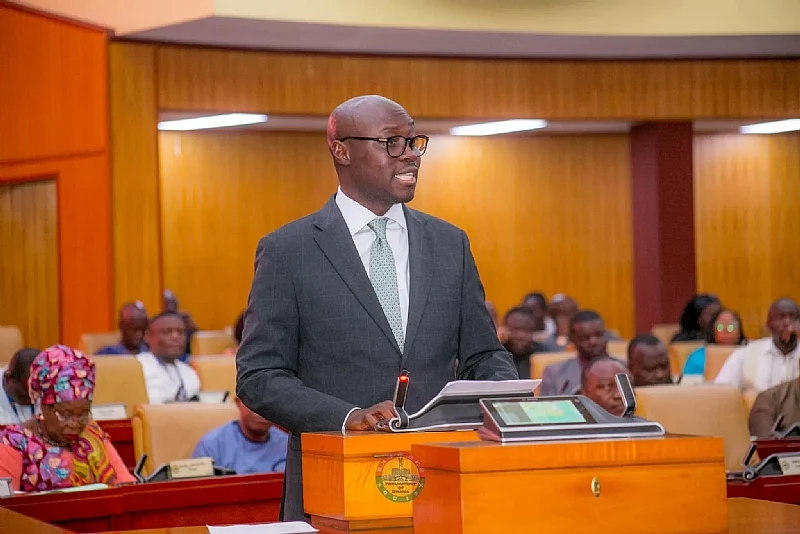
Finance Minister Dr Cassiel Ato Forson announced the target during the presentation of the 2027 Budget Statement to Parliament on Thursday, November 12.
He said Ghana continued to spend billions of dollars annually importing food products that could be produced competitively within the country, putting pressure on the cedi and exposing the economy to fluctuations in international prices.
The rice import phase-out will be supported by the establishment of Rice Development Hubs across the Afram Plains, the Volta Basin, Western Ghana and Northern Ghana.
Under the initiative, production will be expanded through investments in irrigation, mechanisation, silos, modern milling facilities, packaging and logistics infrastructure. The programme is expected to bring an additional 100,000 hectares of land under rice cultivation.
The government is targeting yields of between 5 and 6 metric tonnes per hectare, with the initiative projected to create approximately 125,000 jobs.
The hubs will also benefit from targeted tax incentives covering irrigation equipment, mechanisation, milling facilities, packaging and logistics. According to the Budget, the measures are expected to reduce investment costs and minimise post-harvest losses.
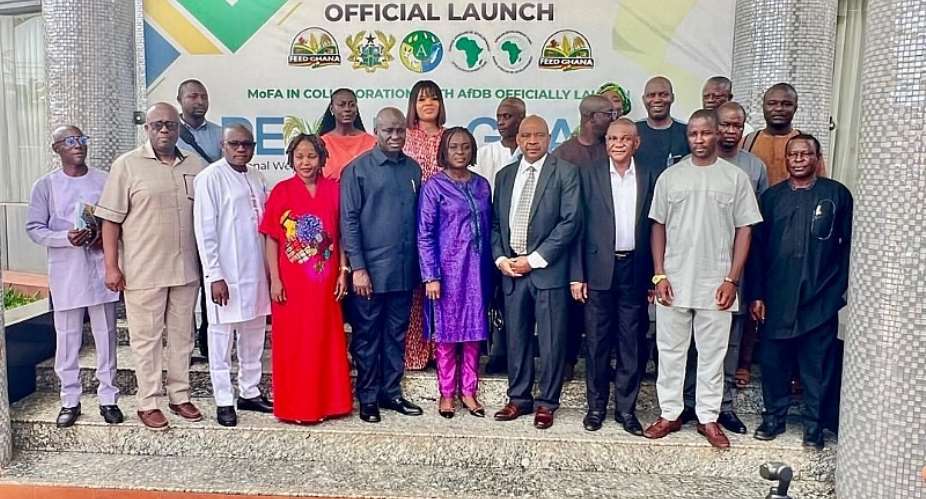
Figures announced during the African Development Bank's presentation of a US$18.8 million grant to Ghana for the REWARD-Ghana rice project on November 10 indicate that domestic milled rice production increased from approximately 685,000 metric tonnes in 2022 to 960,000 metric tonnes in 2025.
Despite the growth in local production, the African Development Bank estimates Ghana's annual rice import bill at about US$500 million.
To strengthen demand for locally produced rice, the government also intends to amend public procurement laws to require schools, hospitals and other public institutions to purchase rice and other staple foods produced in Ghana.
“If you use Ghana's money to buy rice, you must buy Ghana rice,” Dr Forson told Parliament.
New conditions for rice import licences
The government will introduce new conditions for rice import licences from 2027, requiring importers to demonstrate that they have purchased rice from verified local farmers and millers.
The Budget indicates that the proportion of locally purchased rice required to qualify for import licences will increase as domestic production expands, while import quotas will gradually be reduced.
“The local-purchase ratio will rise as domestic output expands and import quotas decline,” the Budget states.
The proposed arrangement follows an earlier statement by Dr Forson at a forum at the Kwame Nkrumah University of Science and Technology, where he suggested that rice importers could be required to purchase up to half of their volumes locally to qualify for import permits.
Questions remain over implementation
Although the budget sets out the government's ambition to phase out commercial rice imports, it does not specify the penalties for importers who violate the proposed regulations.
It also does not provide details of the import quotas that will apply to individual businesses or explain how the gradual restrictions could affect retail rice prices.
The rice development initiative forms part of the government's wider commercial agriculture agenda, which is expected to receive US$3 billion under the US$10 billion New Economy programme planned for 2027 to 2030.

 2027 Budget: ‘Another round of slogans with no jobs’ – Afenyo-Markin
 Women's Development Bank to begin operations in early 2027 – Ato Forson
 Govt to settle US$590m Eurobond and domestic bond obligations by December 31 – A...
 Govt allocates GH¢1bn to complete 35 Agenda 111 hospitals in 2027
 Ato Forson outlines eight pillars of government's US$10bn economic transformatio...
 Govt allocates GH¢600 million for construction of 10 regional stadia
 Government rules out new taxes in 2027, targets GH¢323.4bn revenue
 2027 Budget: Gov't to improve revenue collection without introducing new taxes –...
 New Economy to help Ghana process more of its resources locally – Ato Forson
 [Full text] Ato Forson presents 2027 budget in Parliament


