




The government has allocated GH¢2.9 billion to the Ministry of Food and Agriculture in the 2027 Budget to support farmers with agricultural machinery, improved seeds, fertiliser, irrigation infrastructure and storage facilities.
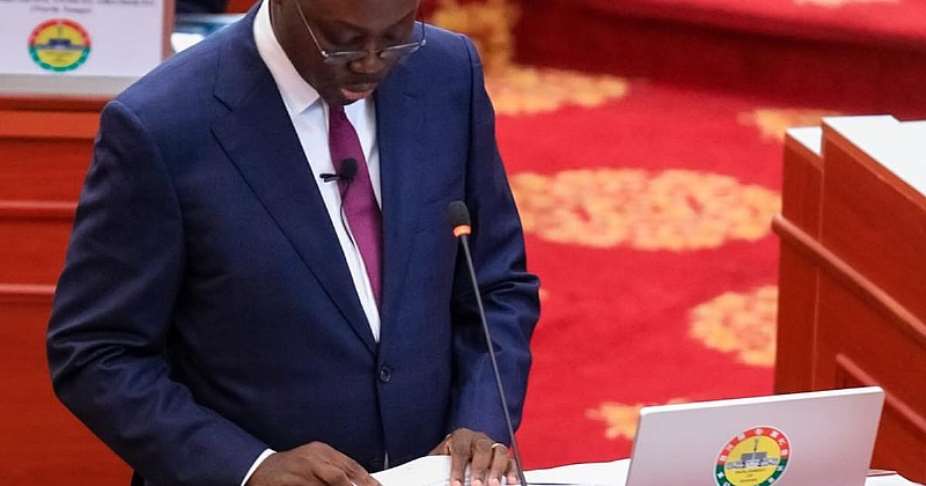
Finance Minister Dr Cassiel Ato Forson announced the allocation during his presentation of the 2027 Budget Statement to Parliament on Thursday, November 12, 2026, describing the investment as part of efforts to help farmers increase production and strengthen food security.
Of the allocation, GH¢800 million will be used to procure agricultural machinery for the second phase of the Farmer Service Centres, while GH¢515 million has been set aside to provide fertiliser and certified seeds for the production of grains, vegetables, roots and tubers.
The government has also earmarked GH¢500 million for the construction of silos to improve food procurement and storage, alongside GH¢245 million for the Poultry Farm-to-Table project.
Another GH¢200 million will go to the National Food Buffer Stock Company, with GH¢105 million allocated to ongoing irrigation projects and GH¢60 million dedicated to the Feed Ghana Programme.
Dr Forson said increasing domestic food production and processing would deliver benefits beyond the agricultural sector, including improved rural incomes, lower inflationary pressures and reduced demand for foreign exchange.
“When Ghana grows more of what it eats, processes more of what it grows and exports more of what it makes, rural prosperity will rise, inflation will become easier to control, and the cedi will face less pressure,” he said.
Agriculture is also a major component of the government's New Economy programme, which is expected to run from 2027 to 2030. According to the Finance Minister, US$3 billion out of the planned US$10 billion investment will be channelled into commercial agriculture.
The government has also set a target of ending commercial rice imports by 2030 as part of its broader strategy to expand local production.
The planned investment comes against the backdrop of a slowdown in agricultural growth. Data from the Ghana Statistical Service indicates that the sector expanded by 2.6 per cent in August 2026, compared with 8.6 per cent during the corresponding period in 2025 and 3.7 per cent in July 2026.
Beyond agriculture, the 2027 Budget has allocated GH¢3.1 billion to the Ministry of Energy and Green Transition, including GH¢3 billion for the expansion of rural electrification to 6 regions. The initiative is expected to support farming communities that require reliable electricity for processing and preserving agricultural produce.
The agricultural allocations are intended to address production costs, improve access to machinery and inputs, strengthen food storage and secure domestic supplies. Investments in silos and the National Food Buffer Stock Company are particularly expected to help minimise post-harvest losses and improve the stability of food supplies.
However, the Budget did not specify timelines for the delivery of the proposed storage facilities and other interventions.

 2027 Budget: ‘Another round of slogans with no jobs’ – Afenyo-Markin
 Women's Development Bank to begin operations in early 2027 – Ato Forson
 Govt to settle US$590m Eurobond and domestic bond obligations by December 31 – A...
 Govt allocates GH¢1bn to complete 35 Agenda 111 hospitals in 2027
 Ato Forson outlines eight pillars of government's US$10bn economic transformatio...
 Govt allocates GH¢600 million for construction of 10 regional stadia
 Government rules out new taxes in 2027, targets GH¢323.4bn revenue
 2027 Budget: Gov't to improve revenue collection without introducing new taxes –...
 New Economy to help Ghana process more of its resources locally – Ato Forson
 [Full text] Ato Forson presents 2027 budget in Parliament


