




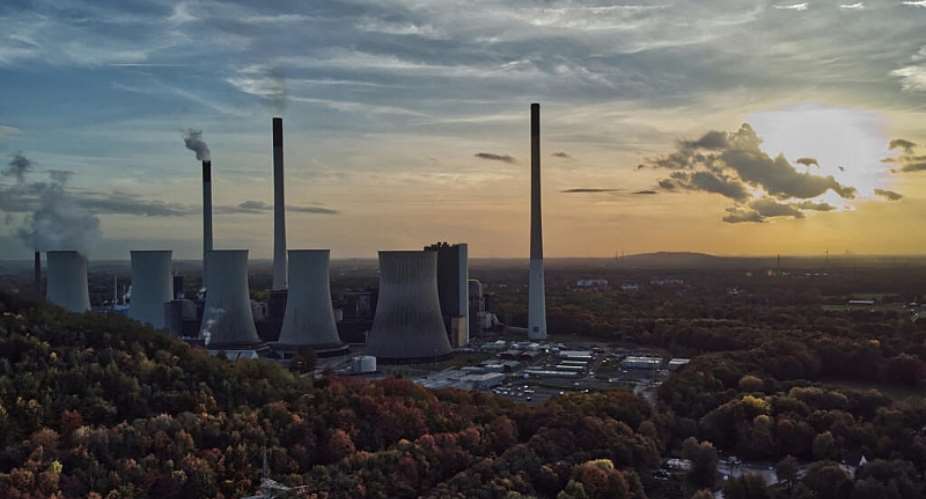
The scheme – the EU Emissions Trading System, known as ETS2 – which would set an EU-wide price on carbon emissions from petrol, diesel and heating fuels, was originally due to begin in 2027 but has been postponed to 2028.
In a letter to European Commission President Ursula von der Leyen, Merz rejected further changes or delays.
“I am counting on the European Commission to stay the course on emissions trading and thereby give European companies and households planning certainty,” he wrote, according to German weekly Der Spiegel.
Merz said that the issue was not merely about climate policy but “about the future of industry in Germany and Europe".
However, according to Wolfgang Grosse Entrup, CEO of Germany's chemical industry association, the VCI, the carbon trading scheme will "become the gravedigger of industry in Europe".
The organisation fears that an EU-wide carbon price would add to costs already borne by German firms, which have paid a national carbon levy on transport and heating fuels since 2021.
World leaders begin talks at Cop31 climate conference but big names missing
Frozen
Germany's existing carbon price stands at between €55 and €65 per tonne of CO2 this year and is due to be frozen in 2027 before ETS2 replaces it.
Because several other member states have no comparable national levy, German companies fear they would suffer a lasting competitive disadvantage if the EU scheme slipped further.
Major chemical producers, including BASF, argue that stringent European climate rules already place them at a disadvantage against competitors in China and the United States.
COP31 opens under climate and finance pressure
The VCI's unusually blunt language reflects anxiety that additional carbon costs could accelerate plant closures, investment cuts and the relocation of production outside Europe.
The European Commission has proposed reforms to ETS1 that would slow the reduction of the emissions cap after 2030 and extend free allowances tied to decarbonisation investment.
Climate groups including the Climate Action Network and Carbon Market Watch say the proposal weakens the incentive to cut emissions, while industry insists that without such support, European production cannot compete.
Merz also defended the EU's existing emissions trading system for power plants and heavy industry, ETS1, calling it “a well-functioning, market-based system that we must not call into question.”
He argued that energy and industrial companies had built investment plans around reliable carbon-price signals.
Merz's intervention comes as several EU governments, concerned about higher fuel and heating costs, press for another delay.
(with newswires)

 2027 Budget: ‘Another round of slogans with no jobs’ – Afenyo-Markin
 Women's Development Bank to begin operations in early 2027 – Ato Forson
 Govt to settle US$590m Eurobond and domestic bond obligations by December 31 – A...
 Govt allocates GH¢1bn to complete 35 Agenda 111 hospitals in 2027
 Ato Forson outlines eight pillars of government's US$10bn economic transformatio...
 Govt allocates GH¢600 million for construction of 10 regional stadia
 Government rules out new taxes in 2027, targets GH¢323.4bn revenue
 2027 Budget: Gov't to improve revenue collection without introducing new taxes –...
 New Economy to help Ghana process more of its resources locally – Ato Forson
 [Full text] Ato Forson presents 2027 budget in Parliament


