




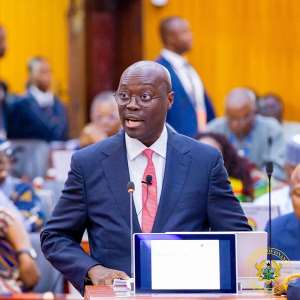
Finance Minister Dr Cassiel Ato Forson has raised concerns about Ghana's inability to translate decades of economic growth into sufficient productive employment and improved living conditions for its citizens.
He said the country recorded an average real Gross Domestic Product (GDP) growth rate of 5.2 per cent between 1990 and 2025, but the performance had not adequately addressed the economic challenges facing many households.
Presenting the 2027 Budget Statement to Parliament, Dr Forson observed that Ghana's economic history had been characterised by repeated cycles of expansion and instability, making long-term planning difficult for families and businesses.
He attributed some of the country's economic vulnerabilities to its heavy reliance on commodities such as gold, cocoa and oil, noting that extractive industries contributed about 16 per cent of GDP growth over the past decade.
Despite this growth, he said unemployment remained a major concern, standing at approximately 12.8 per cent in 2025.
The Finance Minister argued that economic growth figures should not be the sole basis for assessing national progress, insisting that the real measure of success should be reflected in the living conditions of citizens.
“The best measure of an economy must be an improvement in the quality of life,” he told Parliament.
He cautioned that Ghanaians had endured repeated periods of economic expansion that were often followed by instability before households could enjoy lasting benefits.
“Ghanaians have endured modest economic progress that arrives in bursts and disappears before families can build secure lives around it,” he said.
Dr Forson cited recurring patterns of economic growth followed by instability, increased government spending followed by difficult fiscal adjustments, and periods of currency stability interrupted by sharp depreciation.
He said the country needed to break away from the cycle to establish a more resilient and sustainable economy.
“These boom and bust cycles must cease,” he declared.
According to him, the government's New Economy programme is designed to tackle the structural challenges that have limited Ghana's ability to convert economic growth into sustained improvements in the livelihoods of its people.
 [Full text] Ato Forson presents 2027 budget in Parliament
 2027 Budget: Stability returned in Ghana's economy, Ghanaians can breathe again ...
 2027 Budget: Ghana has emerged from painful economic crisis - Finance Minister
 Government to invest GH¢30bn in New Economy programme in 2027 – Ato Forson
 Best Assurance donates 28,500 exercise books worth GH¢100,000 to GETFund
 Ato Forson unveils four-year New Economy plan ahead of Ghana’s 70th independence...
 Ghana recorded 5.2% average growth in 35 years but unemployment remains a challe...
 2027 budget: Reckless spending, weak revenue and expensive debt caused 2022 cris...
 Mahama limits Ghana's COP31 delegation to 69 people in cost-cutting move
 Bono police reject GH¢9,000 bribe, detain suspected drug dealers


