




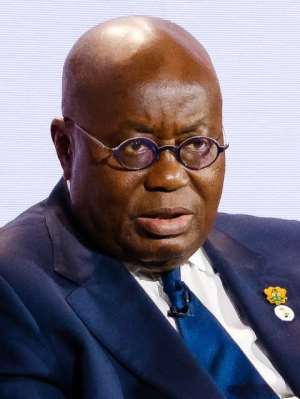
Late on Thursday afternoon, according to The Ghanaian Chronicle, a delegation from ECOWAS arrived at the office of erstwhile President Nana Addo Dankwa Akufo-Addo to tell him formally that he had been picked for a new job. Hours later, a statement from his office confirmed it. He will lead a 200-member ECOWAS Election Observation Mission to Nigeria for the country's January 16, 2027 general elections.
The screenshot of the UTV Ghana post that started the conversation on my phone carried the same headline. Within minutes, the story was on MyJoyOnline, Citi Newsroom, GhanaWeb and Graphic Online. Ghanaians are talking about it, so let us talk about it properly.
What has been announced
According to Graphic Online and Citi Newsroom, the mission will observe Nigeria's presidential and National Assembly elections on January 16. The governorship and State Houses of Assembly elections follow on February 6. The statement says the deployment follows the 2001 ECOWAS Supplementary Protocol on Democracy and Good Governance.
The team will draw on foreign affairs ministries, electoral commissions, ECOWAS ambassadors in Abuja, the Council of the Wise, the ECOWAS Court of Justice and the ECOWAS Parliament. It will also include civil society groups, media practitioners and electoral specialists from across the region. According to Citi Newsroom, Mr Akufo-Addo was Ghana's fifth president of the Fourth Republic, serving from January 2017 to January 2025.
Why this election is a very big deal
Nigeria is the largest democracy in West Africa. INEC says it has more than 103 million registered voters, after a registration drive that added 10,772,421 people, according to allAfrica. Eighteen parties have fielded presidential candidates, including the incumbent, Bola Tinubu of the APC, former Vice-President Atiku Abubakar, Peter Obi and Oyo State Governor Seyi Makinde, according to PRNigeria and Channels Television.
The date itself changed. INEC first fixed February 20, 2027, then moved the presidential and National Assembly elections forward to January 16 after the Electoral Act 2026 was signed. That is a tighter calendar than Nigerians planned around, which is one more reason a credible outside observer matters.
Turnout is the other quiet worry. In 2019, INEC's official figures put turnout at around 35 per cent, the lowest since Nigeria's return to civilian rule in 1999, according to BusinessDay. Registered voters are not the same as people who vote, and a high registration number means little if citizens do not trust the process enough to show up.
Why ECOWAS chose him, and what he has already done
This is not Mr Akufo-Addo's first mission. ECOWAS picked him to lead its observers for Benin's presidential election on April 12, 2026, according to Africanews. There, observers praised the orderly and peaceful conduct of the poll, according to BusinessDay. Akufo-Addo himself said the calm climate showed "the maturity of Benin's democracy," as quoted by Xinhua. About 120 ECOWAS observers were deployed on voting day. On the ground, much of the day-to-day observation was led by ECOWAS Commissioner Abdel-Fatau Musah, who represented the head of mission, according to BusinessDay.
His supporters will say the logic is simple. An erstwhile head of state brings access, status and the ability to speak candidly to presidents and party leaders, which a junior diplomat cannot do. Before Benin's vote, Realnews Magazine reports, he urged observers to be neutral and professional and to follow the rules and methodology governing the process. And he left office at the end of his constitutional term, which counts for something in a region where leaders sometimes do not.
The sceptic's case, which deserves a fair hearing
There is another side, and I would be a poor columnist if I skipped it.
The Benin mission drew scrutiny before it even began. One analysis from Streamline Feed noted that the election took place amid allegations of opposition exclusion, a point echoed by Global News Network Liberia, which cited complaints from the opposition after constitutional reforms and a drastic reduction in the number of political parties. The same analysis argued that the mission's assessment would show whether the region saw Benin's transition as a triumph of constitutionalism or the consolidation of a restricted political order. Observers who praise a calm voting day while the bigger questions about who was allowed to compete go unanswered risk looking like they are signing off on the result. A calm voting day is not the same as a competitive election.
ECOWAS as an institution has taken criticism too. The same analysis says the bloc has been accused of inconsistent responses to democratic backsliding, and that its failure to prevent military takeovers in Mali, Burkina Faso and Niger has fed public scepticism about observer missions.
I do not think these points make the appointment wrong. They set the standard Nigerians will use. A mission that spends a few days in Abuja and Lagos, issues a warm statement on voting day and leaves will convince very few people. A mission that checks the whole process, including candidate eligibility, the neutrality of state institutions, how results are collated and what happens in the disputes that follow, will earn real trust.
What to watch
First, whether the preliminary statement addresses the full electoral environment instead of only polling-day calm. Second, whether ECOWAS publishes its findings in detail so that Nigerians, not just diplomats, can read them. Third, how the mission responds if there are credible complaints about the collation of results, since that is where Nigerian elections have often been contested. An erstwhile head of state leading the team does not guarantee any of that. It does mean the person carrying the mission's reputation is very visible, and in this job visibility cuts both ways.
What Ghanaians should take from this
Whatever your politics at home, an appointment like this reflects on Ghana's standing in the region. It also reminds us that elections are won or lost on trust before a single ballot is cast. Ghana has its own history of peaceful transfers of power, and that history is part of why our erstwhile leaders are asked to do this work. We should hold that record carefully and expect the same standard from every country we observe.
A note from me
I follow West African politics closely, and I will be reading the mission's reports the way I read everything: asking what was checked, what was left out and who gains from the language. I hope the mission is rigorous. I hope Nigeria's election is peaceful and credible. And if the final report is thin on detail, I will say so just as plainly as I would praise it if it is thorough.
Sources: MyJoyOnline; Citi Newsroom; Graphic Online; GhanaWeb; The Ghanaian Chronicle; UTV Ghana (social media post); Africanews; BusinessDay Nigeria; Xinhua; Realnews Magazine; Global News Network Liberia; Streamline Feed; allAfrica; Channels Television; PRNigeria. Reporting current as of November 12, 2026.


 2027 Budget: Gov't to improve revenue collection without introducing new taxes –...
 New Economy to help Ghana process more of its resources locally – Ato Forson
 2027 Budget: Government to spend GH¢389.2bn, allocates GH¢100.4bn for projects
 [Full text] Ato Forson presents 2027 budget in Parliament
 2027 Budget: Stability returned in Ghana's economy, Ghanaians can breathe again ...
 2027 Budget: Ghana has emerged from painful economic crisis - Finance Minister
 Government to invest GH¢30bn in New Economy programme in 2027 – Ato Forson
 Ato Forson unveils four-year New Economy plan ahead of Ghana’s 70th independence...
 Ghana recorded 5.2% average growth in 35 years but unemployment remains a challe...
 2027 budget: Reckless spending, weak revenue and expensive debt caused 2022 cris...


