




Illegal mining (locally known as 'galamsey' in Ghana) is widespread and has caused deaths, deforestation, farmland destruction, and water pollution. Various administrations have implemented anti-galamsey measures, including joint security task forces. It remains a major issue without a sustainable solution.
Several government initiatives have raised public awareness, engaged communities, and built some national consensus on addressing this environmental threat. However, these outcomes have not been realized because of a lack of political will, insufficient resources, unidentified financiers, corruption, collusion, and failure to address the root problem.
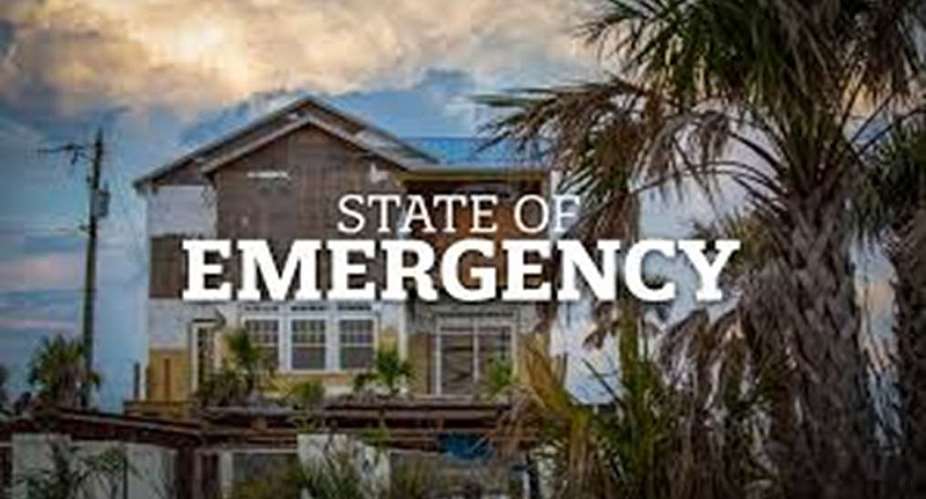
The rapid destruction of forest reserves and water bodies in Ghana, along with deaths from mercury and cyanide poisoning, has caused congenital disorders, kidney disease, skin diseases, reproductive problems, and other issues. Contamination has reduced soil quality, threatened food security, caused water shortages, and affected cocoa production. Pressure is mounting on the government to declare a state of emergency.
A state of emergency is a legal tool that both democratic and autocratic regimes can use to deal with a crisis (civil unrest, natural disaster, security threat, pandemic, etc.) that threatens the stability and security of the state and the lives of the people. In the course of a state of emergency, certain individuals...
The functions of the legislature, executive, and judiciary are on hold. The Government is implementing emergency protocols and will inform the public of necessary changes to daily life. Some Ghanaians believe the Government's declaration of a state of emergency on illegal small-scale gold mining has had a rapid and tangible impact. It allows quick, effective deployment of the military and police to key areas (forests, major rivers) to stop illegal mining.
A state of emergency would speed up the seizure and destruction of heavy equipment (excavators, etc.). It would also stop illegal extraction in affected areas. It would provide the legal basis for emergency financial planning and resource allocation for ecological restoration and purification of the most contaminated water bodies. It would turn galamsey from a long-standing policy issue into a major national security concern, cutting the legs out from under local patronage networks.
Declaring a state of emergency would demonstrate political will and determination to end galamsey and might help generate greater public support and cooperation from all quarters.
On the other hand, a state of emergency may infringe fundamental rights. Under Article 31(10) of the 1992 Ghana Constitution, a state of emergency may be declared to suspend or restrict certain civil liberties and constitutional rights.
Critics argue small-scale mining is the main livelihood for many rural Ghanaians and artisanal miners. A large-scale emergency or sudden halt would likely cause massive unemployment, increased poverty, and social instability. Militarization of such efforts would likely raise human rights concerns (excessive force, arbitrary detention) and increase tensions with the local population.
The Ghanaian government can take effective actions to address illegal small-scale mining. These include enforcing equipment rules and deploying GPS nationwide to track heavy machinery and excavators, preventing their use at illegal mining sites.
Collective Security and Forestry Task Force initiatives should fight illegal mining by disabling, burning, or seizing pumps and shears used in the process.
The government should review the Minerals and Mining Act and national mining policy through the Minerals Commission to address licensing deficiencies such as permits issued without landowner and community approvals.
Specialized regulatory bodies (e.g., the Gold Board of Ghana (GoldBod)) are vital to dismantling illegal gold smuggling as the only legitimate purchasers and exporters of artisanal gold. Those financing illegal mining (government officials and financiers) must face the full force of the law. The Government should use conspiracy and abetment laws to target major financiers, corrupt officials, and key players, not just low-level participants.
Chiefs and Traditional Authorities, as primary custodians of local lands must be made to manage forest reserves and water bodies and ensure accountability for activities on their lands. For effective enforcement, District Chief Executives (DCEs), Regional Ministers, the EPA, and regional security heads must be made to take active part in the fight against illegal mining. Ghanaians must remember that a state of emergency can enhance the fight against this ecological destruction, but without the active support of the mentioned people, it will not be easy to stop galamsey in the country.
Even if a state of emergency is declared, there must be safeguards such as time limits and renewal requirements. It can last about three months and be renewed only with parliamentary approval.
The government should establish a monitoring body (a civil society organization, the judiciary, or CHRAJ) to oversee security operations. Transparent reporting should cover items seized, cases going to court, and resources allocated to remediation.
Further measures should expand opportunities for licensed small-scale mining, provide training and credit for agriculture and vocational trades, and work with local leaders, religious bodies, and youth groups to discourage support for illegal mining.
I want to conclude by making it clear that a state of emergency for illegal mining is a temporary measure. The real solution lies in tackling root causes such as high rural unemployment, unclear regulatory regimes, and lack of institutional accountability. Emergency powers may allow Ghana to respond quickly and decisively to illegal mining and its environmental consequences, but should be seen as a temporary enforcement tool, not a panacea. The long-term solution is integrated reform through better legislation, stronger enforcement, and sustainable livelihoods.
By Kwame Aduhene-Kwarteng PhD, MA.


 Foreign Ministry interdicts two officers, terminates 10 illegally issued Service...
 Outspoken Ghanaian politician and founder of URP Kofi Wayo dies
 Seven companies shortlisted for Keta Port development – Mahama
 Mahama allocates GH¢100m to complete abandoned Nsawam remand prison block in 202...
 GJA Awards: Afenyo-Markin calls for repeal of laws criminalising false publicati...
 30th GJA Awards: Asempa FM’s Philip Osei Bonsu adjudged Journalist of the Year
 30th GJA Awards: Mahama allocates GH¢10m to Media Development Fund in 2027 budge...
 AMA offers GH¢1,000 Christmas packages to traders complying with trading rules
 Accra Airport concourse linking Terminals 2 and 3 reaches 20% completion – Kwaky...
 Oxygen City project starts in Ho, additional GH¢500m earmarked for district hous...


