




The Institute for Fiscal Studies (IFS) says Ghana could have generated an additional $6.56 billion in mining revenue in 2025 if the government had adopted a more direct role in the sector.
The institute argues that the country is not maximising the financial benefits of its mineral resources because the government has limited participation in mining operations and relies largely on taxes and royalties from private companies.
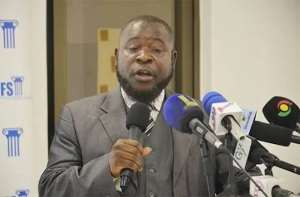
Executive Director of the IFS, Dr Said Boakye, presented the findings at a policy briefing in Accra on revenue mobilisation, urging the government to address the shortfall in the 2027 Budget.
Using Botswana as a benchmark, Dr Boakye noted that the country's mining sector generated $13.4 billion in value added in 2025, compared with Ghana's $1.6 billion in revenue from the sector.
He said Ghana's mining revenue represented just 11.9 per cent of the sector's value, while Botswana captured an average of 60.9 per cent.
According to the IFS analysis, Ghana would have earned approximately $8.16 billion in 2025 if it had secured the same proportion as Botswana, leaving a potential revenue gap of $6.56 billion.
Dr Boakye attributed the difference partly to the level of government involvement in mining activities, explaining that Botswana partners with private companies and benefits directly from the profits generated by mining operations.
“The government of Botswana does not only earn large corporate income tax revenue from mining because it has an insider knowledge of mining operations and profitability, it earns even larger revenue from dividend payments and royalties,” he said.
Ghana, on the other hand, largely allows private companies to undertake mineral extraction under concession arrangements, with government having more limited access to information about their operations and profitability.
The IFS said the challenges in the mining sector reflect a broader weakness in Ghana's revenue mobilisation efforts.
Its report showed that Ghana's total revenue and grants as a percentage of GDP stood at 15.7 per cent in 2022, below the 20.1 per cent average recorded by 25 sub-Saharan African countries assessed in the study. Ghana ranked 18th among the countries examined.
The institute estimated that matching the regional average would have enabled Ghana to mobilise GH¢288.26 billion in total revenue and grants in 2025, compared with the actual collection of GH¢224.88 billion.
Dr Boakye also identified tax evasion, underreporting, tax avoidance and collusion involving revenue officials as factors contributing to the country's revenue losses.
He cited revelations by Ghana Revenue Authority Commissioner-General Anthony Sarpong in April 2026 that more than GH¢11 billion had been lost at the ports through incorrect declarations relating to the country of origin, classification and valuation of imported goods.
The institute further identified tax exemptions as another area requiring attention, pointing to incentives available under the Free Zones regime and the automotive industry development policy.
These arrangements provide businesses with tax holidays, import duty exemptions and other fiscal concessions. The Ghana Investment Promotion Centre's incentives inventory lists 31 income tax, customs and financial incentive packages available to businesses across different sectors.
Dr Boakye warned that weak revenue mobilisation limits the government's ability to finance development projects and increases its dependence on borrowing, with consequences for public debt and debt servicing.
“The low government revenue mobilisation usually leads to shortage of money to fund the government’s developmental projects, making it resort to borrowing. This has led to frequent large debt build-ups, high debt service costs, and fiscal or debt crisis,” he stated.
To address the problem, the IFS executive director proposed a shift towards greater state participation in the extractive sector through direct investment and partnerships with private mining companies.
He also recommended the adoption of production-sharing agreements as an alternative to the existing concession arrangements, arguing that such a model could improve government returns from mineral resources.
Beyond mining, Dr Boakye called for stronger measures to tackle corruption within agencies responsible for collecting tax and non-tax revenue.
He also urged the government to review existing tax incentives and withdraw exemptions that do not deliver sufficient economic benefits to justify the revenue lost.
He maintained that improving the country's macroeconomic and political environment should form a central part of efforts to attract investment, rather than relying excessively on tax concessions.

 Ofori-Atta describes late CLOGSAG leader Bampoe Addo as fearless negotiator
 Ghana lost $6.5bn in mining revenue in 2025 – IFS
 Obuasi SHTS case: 'If we don’t get any positive response, we’ll stage another de...
 NMC to question midwife over controversial TikTok livestream
 ‘You champion reparation but cannot pay your own workers’ – Osahen Afenyo-Markin...
 Akim Oda MP questions government’s handling of DHIMS2 shutdown over $64,000 debt
 DHIMS restored, fully operational – Health Ministry
 Mahama discusses financial health with UNSGSA Queen Máxima
 Ghana to fully fund its own vaccines by 2030 as President Mahama announces Gavi ...


