




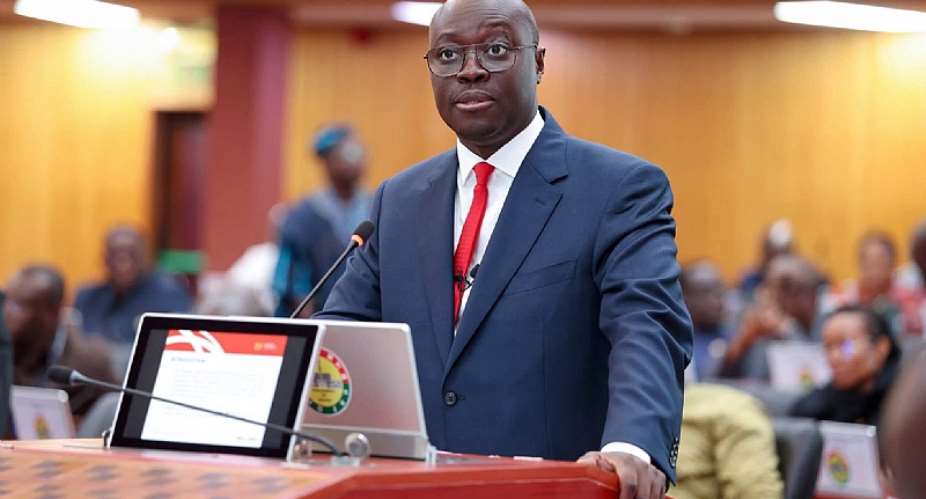
Government has ruled out the issuance of Eurobonds from 2027 to 2030 as part of a medium-term debt management strategy aimed at preserving debt sustainability and reducing refinancing risks.
The policy is contained in the 2027-Fiscal-Strategy-Document which outlines the fiscal framework and debt management priorities that will guide economic policy over the next four years.
According to the document, Government would rely primarily on domestic financing, project loan disbursements from development partners, and prudent debt management measures instead of raising funds from the international capital market through Eurobond issuances.
The strategy forms part of efforts to consolidate gains made under recent fiscal reforms and debt restructuring initiatives while limiting the country's exposure to external borrowing risks.
The document said domestic financing from both banking and non-banking sectors would serve as the residual source of budget financing over the period, with renewed emphasis on expanding the local bond market.
Government also plans to increase the issuance of medium and long-term domestic bonds to reduce refinancing pressures associated with short-term debt instruments.
Under the medium-term debt strategy, authorities intend to reduce reliance on treasury bills and build cash buffers through the Sinking Fund to support future debt redemptions and liability management operations.
The fiscal strategy document noted that monthly transfers equivalent to seven per cent of gross domestic non-oil tax revenue would continue to be made into the Sinking Fund to support the redemption of domestic bond maturities due in 2027 and 2028.
Government expects external financing over the period to come primarily from multilateral development institutions, particularly policy-based and project loans, while maintaining strict borrowing limits.
The document indicated that project loan disbursements from bilateral and multilateral partners would be capped to ensure borrowing remains consistent with debt sustainability objectives.
It projected that the country's public debt-to-GDP ratio would remain on a downward path, reaching 44.8 per cent by 2034, below the statutory threshold of 45 per cent established under the amended Public Financial Management framework.
Ghana suspended access to the international capital market following the debt crisis that culminated in the Domestic Debt Exchange Programme in 2022 and subsequent external debt restructuring efforts.
The Government's decision to avoid Eurobond issuance through 2030 reflects a strategy to minimise external debt vulnerabilities, strengthen the domestic debt market and sustain the country's ongoing fiscal consolidation programme.
GNA

 Barred Nigerian presidential hopeful vows to stay in race
 Israel's Eisenkot claims 'progress' in coalition talks as opposition eases on ul...
 Soldiers allegedly shoot sand and stone tipper truck drivers in Afienya
 Minority demands answers over nationwide shutdown of health information systems
 Wontumi’s bail application delayed as JUSAG strike disrupts court proceedings
 President Mahama, Boeing agree roadmap for establishing Ghana’s national airline
 Passports director interdicted over alleged $50,000 sale of service passports
 "There is no substantive Chief in Gomoa Ekwamkrom" – Nana Ekwam X dismisses rumo...
 Questions raised over impartiality of committee investigating passport scandal
 'Don't take metaphorical NPP serious, they should be apologising to Ghanaians' –...


