




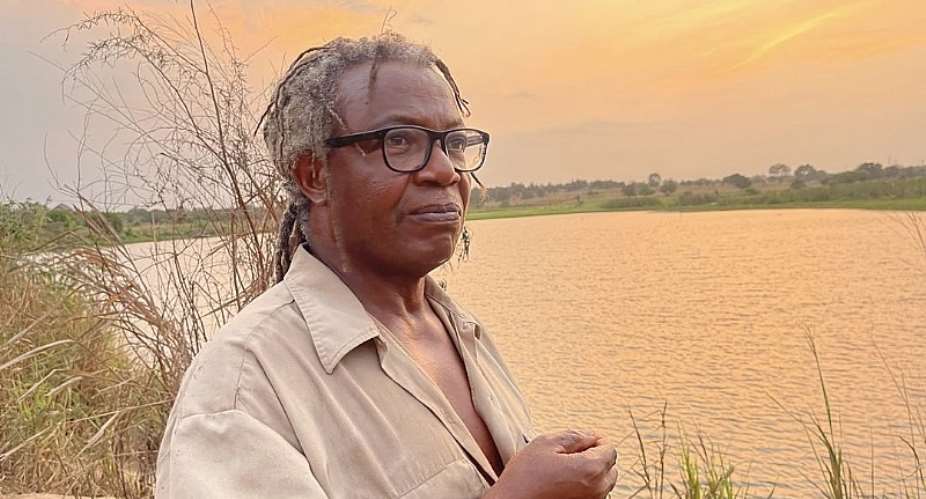
How long shall we continue to be subjected to the spectacle of the nauseating and expensive annual pilgrimage of African Plantation Supervisors to the headquarters of their former colonial masters?
Today, on Pan African Digest, we have another elementary question: What exactly is common about the British Commonwealth? And, perhaps more importantly, where is the wealth?
For an organization that has spent decades congratulating itself on shared values, common heritage, mutual respect and collective aspirations, the Commonwealth has an extraordinary talent for avoiding inconvenient questions about its history.
It is a curious association of nations, many of whose ancestors were enslaved, dispossessed and brutalized by the very imperial power whose monarchy continues to occupy its ceremonial throne.
This is a remarkable achievement for those Perfidious Albion from that Island of iniquities. They deserve some credit for maintaining the neocolonial edifice even as the country sinks into global irrelevance.
What a nauseating spectacle to watch colonial subjects, supposedly liberated and sovereign, periodically gather for an elaborate diplomatic pilgrimage, complete with royal handshakes, ceremonial speeches and carefully choreographed photographs.
The Commonwealth is perhaps one of the most successful exercises in imperial public relations ever devised. Colonialism’s retirement home, where former plantation subjects and their political successors gather to celebrate the supposed disappearance of the plantation.
A little bit of history for those who missed the subject might help, as history is apparently the one guest rarely invited to Commonwealth celebrations.
The British Empire was not built on cricket, afternoon tea and the charming eccentricities of English gentlemen as British PR might want us to believe. It was built on conquest, slavery, dispossession, racial hierarchy and organized violence on an industrial scale.
King Charles II granted a royal charter to the Royal African Company in 1672, giving it a monopoly over Britain’s trade in West Africa. The most lucrative of which was the trafficking of captured Africans. His brother, James, Duke of York, who subsequently became King James II, was closely involved in the company.
The RAC became one of the largest institutional participants in the transatlantic slave trade and the British Empire perfected the art of dressing organized robbery in the language of civilization.
In India, British rule was accompanied by systematic extraction, devastating famines and brutal repression. At Amritsar in 1919, British troops under General Reginald Dyer massacred hundreds of unarmed Indians.
British violence against indigenous people was especially brutal in places like Kenya, where the colonial administration established detention camps during the Mau Mau Emergency, where torture, sexual violence, beatings, and other forms of inhuman treatment were inflicted on detainees.
In 2013, the British government acknowledged torture and ill-treatment and agreed to compensate 5,228 Kenyan claimants.
In South Africa, British imperial expansion produced devastating wars and established the world’s first concentration camps during the Second Boer War. In Nigeria, the 1897 British expedition against Benin resulted in the destruction of the kingdom and the looting of thousands of priceless cultural treasures, many of which remain in Western museums.
The British Museum remains the world’s largest depository of looted wealth. That, of course, won’t stop European missionaries from preaching: Thou shalt not steal.
These are not inventions of anti-Western propaganda. They are rather documented historical events which well-curated history books glossed over.
Yet the Commonwealth would have us believe this history can be conveniently wrapped in diplomatic gift paper, decorated with a royal ribbon, and deposited in the archives of an increasingly irrelevant and anachronistic institution.
Let’s turn our spotlight on the distinguished family whose presence gives this organization much of its peculiar ceremonial character.
The British monarchy has spent centuries cultivating an image of dignity, continuity and moral authority.
Unfortunately, its historical record is considerably less flattering than its vast public relations machinery.
Consider the royal family’s historical connections to slavery through Charles II, James II and the Royal African Company.
Consider Edward VIII, whose association with Nazi Germany, including his notorious 1937 visit and meeting with Hitler, remains one of the most disturbing episodes in modern royal history.
And then there is Prince Andrew, whose association with convicted sex offender Jeffrey Epstein and the civil sexual assault allegations brought by Virginia Giuffre became an extraordinary embarrassment to the institution. Andrew denied the allegations and settled the civil case in 2022 without admitting liability. We talk of serious child abuse and even cannibalism.
One does not need to invent convictions or exaggerate allegations to recognize the damage such episodes have inflicted on the monarchy’s moral standing.
The larger question for us in Africa (continental and Diaspora) is why African leaders should continue participating in the glorification of an institution whose historical inheritance deserves scrutiny rather than unquestioning reverence.
Are we so desperately short of symbols of African achievement that we must continually borrow our sense of importance from Buckingham Palace?
To the defenders of this colonial institution who like to explain that the modern Commonwealth is a voluntary association of 56 independent countries, that its members are equal, and that it promotes democracy, development, trade and cooperation, blah, blah, blah, I say, tell that to the marines.
Political independence is not merely a question of changing the name on the plantation gate.
Kwame Nkrumah warned that political independence without economic independence could become meaningless. Frantz Fanon understood that colonialism seeks to conquer not merely territory but the mind. Marcus Garvey insisted that a people without confidence in themselves would remain dependent on others' recognition.
What would these men make of African presidents who spend enormous sums traveling to royal ceremonies while their countries remain trapped in debt dependency, unemployment, raw-material exports, crumbling infrastructure, and the endless importation of finished products?
What would Frantz Fanon say about the African leaders who inherited the palaces and the appurtenances of their former colonial masters but appear reluctant to inherit the intellectual courage required to dismantle the structures of dependency?
And what would Garvey say about a continent that still seeks validation from institutions that once regarded its people as chattel?
We do not argue that the Commonwealth is responsible for every African problem; we say its continued relevance deserves serious examination.
What we ask is: where is the industrial transformation and the technological transfer? Where is meaningful restitution for centuries of extraction? Where is the serious commitment to returning stolen African cultural treasures still kept in British museums?
We are offered declarations, communiqués, diplomatic photographs, and the occasional royal handshake with no tangible benefits accruing to the ordinary people.
More importantly, why do African leaders agree to participate in a club where they are clearly second-class citizens? For example, White Commonwealth countries do not need visas to visit their “Mother” country, but Black African countries do.
Apparently, the Empire has discovered that maintaining influence through ceremonial affection is considerably cheaper than administering colonies.
It makes a declining power like Britain consider itself relevant, just like France and its Françafrique.
Perhaps the most revealing commentary on the Commonwealth came from Boris Johnson, then a journalist, who wrote in 2002 that the Queen supposedly loved the Commonwealth partly because it supplied her with cheering crowds of “flag-waving piccaninnies”. He also described African crowds as displaying “watermelon smiles”.
There you have it: the imperial imagination stripped of diplomatic cosmetics. Boris Johnson was brutally frank.
Unfortunately, African misleaders continue to attend, revealing their dental work because they are beyond irony.
The African leaders may arrive in expensive suits, accompanied by presidential entourages and security details. But in the imagination of certain sections of the British establishment, the old colonial caricature remains remarkably alive.
A person can be invited to the palace and still be regarded with contempt by sections of the society that built it.
This is not suggesting that African countries should abandon every relationship with Britain or refuse cooperation with other Commonwealth members. Diplomacy is about interests, not emotional tantrums.
Genuine opportunities exist for trade, education, scientific collaboration, and cultural exchange. African governments should pursue them wherever measurable benefits exist.
But cooperation between equals is different from an annual exercise in imperial nostalgia.
For any organization, the Commonwealth included, to be taken seriously, it must demonstrate its usefulness through demonstrable mutual respect, industrial partnerships, technology transfers, historical accountability, restitution, and a genuine commitment to economic sovereignty.
Let the Commonwealth support the return of stolen African artifacts. Let it take colonial reparations seriously, not only through dated rhetoric. Let the organization confront the realities of slavery and imperialism and neocolonialism without the usual diplomatic evasions.
Perhaps, more importantly, let the Commonwealth have rotational leadership, so that we can have a genuine meeting of equals. Why should only the Brits be leading an association of sovereign equals?
Otherwise, what exactly are we celebrating?
Our advice to African presidents and their numerous groveling entourages is simple: stop wasting scarce public resources on anachronistic gatherings meant only to exchange pleasantries with royalty and participate in stupid diplomatic theatre.
If you must travel, travel to negotiate industrial partnerships, secure technology transfers, attract productive investment, and build alliances that advance African interests.
But travel as representatives of sovereign nations, not as grateful beneficiaries of somebody else’s imperial hospitality.
The British monarchy is entitled to its traditions. The British people are entitled to whatever constitutional arrangements they find suitable. But African people are equally entitled to question why their leaders continue investing public money in maintaining the ceremonial prestige of an institution whose historical inheritance includes the enslavement and subjugation of their ancestors.
We did not struggle for independence so that our presidents could become more expensive plantation supervisors.
Nkrumah did not build his Pan-African vision so that African leaders could spend their time auditioning for invitations to royal garden parties.
The future of Africa will not be determined by how enthusiastically our presidents are received at Buckingham Palace, but by what they build in Accra, Lagos, Nairobi, Abuja, Dakar and Addis Ababa.
It is time for us in Africa to grow up. It is time to stop genuflecting before the ghosts of empire. It is time to reclaim our history, dignity and political imagination.
The hard question we must answer is: what exactly is common about this Commonwealth? And where, in the names of the ancestors, is the wealth?
Until somebody provides convincing answers to these elementary questions, perhaps our African leaders should consider staying at home.
The plantation has supposedly been closed; why, then, do the plantation supervisors keep returning for inspection?
©️ Ọ̀dọ̀fin Fẹ́mi Akọ́mọláfẹ́ (1st Dan, Ọ̀dọ̀fin I of Kasoa)


 Barred Nigerian presidential hopeful vows to stay in race
 Israel's Eisenkot claims 'progress' in coalition talks as opposition eases on ul...
 Soldiers allegedly shoot sand and stone tipper truck drivers in Afienya
 Minority demands answers over nationwide shutdown of health information systems
 Wontumi’s bail application delayed as JUSAG strike disrupts court proceedings
 President Mahama, Boeing agree roadmap for establishing Ghana’s national airline
 Passports director interdicted over alleged $50,000 sale of service passports
 "There is no substantive Chief in Gomoa Ekwamkrom" – Nana Ekwam X dismisses rumo...
 Questions raised over impartiality of committee investigating passport scandal
 'Don't take metaphorical NPP serious, they should be apologising to Ghanaians' –...


