




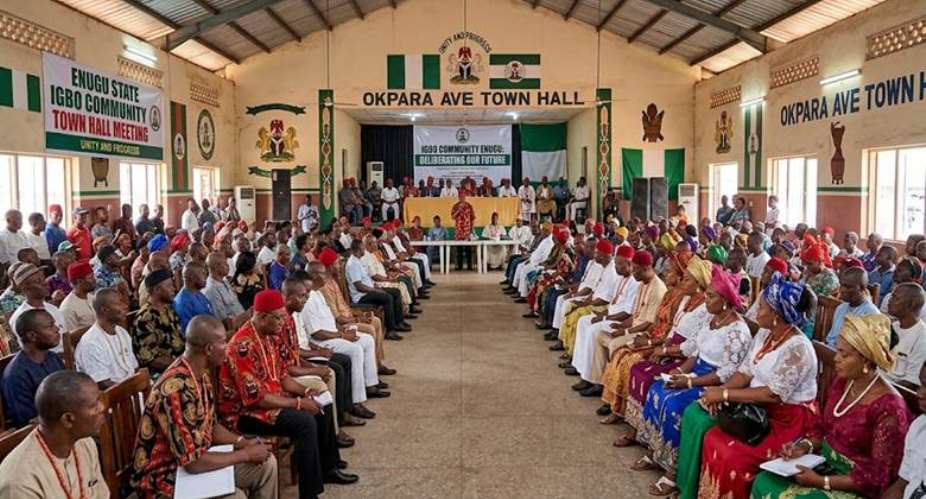
About fifty years ago, relationships across many African countries were mainly built around communities, shared responsibilities, respect for elders and a strong sense of belonging to family and kindred, often seen as the bigger family. Neighbours knew one another. Guiding and educating children were regarded as the responsibility of the wider community, and family relationships extended beyond parents and siblings to include uncles, aunts, cousins and distant relatives. People depended on each other for financial assistance and also for emotional support, security and a sense of identity. Today, the social landscape has changed considerably. Modern urbanization, technology, economic pressures and changing attitudes have transformed the way people live, interact and relate to one another from what the situation was half a century ago.
In this half a century, many traditional community values have been weakened, modified or replaced by new priorities. One of the most remarkable changes is the decline of the extended family system. In the past, particularly in African societies, family life was organised around collective responsibility. Children were raised not only by their biological parents but also by grandparents, uncles, aunts and other relatives. When a family experienced financial difficulties, other members often stepped in to provide assistance. Weddings, funerals, naming ceremonies and other important occasions brought entire families and communities together. Such gatherings reinforced relationships and reminded individuals that they belonged to some circle that was bigger than themselves.
Today, emphasis on the nuclear family has become increasingly common, particularly in urban centres. Many young couples prefer to live independently, while relatives are often separated by employment, education and migration. Although family bonds remain important, the level of everyday interaction and collective responsibility has considerably diminished and urbanization played a major role in this transformation.
According to World Bank data based on United Nations population estimates, approximately 23.7 per cent of Nigeria's population lived in urban areas in 1975. By 2025 which is 50 years, the proportion had risen to approximately 63.8 per cent. This represents a dramatic shift in the country's settlement patterns within five decades. The movement from rural communities into cities created new opportunities for education, employment and business, but it also altered traditional social relationships. In crowded cities, people frequently live alongside neighbours whose names, backgrounds and personal circumstances they barely know. The close-knit village environment, where everyone knew everyone else, is gradually giving way to a more individualistic urban lifestyle.
Respect for elders is another traditional value that has experienced considerable change. Fifty years ago, age and experience commanded considerable authority in many communities. Young people listened to older members of society, sought their advice and observed established customs. Speaking disrespectfully to an elderly person was generally regarded as unacceptable. Elders in the community were the custodians of history, culture and traditional knowledge. Today, education, exposure to different cultures and the influence of social media have encouraged younger generations to question established practices and authority. While this development has promoted independent thinking and challenged outdated traditions, it has also created tension between generations. The challenge we have, is to encourage young people to think critically without losing the courtesy and respect for elders that hold communities together, in the knowledge that everyone is older than someone.
The role of women in society has also changed significantly. In earlier generations, women in many communities were expected to concentrate primarily on domestic responsibilities, and that included raising children, preparing meals and caring for the household. Although many women worked in the farm, and some were into trading and other occupations, their contributions were not always recognised as equally as their menfolk. Over the past 50 years, increased access to education, professional employment and entrepreneurship expanded women's opportunities. Women now occupy positions in government, business, education, science and other professions. They increasingly participate in household decision-making process and contribute to family finances. Nevertheless, progress remains incomplete. The United Nations' World Social Report 2025 estimates that women globally spend an average of 4.2 hours daily on unpaid domestic and care work, compared with 1.7 hours for men. In a way, this demonstrates that changing attitudes have not entirely eliminated traditional inequalities, but definitely the times and values are changing.
And perhaps, it is technology that has produced the most dramatic transformation in community interaction. Fifty years ago, communication depended largely on physical visits and on face-to-face conversations, handwritten letters and landline telephones. Neighbours gathered to discuss community affairs. Families visited one another, and people often travelled considerable distances to enhance and maintain relationships. Today, smartphones, instant messaging, video calls and social networking platforms allow people to communicate across continents within seconds. Information that once took days or weeks to obtain is now available instantly. These developments have made communication easier and have helped families separated by migration to remain connected. But, they have also introduced new challenges. People can spend hours interacting with strangers online while they pay little attention to those who sit beside them. On other words, virtual friendships seem to have displaced meaningful physical relationships, and the danger is that the pressure to maintain an online image can encourage superficial connections.
Another important change concerns the relevance of kinship. 50 years ago in traditional communities, indigenes of a kindred were often regarded as members of an extended family. They shared food, attended one another's celebrations, helped during illness and supported one another during difficult times. A kinsman or woman could look after a child, lend money or provide assistance without expecting an immediate reward. But today, economic pressure, social insecurity, competition at work and busy working schedules have all weakened some of these relationships. Many people now prefer their privacy and are cautious about becoming involved in the affairs of others, no matter how closely related they are. In some communities, relatives may live in the same building for months without developing meaningful interactions. But this should not suggest that kindness had disappeared. Community associations, religious and charitable groups and neighbourhood initiatives continue to demonstrate that collaboration is possible and necessary.
Attitudes towards marriage, parenting and personal freedom have equally evolved in a somewhat different direction. Fifty years ago, marriage was widely regarded as an essential stage of adulthood, and divorce was often strongly discouraged because of cultural expectations and the social pressure it would have on children from single parents, after the divorce. Parents and extended families frequently played influential roles in choosing partners and resolving marital disagreements. Today, individuals increasingly expect to make independent decisions about marriage, relationships and family size. Education and economic independence have given many people greater freedom to determine their own future. Parenting has also changed, with greater attention being paid to children's education, emotional development and individual rights. These changes have brought important benefits, even when they challenged traditional family structures and expectations as well.
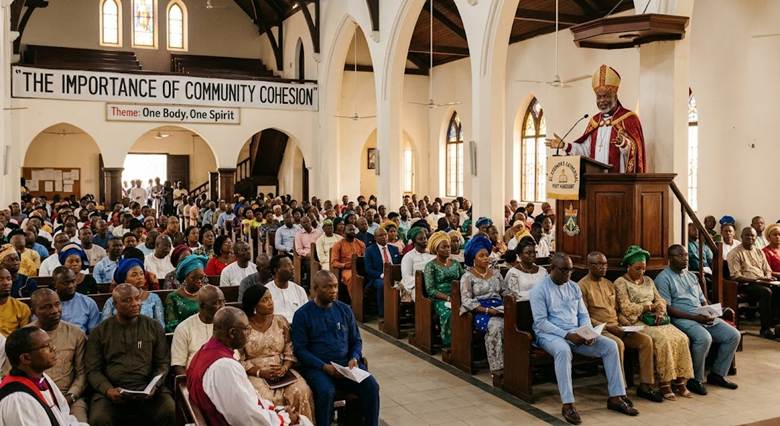
Religion and moral values have also continued to influence community life. But, these days, the way people express their beliefs has changed. In earlier times, religious institutions and traditional authorities often exercised considerable influence over social behaviour. Community members looked to religious leaders and elders for guidance on morality, family disputes and collective responsibilities. Today, religious participation remains significant in many societies, including Nigeria, but individual interpretation and personal choices have become more prominent. Some people increasingly distinguish between religious identity and the conduct of religious institutions. Others seek to combine traditional beliefs with modern lifestyles. The result is a more diverse social environment in which different perspectives frequently coexist.
Economic realities have also influenced the changing character of communities. In the past, many families depended on agriculture, local trades and communal labour. People frequently exchanged services and supported one another through cooperative arrangements. Today, rising living costs, unemployment and the pursuit of financial security have intensified competition. Many individuals devote more time to earning a living, leaving less time for community activities. Material possessions and personal achievement are increasingly being regarded by the younger generation as measures of success, while collective welfare receives less attention. Still, the growth of entrepreneurship, professional networks and cooperative businesses has created new forms of economic collaboration and there is no doubt about that.
Ultimately, it cannot be said that the transformation of community values over the past 50 years is entirely positive or entirely negative. Society has gained greater educational opportunities, improved communication, embraced wider personal freedoms and increased recognition of individual rights. At the same time, it has risked losing some of the qualities that made traditional communities supportive and closely connected. But the real question is not whether society should return to the past. Many old practices were restrictive and needed to change. Rather, the challenge is to preserve the best aspects of traditional life while we embrace the opportunities of modern civilization. And so, respect, honesty, compassion, responsibility, hospitality and concern for the welfare of others should not become casualties but components of technological advancement and economic progress.
Fifty years may have changed the way people work, communicate, marry, raise children and organise their communities, but the fundamental human need for belonging remains unchanged. A prosperous society cannot be measured solely by its buildings, technology or financial achievements. It must also be judged by how its people treat one another. If modern communities can combine the freedoms of the present with the solidarity of the past, the next 50 years could produce societies that are not only more advanced but also more humane.


 Barred Nigerian presidential hopeful vows to stay in race
 Israel's Eisenkot claims 'progress' in coalition talks as opposition eases on ul...
 Soldiers allegedly shoot sand and stone tipper truck drivers in Afienya
 Minority demands answers over nationwide shutdown of health information systems
 Wontumi’s bail application delayed as JUSAG strike disrupts court proceedings
 President Mahama, Boeing agree roadmap for establishing Ghana’s national airline
 Passports director interdicted over alleged $50,000 sale of service passports
 "There is no substantive Chief in Gomoa Ekwamkrom" – Nana Ekwam X dismisses rumo...
 Questions raised over impartiality of committee investigating passport scandal
 'Don't take metaphorical NPP serious, they should be apologising to Ghanaians' –...


