




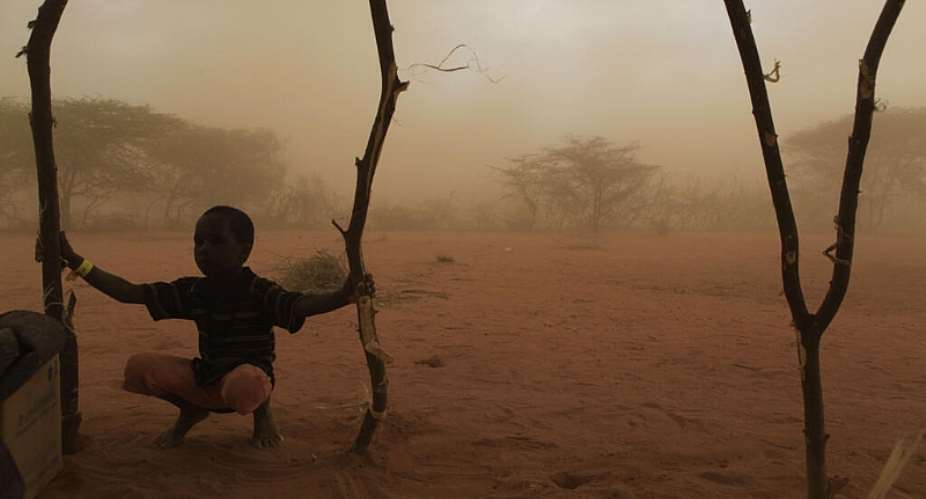
People fleeing conflict, violence and persecution find themselves in places grappling with severe droughts, deadly floods and extreme heat, UNCHR said in a statement on Friday, warning that close to 90 million displaced people – the equivalent of three in four globally – are now living in countries most exposed to the effects of global warming.
"Refugees face a double injustice," said Anton Leis Garcia, the refugee agency's assistant high commissioner for operations.
"Forced to flee conflicts they did not cause, they are now on the frontlines of a climate crisis they have contributed least to."
Returning to vulnerable countries
Climate change was also increasingly threatening the prospect of lasting solutions for displaced people, UNHCR warned.
It said more than two-thirds of refugees who returned home during the first half of this year went back to countries highly vulnerable to climate hazards.
In Syria, where nearly 4 million displaced people have recently returned, declining groundwater and climate shocks were threatening recovery, the agency said.
Before its peak, El Nino brings failed crops and empty fishing nets
It mentioned flooding along the Euphrates River last May that damaged homes and displaced thousands once again.
Extreme heat was also a growing threat, it said, cautioning that by 2050, one in three refugee settlements across sub-Saharan Africa could face 100 or more days of dangerous heat each year.
Weather-related disasters are meanwhile spurring even more displacement inside countries, causing more than 255 million internal displacements worldwide over the past decade, UNHCR said.
That amounts to 70,000 each day, it pointed out.
Climate change 'not a distant threat'
This year's exceptionally strong El Nino was expected to cause even more displacement.
In East Africa, forecasts indicate that severe flooding linked with the weather phenomenon could displace up to 3 million people across Somalia, Kenya, South Sudan and Uganda by the end of 2026.
"For millions, climate change is not a distant threat. It is destroying shelters, undermining livelihoods and putting their hopes of rebuilding their lives at risk," Garcia said.
Under the same sky, climate change brings drought to Somalia and floods to Kenya
UNHCR said only 10 percent of global climate finance goes to fragile and conflict-affected countries hosting large populations of climate-exposed displaced people.
The organisation said that during Cop31 it would call on governments and climate finance institutions to include refugees and other displaced populations in national climate plans and financing mechanisms.
"We cannot allow those who have already lost so much to be left behind in global climate action," Garcia said.
(with newswires)


 Barred Nigerian presidential hopeful vows to stay in race
 Israel's Eisenkot claims 'progress' in coalition talks as opposition eases on ul...
 Soldiers allegedly shoot sand and stone tipper truck drivers in Afienya
 Minority demands answers over nationwide shutdown of health information systems
 Wontumi’s bail application delayed as JUSAG strike disrupts court proceedings
 President Mahama, Boeing agree roadmap for establishing Ghana’s national airline
 Passports director interdicted over alleged $50,000 sale of service passports
 "There is no substantive Chief in Gomoa Ekwamkrom" – Nana Ekwam X dismisses rumo...
 Questions raised over impartiality of committee investigating passport scandal
 'Don't take metaphorical NPP serious, they should be apologising to Ghanaians' –...


