




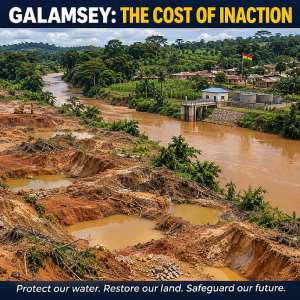
Ghana’s fight against illegal mining is a struggle to protect drinking water, farmland, public health and the authority of the state. When rivers become channels of mining waste and productive land is abandoned as open pits, the consequences extend far beyond the communities where gold is extracted. The profits may be private, but the damage is shared.
The health risks deserve urgent attention. The World Health Organization identifies mercury, which is used in some small-scale gold extraction, as a major public-health concern. Exposure can damage the nervous system and kidneys and threaten a child’s development before birth. Mercury released into the environment can also accumulate in fish, creating another route of human exposure. Cyanide presents separate toxic hazards; it is not a heavy metal.
These dangers must be explained accurately. It would be misleading to attribute every case of kidney or liver disease in Ghana to galamsey. Establishing the cause of illness requires clinical investigation and evidence of exposure. Nevertheless, the known hazards justify stronger monitoring of water, food and people living or working in affected areas. Prevention should begin before communities experience avoidable illness.
The financial consequences are equally serious. Ghana has introduced publicly funded dialysis support, making it inaccurate to suggest that every patient must personally pay the full cost of every session. Yet support does not eliminate shortages of machines, travel expenses or lost income. In April 2026, the Renal Patients Association called for expanded facilities and funding, reporting that demand was placing substantial pressure on existing centres.
Water production provides another clear warning. In July 2026, the Ghana Gold Board announced a GH¢8.4 million agreement with Ghana Water Limited to rehabilitate the Bonsa, Daboase and Sekyere Heman supply systems. Its statement identified high turbidity associated with illegal mining, sand winning and other environmental pressures as causes of severe operational difficulties. Money needed for development is consequently being diverted towards repairing damaged essential infrastructure.
The destruction also undermines farming and community safety. Excavated land requires restoration, while abandoned pits create hazards for residents. Children exposed to dangerous mining activities need protection, schooling and realistic alternatives. Sensational allegations about ritual killings should not replace verified evidence: the documented environmental and public-health risks already provide sufficient grounds for decisive action.
Recent enforcement illustrates the challenge. Reports published on 1–2 November described a National Anti-Illegal Mining Operations Secretariat operation at Subin Akwaaboso on the Offin River, where officers encountered alleged resistance involving firearms and other weapons. Such incidents demand investigation and lawful prosecution. They do not, on their own, establish that enforcement agencies have been overwhelmed by military-equipped cartels.
Ghana needs sustained enforcement that reaches beyond workers at mining sites. Investigators should follow financing, equipment ownership, gold purchases and any evidence of official protection. Political connections must offer no immunity, while allegations against individuals must be distinguished from proven offences.
Protected water catchments need continuous surveillance. Mining licences and concession boundaries should be publicly accessible, and communities should have safe channels for reporting violations. Operators responsible for damage should bear restoration costs, supported by transparent reclamation plans and independent checks.
Calls for emergency powers reflect understandable frustration. However, extraordinary measures require clear legal justification, defined objectives and oversight. Automatically describing every illegal miner as a terrorist would substitute a sweeping label for the careful application of criminal law.
Ghana must act with urgency, consistency and fairness. Responsible, regulated mining and viable livelihoods should be supported, while destructive operations and their financiers face consequences. Gold cannot compensate for unsafe water, damaged health and land that can no longer sustain a community.


 Ghana introduces 21-day monitoring for travellers from Ebola-affected countries
 Let’s stop bashing NACOC anytime there is drug bust – Hopeson Adorye
 Sam George threatens to shut down political, religious affiliated media houses i...
 'We are demanding our GH¢16m back' – Abu Jinapor at 'Yɛ Gye Yɛ Sika' demo
 'Don't defend accountability only in opposition' – Osahen Afenyo-Markin tells Af...
 Mother of slain Ghanaian teenager heads to US for son's funeral
 'People want to directly elect their MMDCEs' — CDD-Ghana rejects govt proposal
 Parliament’s Human Rights Committee calls for reintroduction of safe disciplinar...
 Chief Justice orders Supreme Court to sit despite ongoing JUSAG strike
 Free SHS food suppliers threaten five-day protest over unpaid debts


