




According to the United Nations cultural body Unesco, more than 1,600 journalists have been murdered worldwide over the last twenty years – a 20 percent increase in the past three years.
In its latest report "Threats evolve. Impunity endures", published on Monday, Unesco warns that 86 percent of crimes against the press remain unpunished.
Nine out of ten victims are local journalists.
"It is often in countries not currently in conflict – where the murders of journalists are linked more to criminal circles, mafia-like groups and organised crime – that we have seen greater efforts on the part of the authorities to eliminate this impunity," Stéphane Dujarric, spokesperson for the United Nations Secretary-General, told RFI.
Although the number of unpunished crimes has fallen over the years, it remains very high.
"These figures have also risen because the number of armed conflicts has increased. And it is clear that in combat zones, when a journalist is murdered, it is much easier for those responsible for these deaths to evade the authorities and escape any accountability," explains Dujarric.
Unesco says the Middle East remains, by far, the most dangerous region in the world for the press: with 97 journalists killed there over the past two years, many in connection to the war in Gaza.
Ukraine, Somalia and Sudan have also been among the deadliest areas over the past three years.
Former RFI journalist disappears in Niger after attempted coup
This year, Reporters Without Borders (RSF) recorded two journalists killed on the African continent: one in Uganda and the other in Somalia.
In Uganda, Joe Nam, a former contributor to the state-owned daily New Vision and author of a book about President Yoweri Museveni, was killed on 19 April.
The journalist was shot dead by a masked man in the middle of the night near his home in Kampala. The unidentified killer fled with the journalist's mobile phone, leaving his computers in his bag.
In Somalia, Bashir Mohamed Abdullahi, a journalist with the Alraadi Media Network, died on 7 September. Aged 23, he had been seriously wounded by gunfire four days earlier in Baidoa, in the south-west of the country, whilst on his way to his newsroom.
Somalia remains one of the most dangerous African countries for media professionals. To date, neither of these two murders has led to an arrest, prosecution or conviction.
Social media pressure
In Burkina Faso, RSF highlighted a worrying trend of repression beyond arrests and administrative censorship. It occurs on social media, through waves of coordinated attacks designed to discredit journalists and expose them to public hatred.
RSF pointed to the actions of BIR-C, a body linked to the ruling junta, a "digital militia" behind propaganda, disinformation and online harassment against journalists and critics of the regime.
"In the Sahel, journalists are being taken to the front line, supposedly to fight terrorists. Others are accused of being terrorists themselves. In 2026, Burkina Faso slipped to 110th place, Mali to 121st and Niger to 120th, having fallen 37 places," Yao Noël, president of the Union of African Free Press Journalists (UJPLA) told RFI.
Global press freedom in 'deplorable' state, journalism federation chief tells RFI
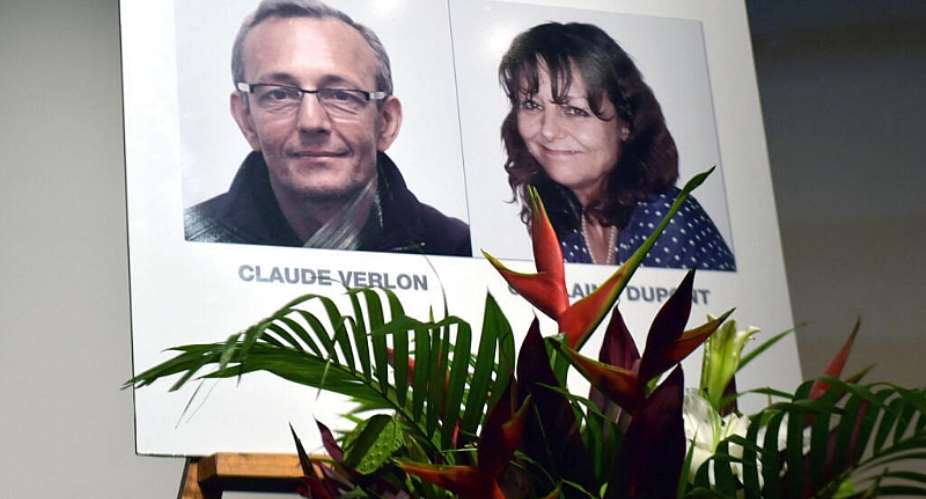
Thirteen years after the murder of French journalists Ghislaine Dupont and Claude Verlon, the judicial investigation is still ongoing in France, with many questions unanswered.
In October, the association "Friends of Ghislaine Dupont and Claude Verlon" published an op-ed titled: "Families of crime victims: we call for the lifting of defence secrecy."
Danièle Gonod, president of the association says despite calls for more transparency, no concrete progress has been made.
"The new judge appointed to the counter-terrorism unit for our case, Valéry Muller, requested the declassification of further documents in January 2026 – specifically regarding a conversation between the masterminds and the kidnappers, as well as a report from the special forces. In May, we received a single document from the General Directorate for External Security (DGSE), which does absolutely nothing to advance the case. We have had absolutely no feedback since then," she told RFI.
"When you don't speak out, one can always assume that you are hiding something. The truth brings clarity; it allows loved ones to feel that justice might be served and provides a sense of peace –something we still have not found, 13 years later," she says.
Unesco also noted that wearing a vest or helmet marked press offered no guarantee of protection for reporters in war zones.
Journalists are killed not only on the front lines, but also in their newsrooms and even in their own homes.
The United Nations is also warning of a worrying trend of journalists being targeted by drones.
This article was adapted from the original version in French and slightly edited for clarity.

 Loaded Transit Truck Left for Weeks Exposes Safety, Enforcement and National Sec...
 GRIDCo CEO gives December deadline for improved power supply in Ashanti Region
 GES to remove Twene Amanfo SHS teachers from Masters on Duty positions over stud...
 Speaker Bagbin urges PAC to detain officials who fail to account for public fund...
 Audit Service recovers over GH¢18bn in public funds between 2022 and 2026 – Audi...
 Mining Conference: Local Government Minister puts Regional Ministers, MMDCEs on ...
 'Illegal mining is direct assault on national security' — Lands Minister vows de...
 'Chiefs must protect lands from galamsey for generations unborn' — National Hous...
 'I’ll make you impotent' – Wife threatens husband on live radio over 'baby mamas...
 NIA begins nationwide crackdown on illegal Ghana Card photocopying


