




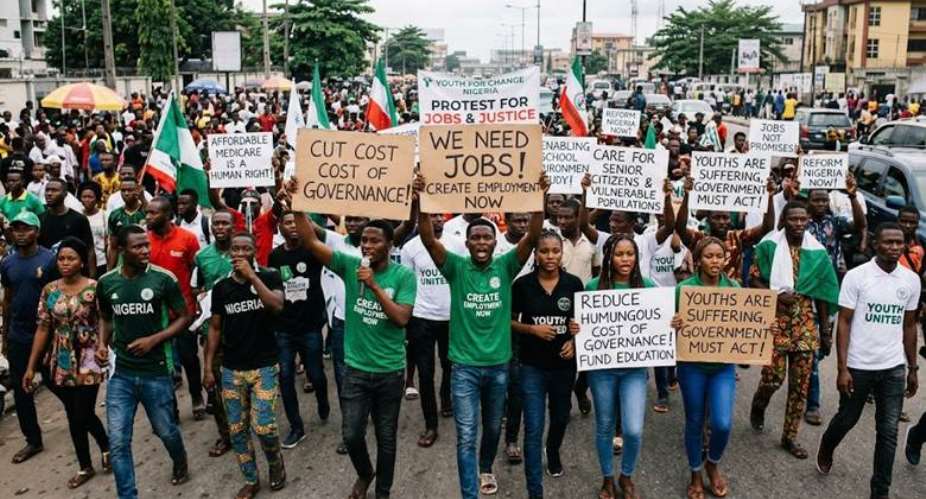
Nigeria stands at a defining moment in its political history. As the country approaches the 2027 presidential elections, its citizens, particularly the younger generation, must confront a fundamental question: should the next election be another contest over ethnic identity, regional interests and political entitlement, or should it become a national referendum on competence, character, compassion and the capacity of the Presidential contender to deliver good governance? The answer will determine not only who occupies the Presidential office in Aso Rock but more importantly whether Nigeria can finally begin the difficult journey towards genuine nationhood.
For too long, tribal politics has stood as one of the greatest obstacles to the emergence of a united Nigerian nation. Instead of building a political culture in which citizens can evaluate leaders by their past records, vison and ability to solve common problems, many politicians found it convenient to mobilize and manipulate ethnic sentiments for their personal gains and those of their family and cronies. They present political power as belonging to a particular ethnic group, a regional inheritance or a prize that must be wrested from one ethnic group to another. And so, given this unwholesome condition, national interests are sacrificed on the altar of sectional ambition. The consequences have been costly, to put it mildly.
Tribal politics has continued to weaken national solidarity, undermine public accountability and provide a convenient shield for politicians whose principal qualification for public office is their ability to manipulate the fears and aspirations of their ethnic constituencies. The result is that a politician who fails to deliver development to his community can still enjoy popular support by portraying criticism of his performance as an attack on the ethnic group he claims to represent. In this way, ethnicity becomes an instrument for protecting political failure.
This is the danger that is inherent in the persistent agitation for an Igbo presidency when the argument is presented primarily as an ethnic entitlement rather than a question of democratic choice, national inclusion and the competence of an individual candidate to deliver good governance. But let’s get it right. There is nothing inherently wrong with an Igbo person aspiring to become Nigeria's president. Indeed, no Nigerian should be disqualified from the highest office because of ethnic origin. The same principle applies to the Hausa, Ibibio, Ijaw, Kanuri, Tiv, Yoruba, and every other ethnic community in the country. What is objectionable is the insistence that the Presidency must belong to a particular ethnic group simply because its members believe that their turn has arrived.
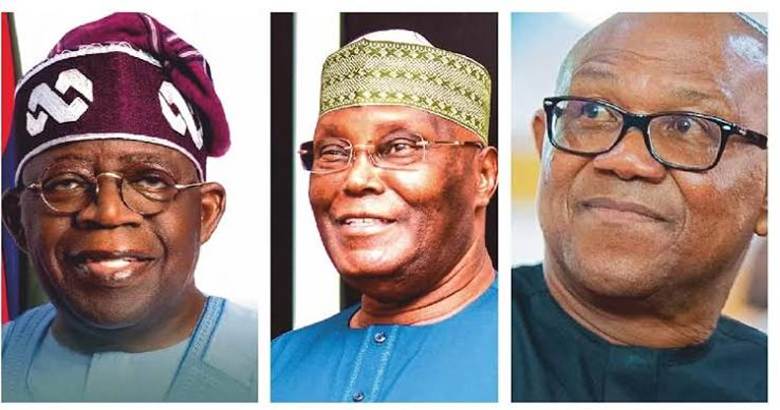
An Igbo presidency, a Yoruba presidency or an Hausa presidency cannot, by itself, guarantee good governance. Nigeria needs a Nigerian presidency that recognises the equal citizenship of all Nigerians and can comfortably place the welfare of the entire population above ethnic calculations. The question should not be whether a candidate is Igbo, Hausa or Yoruba, but whether that candidate possesses the vision, integrity, courage and practical ability to address the country's urgent problems and tackle them head-on.
Come to think of it: hunger does not discriminate among ethnic groups. A hungry child in Abia suffers no less than a hungry child in Kano. An unemployed graduate in Lagos experiences the same frustration as one in Bauchi. A family whose breadwinner has been kidnapped in Kaduna has the same desperate need for security as a family facing similar terror in Imo. Inflation, poverty, failing public services and insecurity have become national afflictions. They do not ask for a victim's ethnicity before destroying livelihoods and devastating families. Why, then, should Nigerians permit politicians to divide them along precisely those lines when their most pressing problems are substantially shared?
The argument for national unity is not against cultural diversity by any stretch of the imagination. Nigeria's multi-ethnic groups, languages, traditions and histories are an enormous national asset to the people of that country. The challenge is to transform this diversity into a foundation for collective strength rather than a permanent source of political tension. A nation is not built by erasing the identities of its citizens but by ensuring that no identity becomes a barrier to equal opportunity, justice and a communal sense of national belonging.
The United States offers an instructive example. With 50 states, considerable cultural diversity and a population drawn from different ethnic and ancestral backgrounds, it has built a federated political system in which presidential elections are formally national contests. Americans have certainly continued to struggle with racial biases, regional disagreements, economic inequality and partisan hostility. Their political system is far from perfect. But still, the American constitutional ideal is that the presidency serves the entire Union, not one state or ethnic community. A president elected from one state assumes responsibility for the welfare and security of citizens throughout the country with absolutely no biases.
Nigeria can learn from this principle without giving the impression that its circumstances are exactly identical to those of America because they are not exactly the same. On the other hand, Nigeria’s political parties must work to become stronger platforms for programmes that enhance national cohesion, encourage accountable leadership and inclusive democratic participation, rather than vehicles for ethnic bargaining. Candidates should be able to explain how their policies can improve the lives of Nigerians across all six geopolitical zones. Their ethnic origins should neither confer automatic advantages to them nor constitute grounds for their rejection.
The United Kingdom also provides a useful, though distinct, illustration of political unity in the face of diversity. England, Scotland, Wales and Northern Ireland have different histories, identities and political institutions. They have not abandoned their distinctive national and regional identities, and disagreements over constitutional arrangements have continued to be significant. Yet the United Kingdom maintains shared institutions and a common framework of government. Its experience demonstrates that political cooperation across distinct communities is possible, even when it requires continuous negotiation and compromise. In all of this, neither the United States nor the United Kingdom has completely eliminated all forms of prejudice, inequality or divisive politics. Therefore, they cannot be romanticized as flawless models. Their relevance to Nigeria is, in the principle, that a shared political future requires stable and respected public institutions that can foster civic responsibility and a commitment to interests that are larger than tribal loyalties. Nigeria must develop its own version of that principle, rooted in its Constitution, federal structure and social realities.
If truth be told, tribal politicians who rely on ethnic mobilization cannot offer any convincing global model for national development. Their approach encourages citizens to judge public officials by tribal identity instead of performance. It rewards political loyalty over competence, weakens meritocracy and that can deepen the resentment of communities that feel permanently excluded from national authority. In a country already confronting severe economic and security challenges, such politics is not merely unhelpful, it could be dangerous.
It is even more relevant when we consider the enormous cost of governance for instance. Nigerians have repeatedly complained about the financial burden of maintaining political officeholders, the size and expense of government institutions, and the privileges attached to public service. At a time when millions of households are struggling to afford food, school fees, transport and healthcare, the contrast between public hardship and the perceived extravagance of political office holders is particularly offensive. Therefore, every naira spent on government administration must be justified against competing needs, including education, public health, infrastructure and security.
Whoever is to become the next President must be prepared to scrutinize government expenditure, eliminate wasteful duplication, strengthen procurement oversight and ensure that public funds produce measurable benefits. Reducing the cost of governance should not become a slogan for indiscriminate cuts that weaken essential services. It should mean a leaner, more efficient and more accountable public sector in which the privileges of office are subordinated to the needs of citizens.
Education must be another central consideration. Nigeria cannot prepare its young people for a rapidly changing global economy with a school system that fails to provide adequate teachers, functional classrooms, digital competence and relevant practical skills. The country needs a comprehensive reform agenda that connects education to science, technology, agriculture, manufacturing, entrepreneurship and the emerging opportunities of the digital economy. And moreover, a serious-minded presidential candidate must explain how schools will be funded, teachers supported, technical and vocational education strengthened, and universities equipped to conduct meaningful research. Young Nigerians must graduate with the knowledge and skills that will enable them create wealth, compete internationally and contribute to national development. Education should not be reduced to awarding certificates, it must become a dependable pathway to opportunity, productivity and dignity.
Employment is equally urgent. The new President must be concerned that millions of Nigerians, particularly young people, face the frustration of inadequate opportunities, insecure livelihoods and limited access to capital. While unemployment and underemployment do not excuse criminal behaviour, a society that neglects the economic potentials of its youths undermines its own future. The next government must create the conditions in which businesses can grow, industries can expand, farmers can prosper and innovation can flourish.
This requires reliable electricity, better transport infrastructure, predictable economic policies, access to affordable financing and a business environment in which entrepreneurs are not suffocated by corruption or bureaucratic obstruction. Government cannot employ every Nigerian, nor should it promise jobs without explaining how they will be sustained. Its responsibility is to build an economy in which productive employment becomes possible and enterprise is rewarded rather than punished.
Security of life and property remains the most immediate obligation of the Nigerian state. For years, communities have endured kidnappings, banditry, terrorism, communal violence and other forms of criminality. The expression "unknown gunmen" has become part of the country's troubling vocabulary, reflecting the fear experienced by citizens who can no longer take their safety for granted. Farmers abandon their fields, travellers fear the roads, businesses close early and families live with the anguish of not knowing whether loved ones will return home safely.
The next president must demonstrate a credible capacity to reverse this situation. This requires better intelligence gathering, properly equipped and motivated security personnel, effective coordination among security agencies, improved investigation and prosecution, and a justice system that is capable of holding perpetrators of evil to account. It also requires attention to the economic and social conditions that allow criminal networks to recruit and operate. Security cannot be achieved through presidential declarations alone, it must be measured by whether Nigerians can live, work, travel and worship without persistent danger hovering over heads like the sword of Damocles.
Road safety and the enforcement of public order also deserve greater attention than is currently tenable. Across Nigerian communities, reckless driving, dangerous commercial transport practices like driving through the red light and overtaking on corners, disregard for traffic regulations and inadequate road maintenance contribute to preventable death and economic loss. A new President that values human life must invest in safer roads, enforce traffic laws strictly, improve emergency response and promote civic responsibility. National development is not measured only by grand infrastructure projects, it is also reflected in the everyday safety and dignity of ordinary citizens.
But, policies, however attractive, are not enough. Nigeria needs a president who feels the pains of ordinary citizens and recognises their legitimate aspirations. Compassion in governance means that economic decisions take account of their effects on poor households. It means listening to communities, explaining difficult choices honestly and ensuring that public assistance reaches those who genuinely need it. Transparency means that government expenditure, contracts, appointments and policy outcomes are subject to public scrutiny. Capacity means having the knowledge, discipline and competent team necessary to translate promises into results.
These qualities must become the standards by which Nigerians will judge every presidential contender. No candidate should be excused from scrutiny because of ethnic solidarity, religious affiliation, regional origin or personal popularity. A candidate's record in public office, approach to corruption, understanding of economic management, respect for constitutional institutions and willingness to implement accountability should carry a far greater weight than the ethnic identity he or she represents.
This is where Nigerian youths must assume a historic responsibility in 2027. They constitute an important segment of the electorate and have a direct stake in the country's political and economic future. They cannot afford to remain spectators while older political networks determine their opportunities, security and standard of living. Nor should they permit themselves to become instruments in the hands of politicians who use ethnic propaganda to divide them while they fail to deliver public goods. Young Nigerians across the North and South, East and West must come together to build a movement around shared aspirations. Such unity does not require agreement on every political question. It requires agreement that hunger must be reduced, security restored, schools improved, employment expanded and public money managed responsibly. It requires rejecting the notion that a politician deserves support simply because he belongs to one's ethnic group.
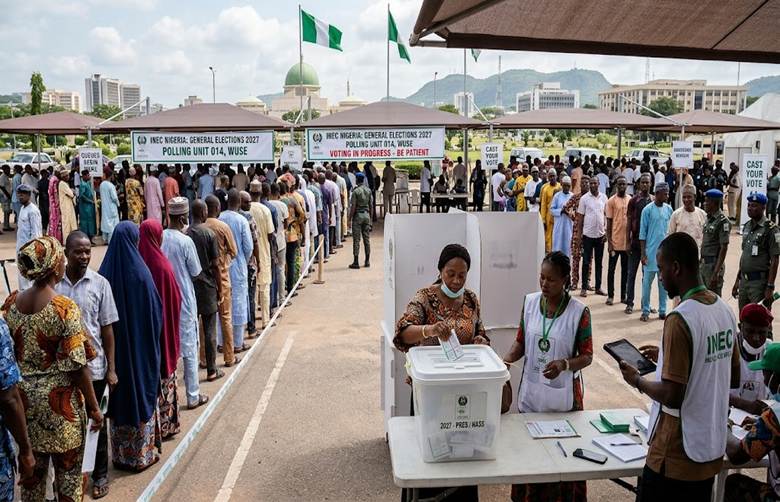
They must organise peacefully, register and verify their voter registration status, study candidates' manifestoes, challenge false promises and participate actively in the democratic process. They should use social media to circulate evidence and policy arguments rather than ethnic insults and misinformation. They must demand transparent campaign financing, credible candidates and measurable commitments. Where political parties present unsuitable candidates, young citizens should make their dissatisfaction known through lawful democratic channels.
Above all, the youth must resist the temptation to see political change as a violent process. The objective of change is to displace the culture of impunity, corruption and irresponsible leadership through constitutional means, not to replace one form of disorder with another. A credible electoral process, sustained civic engagement and public accountability with obviously offer a stronger foundation for national renewal than intimidation or political revenge. And the responsibility does not rest on young people alone. Parents, professionals, traditional rulers, religious leaders, civil society organisations and the media must also challenge divisive rhetoric and insist that public office is a trust and must be upheld as such. Traditional and community leaders, in particular, should encourage their followers to evaluate candidates on merit and public service rather than project the idea that political authority is the exclusive prerogative of an ethnic constituency.
The 2027 presidential election should be an opportunity to move Nigeria beyond the politics of ethnic entitlement, towards a politics of national purpose. The country needs a leadership that can unite its citizens without demanding that they abandon their identities. a leadership that can confront insecurity without sacrificing human rights, a leadership that can reduce public waste without destroying essential services and a leadership that can revive economic opportunity while it treats the poor with dignity.
Nigeria's future cannot be secured by endlessly debating which ethnic group should produce the President. It will be secured when the voters elect a President, whoever that person may be, that is capable of governing for all Nigerians and is prepared to be judged by the results he is able to deliver to them. The choice before the Nigerian electorate is larger than a contest among political parties or personalities. It is a choice between politics that profits from division and one that builds a common vision, and purpose, between public office as a privilege and public office as a responsibility, between a government that demands loyalty and one that earns public trust.
Nigerian youths must rise to this occasion with courage, discipline and a determination to make their votes count. They must reject rogue politicians, expose ethnic manipulation and insist on a government with capacity, compassion and transparency at the heart of its governance. In 2027, the question must not be whose ethnic group will occupy Aso Rock. It must be who can make Nigeria safer, fairer, more prosperous and more united. That is the question worthy of a nation seeking to consummate its destiny. That is the standard by which every presidential candidate for the 2027 presidential election must be judged and elected.

 'I’ll make you impotent' – Wife threatens husband on live radio over 'baby mamas...
 'Some radio stations struggle to buy prepaid electricity' – GIBA president
 GMet warns of prolonged dry spells and hotter days from December to February
 'Watch your words on air' – Suhuyini cautions journalists
 'I killed them for saliva' – Man confesses to killing three people for Ghc500
 Some NDC MPs must lose their seats for Upper East region to get development – Ko...
 Dumsor looms as El Niño could reduce Akosombo Dam inflows and affect power gener...
 'I will suggest we limit TraffiTech-GH's application to some major routes within...
 NIA begins nationwide crackdown on illegal Ghana Card photocopying
 Lebanese customs say 46.7kg cocaine trafficker through Accra used insulation tec...


