




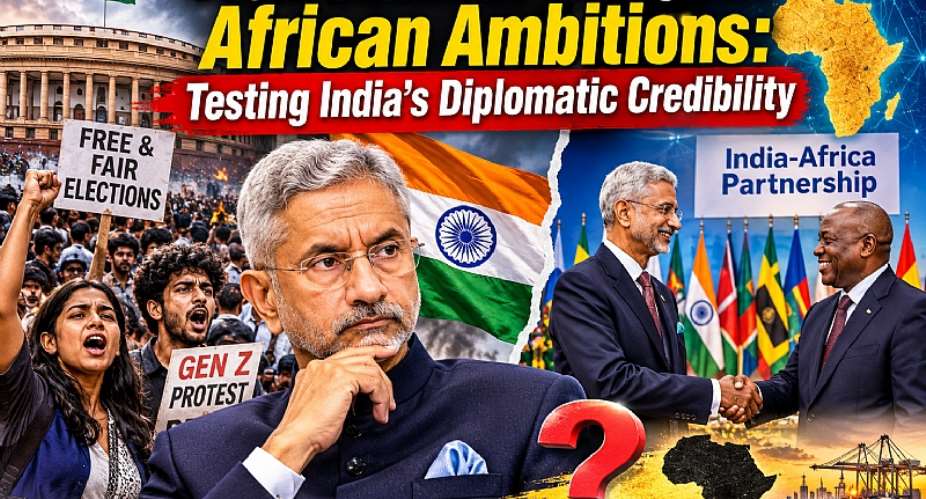
India is undoubtedly one of the world's largest functioning democracies. It possesses the essential institutions of modern governance and diplomacy, from state and federal governments to the judiciary and military. It also maintains a balancing act across Western countries, Africa and Latin America. However, the admiration surrounding its democratic character can change when domestic political realities begin to contradict its international image. Some of India's strategic strength lies in the hands of Dr S. Jaishankar and his diplomatic team, whose policies remain under close scrutiny from the media, former jurists and geopolitical analysts. Such criticism, in itself, reflects the continued presence of democratic debate. Yet, the emerging political unrest associated with the Gen Z wave and student-led protests presents another test for the ruling Bharatiya Janata Party (BJP). While domestic tensions continue to attract attention, Dr Jaishankar and his team are simultaneously advancing India's diplomatic case across Africa. This contradiction raises an important question: can India's international ambitions remain credible when confidence in its domestic political process is being challenged?
Political Unrest Within India
India's internal political tensions have become increasingly significant. The health minister has reportedly alleged that Rahul Gandhi is backed by the Congress party and external funding intended to destabilise the country. Such allegations reflect the intensity of the political confrontation between the ruling BJP and its opponents. Nevertheless, a government operating with considerable political power must also demonstrate its commitment to democratic freedoms, including the right to peaceful protest.
Questions surrounding electoral transparency have added another dimension to the debate. Reports concerning the Election Commission, under Gyanesh Kumar, and the alleged deletion of approximately 1.3 million voters' names have raised concerns about electoral procedures and citizens' voting rights. These claims require careful scrutiny and independent verification. Meanwhile, demonstrations have brought people onto the streets to demand free and fair elections. A functioning democracy must protect both institutional authority and the public's right to question it. If electoral confidence weakens, the consequences extend beyond individual elections to the credibility of the entire democratic system.
India's Diplomatic Bargain: Economic Opportunities in Africa
In April 2026, during the reported fourth India-Africa summit, Dr Jaishankar emphasised Africa's central position in Indian foreign policy. This approach reflects India's expanding interest in economic cooperation, investment and diplomatic partnerships across the continent. Indian investment has reportedly reached $10 billion across 40 African countries, while scholarship programmes have created educational opportunities for approximately 80,000 African students. Cooperation has also extended into healthcare, technology and organic agriculture.
India's digital transformation provides another potential avenue for engagement. New technology partnerships and digital infrastructure could strengthen economic relationships and support African development. However, the ultimate test is whether these initiatives generate sustainable benefits for local communities or primarily serve India's long-term strategic interests. Investment may create opportunities, but its success depends on transparency, mutual benefit and respect for the sovereignty of partner states.
Why Is Africa So Attractive?
Africa possesses considerable strategic importance because of its mineral wealth, energy resources, extensive coastlines and economic potential. Its reserves of critical minerals and metals make the continent increasingly important to countries seeking industrial growth, technological development and secure supply chains.
India is not entering an empty arena. China has already established extensive economic relationships across Africa and other regions, including the Middle East and Central Asia. Through infrastructure projects, trade and investment, Beijing has strengthened its international economic presence. India must therefore compete with China while offering African governments attractive alternatives. Yet, the question remains whether this competition will accelerate African development or turn the continent into another arena for external economic and geopolitical rivalry.
What Should Africa Consider?
African countries must approach every international partnership with a clear understanding of its potential benefits and hidden costs. Developing economies naturally welcome investment, technology transfers, educational opportunities and infrastructure assistance. Nevertheless, behind every diplomatic agreement may lie strategic interests that extend beyond the language of cooperation.
African governments must therefore distinguish genuine development partnerships from arrangements that create political dependence. They should prioritise transparent contracts, local employment, technology transfers and long-term economic sustainability. Development should strengthen national independence rather than make domestic decisions dependent on external powers. The challenge is not to reject foreign investment but to ensure that investment serves African priorities.
Is Russia Also in the Hunt?
Russia is another significant player seeking to deepen its influence across Africa. On 30 September 2026, reported talks in Moscow between Ghanaian President John Dramani Mahama and Russian President Vladimir Putin highlighted the continuing importance of bilateral engagement. Defence cooperation, agricultural development and educational opportunities remain potential areas of collaboration, alongside the broader framework of Russia-Africa relations.
Moscow's interest reflects a wider strategy of expanding diplomatic and economic influence beyond traditional Western partnerships. Military cooperation and scholarship programmes can strengthen bilateral ties, but African governments must carefully examine the long-term implications of security agreements and defence commitments. Reports concerning military recruitment from African countries also raise questions about economic vulnerability and the possibility that financial incentives may expose individuals to risks serving interests beyond their national borders.
The Strategic Question for African States
China, India, Russia and the United States may offer different economic models and diplomatic narratives, but none approaches Africa without strategic interests. International agreements can bring investment, trade and security cooperation; they can also influence political choices and constrain future policy options.
The central question is whether African states can negotiate these relationships without surrendering control over their own decisions. The continent should not have to choose between development and independence. Instead, it should demand partnerships that respect both.
Once trust is lost, money alone cannot restore dignity. Africa's competition for investment has become a contest for strategic influence, and its governments must recognise the distinction. The real victory will not belong to whichever external power secures the greatest economic presence, but to the African nations that convert international competition into lasting prosperity without compromising their sovereignty. The race for Africa has begun, and the hope remains that this time, African interests will determine its outcome.


 'Try their PAs, drivers if you can't reach appointees' – Fifi Kwetey tells angry...
 Reparation justice: 'We cannot change actions of those who came before us' – Kin...
 'Mahama will not sack appointees based on NPP’s claims' – Shamima Muslim
 UK king calls slavery 'monstrous injustice' as PM mulls apology
 Auditor to audit Auditor-General’s accounts
 Minority MPs walk out after Bagbin orders Abu Jinapor out of Parliament
 NPP's Kwadwo Poku calls for more TraffiTech-GH cameras at road intersections to ...
 Bawumia eyes 3R's Japanese tech that removes mercury, cleans soil and recycles w...
 'Our borders must command respect' – Osahen Afenyo-Markin on cocaine busts
 Ablakwa sues Benghazi, Media General over Fantana affair, corruption allegations


