




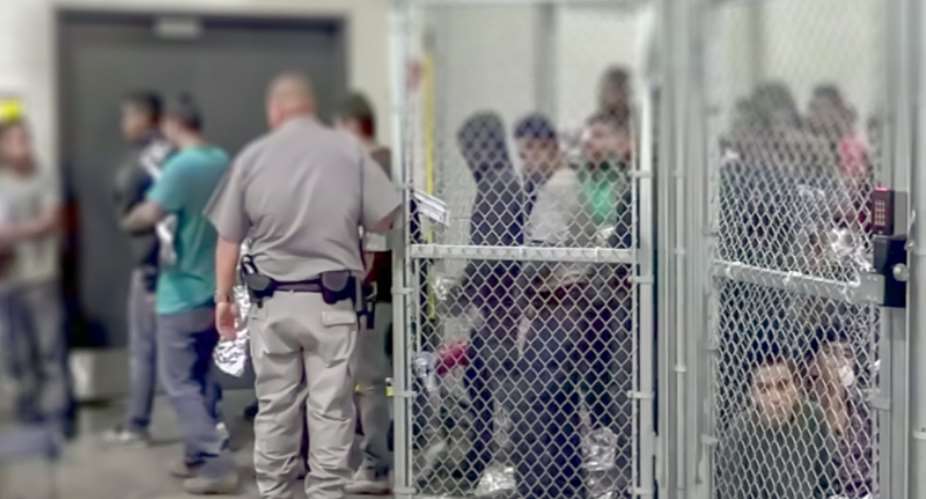
Picture a mother with two children at the edge of a forest, at night, on a border she has never seen before. She has walked for weeks. She says one word to the officer in front of her, "asylum," and she is pushed back across the line, with no form, no lawyer, no interpreter and no decision. Nobody writes her name down, so as far as the world is concerned she was never there.
This is happening right now, in the first days of November 2026, and it is happening to people who look like us, speak our languages and carry our hopes. As a human rights defender writing from Ghana, I refuse to look away.
I want to be fair from the start. Every country has the right to manage its borders. But no country has the right to deny a person a hearing, to beat them in the dark, or to lock them away without a judge. Those are not border management. They are violations of law.
Europe's Silent Rule: Push First, Ask Never
A coalition of European human rights groups, including the Hungarian Helsinki Committee and 11.11.11, recorded at least 80,865 pushbacks at Europe's borders in 2025. That is about 221 a day, and the groups say the true number is higher. Poland alone recorded 14,754 and Bulgaria 13,568. Italy counted 27,116 people intercepted and returned to Libya by a coast guard that Europe funds and supports. Some of the violence that monitors documented is horrifying: beatings, dog attacks, forced undressing, and children and sick people pushed back into forests and rivers.
The European Court of Human Rights recognised a "systematic" pattern of pushbacks by Greece in a landmark ruling in January 2025. Yet the same coalition reports that not a single pushback case has been tried before a Greek court, and no Bulgarian border officer has been sanctioned. Meanwhile the NGOs that watch and document the violations are being squeezed through defunding, defamation and legal threats. When the witnesses are silenced, the violations disappear from the record.
The law is also moving in the wrong direction. The EU Migration and Asylum Pact took full effect on 12 June 2026. Human Rights Watch warns that many asylum seekers will face a border procedure that can involve detention of up to twelve weeks during examination, plus twelve weeks more pending deportation. Days later, on 17 June, the European Parliament adopted a Return Regulation that allows "return hubs" outside EU territory and longer pre-removal detention. UN rights chief Volker Türk said he deeply regretted its adoption, warning that it expands detention and enables offshore deportation hubs.
The Sea Keeps Taking Its Toll
Arrivals to Europe by sea have fallen by 39 percent in 2026, according to the International Organization for Migration, but deaths have risen. At least 2,292 people died or went missing at sea by mid-September, against 1,999 in the same period of 2025. The first months of 2026 were the deadliest start to a year on the Mediterranean since the IOM began collecting data in 2014. Between January and mid-September, 17,067 people were intercepted at sea and returned to Libya.
Libya is not a safe place to return people. UN-commissioned investigators have described abuses in its detention centres, including forced labour, beatings, sexual violence and torture, as crimes against humanity. The IOM itself does not consider Libya a safe port for people rescued at sea. Yet Europe continues to fund the system that sends them back there. Fewer arrivals is not a human rights victory if people are dying quietly out of sight.
The Same Story Across the Atlantic
The pattern is not only European. A US appeals court ruled in April 2026 against the denial of the right to seek asylum at the southern border. Human Rights Watch recorded that 32 people died in US immigration custody in 2025. A US federal court also declared unlawful, in February 2026, the practice of deporting people to countries not designated in their removal proceedings without meaningful notice and a real chance to seek protection from persecution or torture.
That last ruling brings the story to my own doorstep.
Ghana Must Look in the Mirror
I love my country, and for that reason I will speak plainly about it.
In September 2025 Ghana agreed to receive West African nationals deported from the United States who could not easily be sent to their home countries. Lawyers say at least 60 people have been deported to Ghana since. In June 2026 a coalition of human rights lawyers sued Ghana at the ECOWAS Community Court of Justice on behalf of 27 deportees. They allege that Ghana facilitated removals to unsafe countries. According to the lawyers, most of these people had sought and obtained asylum or other protection in the United States. AFP reported that some were sent home or left in Togo without documents, and deportees' lawyers have said some were held in a military camp with little access to their families or attorneys.
The Ghanaian government says its decision rests on humanitarian principle and pan-African solidarity. I want to give that claim its due, and I also want to see it tested. If solidarity means taking people in, it must also mean giving each of them a hearing, a lawyer, an interpreter and a chance to say "I fear for my life" before anyone is put on a plane. The Refugee Convention and the African Union's own refugee convention, to both of which Ghana is a party, forbid sending a person back to persecution or torture. Quiet deals and military camps cannot replace due process.
Ghana also knows what it feels like to be on the other side. After a surge of anti-migrant protests and violence in South Africa in 2026, our government evacuated 1,964 Ghanaians between 27 May and 4 September, and the Foreign Minister said four Ghanaians died in connection with the violence. We rightly demanded that our citizens be protected. We cannot ask for dignity abroad while treating other Africans with less dignity at home. A principle that only applies when it helps us is not a principle at all.
What I Am Demanding
1. An Immediate End to Pushbacks and Collective Expulsions
Every person who reaches a border must be allowed to apply for protection and must receive an individual assessment, whether they cross at a checkpoint, in a forest or in the water.
2. No Detention Without a Judge
No one should be held at a border, in a camp or in an "extraterritorial hub" without a written reason, a court review, access to a lawyer and the ability to contact family. Children should never be detained.
3. Independent Monitoring With Real Power
Monitors need unannounced access to border areas, police stations and detention sites, and the freedom to publish what they find. States must stop criminalising and defunding the groups that document violations.
4. Accountability
Every credible allegation of violence at a border must be investigated, and officers who commit abuses must face prosecution. Frontex and national governments must act on the findings of their own fundamental rights officers.
5. No Funding of Abuse Abroad
The EU and Italy must stop supporting interceptions that return people to Libya, where torture is documented, and must make all external funding subject to public human rights assessments.
6. Transparency From Ghana
I call on our government to publish the terms of its agreement with the United States, to guarantee every deportee a meaningful chance to challenge removal, to end detention in military facilities without legal oversight, and to cooperate fully with the ECOWAS Court proceedings.
7. Protection From Xenophobia Across Africa
African governments and the African Union must hold perpetrators of anti-migrant violence accountable, wherever it happens, and protect all migrants equally.
How You Can Help Document and Protest
Law is only as strong as the evidence behind it. Pushbacks rely on silence, and documentation breaks it.
If you are a lawyer, a journalist, a volunteer or simply someone who meets people on the move, write down what you hear, with the person's consent: the date, the place, what was said and what was done. Photos and videos help, but never put anyone in danger by exposing their face or location. Share what you collect with credible monitoring groups, UN agencies and national human rights bodies. In Ghana, that includes the Commission on Human Rights and Administrative Justice and independent legal organisations. Join peaceful protests, write to your member of Parliament, and support the organisations that go where the cameras do not.
When a person disappears at a border, evidence is the only thing standing between their story and silence.
I think of the people who have stood in lines at borders with nothing but a bag and a name, and I think of how often the world answers them with a closed gate. No one should be erased from the record because they are inconvenient. I will keep writing, and I ask you to keep watching. A border may be a line on a map, but human dignity does not stop there.
Reference Sources
- Beaten Back at Europe's Borders: 2025 Annual Report on Pushbacks (February 2026), a collaboration including 11.11.11, Hungarian Helsinki Committee and We Are Monitoring
- Human Rights Watch, World Report 2026 (EU and US chapters), and Questions and Answers: The EU Pact on Migration and Asylum (10 June 2026); HRW, US Court Upholds Right to Seek Asylum (April 2026)
- IOM data on Mediterranean arrivals and deaths (17 September 2026) and IOM statements earlier in 2026
- UN High Commissioner for Human Rights' reaction to the EU Return Regulation, reported 17 June 2026
- AFP, AP and Channels TV reporting on the ECOWAS Court case (30 June 2026); Third Country Deportation Watch, Ghana page; reporting on Ghana's September 2025 agreement
- Ghana News Agency and MyJoyOnline on the evacuation from South Africa (September 2026)


 Chief Inspectors’ Amnesty Promotion: Supreme Court grants Police Administration ...
 Mahama outlines five priorities for reparatory justice talks with UK, says 'apol...
 GTEC warns universities to stop over-enrolling PhD students
 Police deploy officers and cameras nationwide as TraffiTech-GH enforcement begin...
 Govt to fund travel expenses of mother of murdered Ghanaian teenager to US funer...
 Stop labelling menopausal women as witches – Public told
 ‘Supreme Court is not your lawyer to explain the constitution to you' – Justice ...
 Ghana woos investors for US$100million vaccine manufacturing project
 Eight killed, 21 rescued in bus collision on Elubo–Takoradi Highway
 NPP asks US Embassy to suspend recognition of Ghanaian diplomatic and service pa...


