




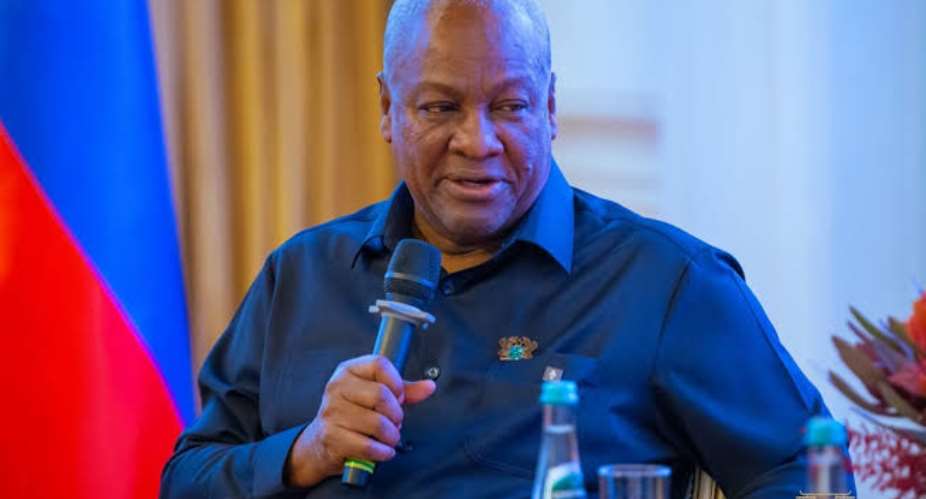
President John Dramani Mahama has identified 5 priority areas Ghana wants addressed in proposed reparatory justice discussions involving the United Kingdom, the African Union (AU), CARICOM and the African diaspora.
The proposed areas include a formal apology for the transatlantic slave trade, the return of looted cultural artefacts, targeted investments in education, healthcare and youth development, measures to combat systemic racism, and development partnerships aimed at tackling structural poverty and inequalities in the global economic system.
President Mahama said the engagement must move beyond acknowledging the atrocities of slavery and colonialism to delivering practical interventions that address their enduring consequences.
His position follows remarks by British Prime Minister Andy Burnham, who has indicated his willingness to consider calls for a formal apology on behalf of the British state and proposed structured discussions with communities affected by the transatlantic slave trade. Burnham has, however, ruled out financial reparations.
In a statement issued on Sunday, November 1, President Mahama welcomed the British leader's recognition of the human rights abuses associated with the slave trade and the UK government's openness to considering a formal apology.
“As African Union Champion on Reparations and Chair of the Global Advisory Panel on Reparatory Justice, I commend the statement for its bold, reflective, conciliatory, and honest reckoning with the UK’s legacy of slavery and colonialism,” he said.
The President said the proposed discussions should be organised around 5 broad commitments. These include a formal apology, international cooperation to eliminate systemic racism and Afrophobia, and targeted support for education, science, youth empowerment, climate resilience and healthcare.
He also called for the restitution of stolen cultural heritage and strategic development partnerships to address structural poverty, alongside reforms to unfair global economic and debt arrangements that continue to place developing countries at a disadvantage.
He cited the Accra Reset and the Bridgetown Initiative as important frameworks in addressing these economic challenges.
President Mahama described the British government's position as an important development in the global campaign for reparatory justice, particularly after the adoption of a Ghana-led United Nations resolution recognising the transatlantic slave trade and the racialised enslavement of Africans as the gravest crime against humanity.
He pointed out that the development carried added significance because the United Kingdom abstained from voting on the resolution.
The President, however, cautioned that recognition of the historical atrocities and a formal apology would not, by themselves, undo the suffering and injustices experienced by millions of Africans.
“While an acknowledgement of the atrocities and a formal apology for the grave mistreatment of the millions affected cannot undo the profound injustices of the past, they signal a crucial departure from past denial and open the path toward genuine healing and repair,” he said.
He called for sincere and structured engagement involving the AU, CARICOM, the African diaspora and countries that participated in the transatlantic slave trade.
Although he acknowledged that the parties might not share identical views on all aspects of reparatory justice, he maintained that their differences should not stand in the way of a common pursuit of healing and redress.
“We recognise, as our partners do, that our perspectives on reparatory justice may not be identical. There are clearly areas of strong disagreement, but such differences must not deter us from the shared objective,” he said.
President Mahama proposed that the Accra Next Steps Commitments, CARICOM's Ten Point Plan and the AU's declarations on reparatory justice should serve as guiding frameworks for the discussions.
He reiterated Ghana's position on the return of stolen cultural artefacts and the establishment of development partnerships to tackle structural poverty and address inequalities in the international financial and debt systems.
The President also reaffirmed Ghana's commitment to working with African nations, CARICOM and people of African descent in the Americas, expressing optimism that the proposed engagement could advance lasting justice, reconciliation and an end to racial discrimination.
“Ghana is ready to walk this road in full partnership with the African Union, CARICOM, members of our global coalition, and the United Kingdom to achieve lasting justice, genuine reconciliation, true healing and the creation of a new world without racism and discrimination,” he said.

 Chief Inspectors’ Amnesty Promotion: Supreme Court grants Police Administration ...
 Mahama outlines five priorities for reparatory justice talks with UK, says 'apol...
 GTEC warns universities to stop over-enrolling PhD students
 Police deploy officers and cameras nationwide as TraffiTech-GH enforcement begin...
 Govt to fund travel expenses of mother of murdered Ghanaian teenager to US funer...
 Stop labelling menopausal women as witches – Public told
 ‘Supreme Court is not your lawyer to explain the constitution to you' – Justice ...
 Ghana woos investors for US$100million vaccine manufacturing project
 Eight killed, 21 rescued in bus collision on Elubo–Takoradi Highway
 NPP asks US Embassy to suspend recognition of Ghanaian diplomatic and service pa...


