




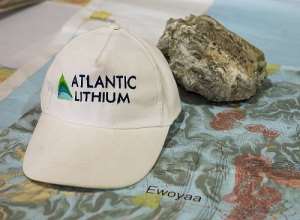
When Ghana first learned that commercial quantities of lithium had been discovered at Ewoyaa in the Central Region, hope spread through nearby communities like rain after a long dry season.
Residents envisioned jobs for their children, improved roads, better schools and healthcare facilities, and a future in which the mineral beneath their ancestral lands would finally bring meaningful development to the people who had lived there for generations.
Across the country, experts, religious leaders, civil society organisations and ordinary citizens debated what the discovery could mean for Ghana. For a nation familiar with the paradox of abundant natural resources delivering limited local transformation, lithium appeared to offer something different.
For the first time, Ghana seemed poised to move beyond the familiar cycle of extraction and export. The ambition was broader: public participation, Ghanaian investor ownership, board representation, commercial offtake arrangements, feldspar development and, ultimately, domestic industrialisation linked to the global battery value chain.
Today, however, that optimism in Ewoyaa and neighbouring communities is increasingly tempered by uncertainty.
"They told us lithium would change our lives. But for how long must we wait before it changes anything for us?" asked Emmanuel Baidoo, a resident, during a visit by the Ghana News Agency.
His question captures the central dilemma confronting Ghana's emerging lithium industry.
The nation wants a viable mining sector. Investors want regulatory certainty. The world wants battery minerals. Yet the people whose farms, water sources, homes and memories sit directly above the deposit are still asking whether development will arrive with dignity or displacement.
National Negotiations, Local Concerns
Officials from the Minerals Income Investment Fund (MIIF) and the Minerals Commission led negotiations aimed at advancing Ghana's broader national objectives.
MIIF's negotiated investment framework amounted to US$32.9 million, including a proposed US$27.9 million investment for a six per cent contributing interest in Atlantic Lithium's Ghana portfolio of seven tenements, including the Ewoyaa project.
The mining lease was signed in October 2023 and later ratified by Parliament in March 2026.
Yet for residents of Ewoyaa and neighbouring communities, the story is about far more than shareholdings, investment structures and international transactions.
It is about farmland that sustains families, inherited property passed down through generations and the uncertainty surrounding compensation and resettlement.
More than 1,500 farmers have been affected by the mining concession. Many continue to await compensation for the loss of access to land and livelihoods.
A moratorium imposed in December 2023 restricted the cultivation of cash crops and new construction on affected lands, deepening hardship for households whose survival depends on agriculture.
Communities in Limbo
In Krofu, 56-year-old community elder James Kwegyir Ampah expressed the frustration shared by many residents.
"It is getting to three years without compensation, and we don't know what to do," he said.
His statement is more than a complaint. It is a warning.
No nation can credibly claim to be pursuing a just energy transition if the people bearing its immediate social and economic costs are left in prolonged uncertainty.
The concerns extend beyond Ewoyaa.
Residents of Krofu fear the effects of dust, noise, blasting activities, water contamination and the loss of agricultural land that has sustained their families for decades.
In Krampakrom, residents voice similar anxieties about displacement, inadequate compensation and the absence of clear alternative livelihood programmes.
Their collective concern raises a fundamental question: should any community be required to surrender its land and way of life for a national development agenda without a clear, timely and enforceable plan for its own future?
The Moral Test of Ewoyaa
Local residents have consistently called for fair compensation, alternative livelihood opportunities, environmental protection, employment prospects and tangible community development.
Many also seek better access to information about their rights and entitlements, particularly women, young people and persons with disabilities, who often bear the heaviest consequences when livelihoods are disrupted.
The debate has become even more urgent following Atlantic Lithium's decision to enter into a binding Scheme Implementation Deed in May 2026 with China's Zhejiang Huayou Cobalt.
The proposed transaction, valued at approximately US$210 million, would result in Huayou acquiring all issued shares of Atlantic Lithium. However, the deal remains subject to shareholder, court and regulatory approvals.
For Ghana, the issue is not simply whether foreign investment is beneficial. The more important question is whether a change in ownership will preserve the original vision of industrial development or reduce Ewoyaa to yet another extractive project in which raw materials leave the country, profits flow abroad and host communities are left to manage the consequences.
The proposed acquisition could bring substantial capital, technical expertise and the capacity to accelerate mine development. Atlantic Lithium has argued that the transaction could speed up socioeconomic benefits for Ghana and its host communities.
Yet residents have heard promises before.
What many now seek are not additional assurances but concrete timelines, compensation payments, resettlement plans, environmental safeguards and legally enforceable commitments that guarantee local benefits.
What Ghana Must Protect
Ghana's lithium opportunity remains intact.
Ewoyaa is still regarded as a significant mineral resource. The mining lease has been ratified, and Huayou's proposed involvement could provide the financial backing required to move the project forward.
But mine development alone cannot be the measure of success.
The true test will be whether the project delivers:
- Timely and adequate compensation for affected farmers and property owners.
- A transparent resettlement programme agreed with communities before displacement occurs.
- Employment, training and procurement opportunities for local residents.
- Effective protection of water sources, air quality, farmland and biodiversity.
- Sustained Ghanaian ownership, investor participation and influence in governance.
- Industrial linkages, local processing opportunities and value addition beyond the export of raw ore.
The Question Beneath the Mineral
Lithium may power electric vehicles in distant cities, but in Ewoyaa its value is measured differently.
It is measured in a cocoa tree. A family plot. A borehole. A child's school fees. A community's connection to its ancestral land.
Ghana must not allow the excitement surrounding the global battery revolution to drown out the voices of the people who live where the lithium lies.
If Ewoyaa becomes a model of shared prosperity, Ghana will demonstrate that resource wealth can serve both national development and community wellbeing.
If residents continue to wait without answers, however, the country may gain a mine while losing something far more difficult to restore: public trust.
The people of Ewoyaa, Krofu and Krampakrom are not asking for charity.
They are asking for fairness.
And fairness, ultimately, will be the truest measure of whether Ghana's lithium promise becomes a national achievement or another painful lesson in extraction without justice.


 ‘The World Is Watching’ — Kwasi Kwarteng Demands Justice for Slain Ghanaian Teen...
 ‘Justice Must Be Served’ — Ghana’s US Ambassador Demands Full Probe into Killing...
 ‘The Constitution Is Clear’ — Fuseini Challenges NPP’s Supreme Court Suit on Pre...
 Audit GH¢49.7m South Africa Evacuation Spending, Kwasi Kwarteng Demands
 Inusah Fuseini to Mahama: Reject a Third-Term Bid Even If Supreme Court Approves...
 Trump admin approves potential Patriot missiles sale to Ukraine
 US and Russia block competing UN resolutions on Western Sahara
 'Atmosphere of fear': Trump moves to curtail voting rights ahead of the midterms
 Uncle and niece shot dead over alleged GH¢500,000 debt; woman arrested


